

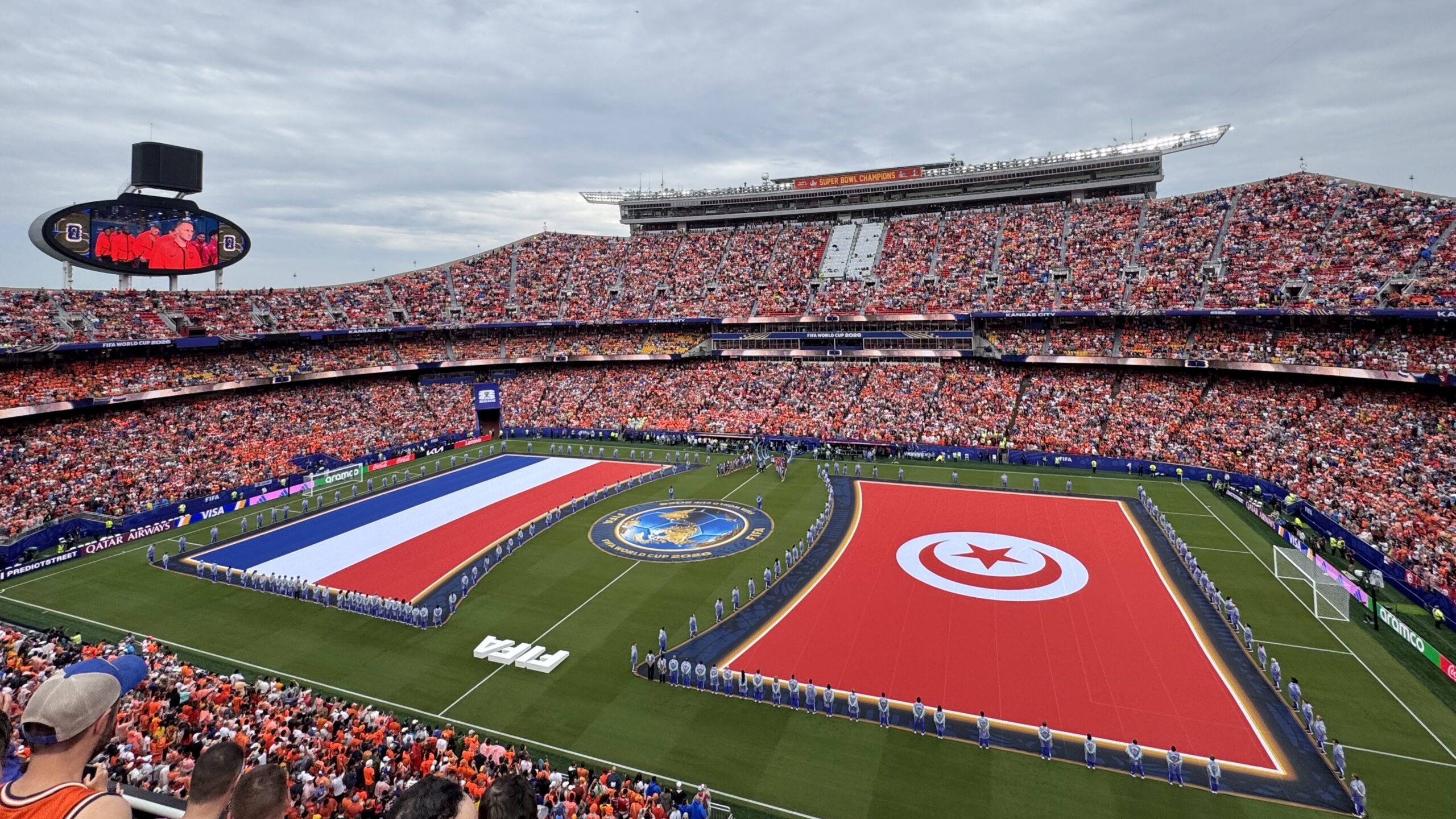

Years from now, football historians will remember the 2026 FIFA World Cup not only because Spain lifted the trophy, but because it was the tournament that rewrote football’s traditional hierarchy.
Brazil’s elimination by Norway, Morocco proving once again that 2022 was no coincidence, Spain’s triumph through discipline rather than star power, and the controversies surrounding the final dominated headlines around the world.
A World Cup has come to an end. But this time, it was not only one team that emerged victorious.
Courage won. Discipline won. Planning won. And above all… The tournament reminded us once again that modern football is no longer decided by the weight of a jersey.
The tournament reminded us once again that modern football is no longer decided by the weight of a jersey.
For me, the defining story of the 2026 World Cup was Norway’s victory over Brazil.
For decades, Brazil symbolized footballing supremacy. Yet they were knocked out by a Norwegian side inspired by Erling Haaland.
International media described the result not simply as an upset, but as a declaration that football’s balance of power is changing.
Another remarkable story belonged to Morocco.
Their extraordinary run in Qatar four years ago was not an exception.
African football is no longer producing surprises. It is producing sustainable excellence.
Morocco played without fear, proving that confidence, tactical discipline and long-term development can compete with the traditional giants of world football.
Then came Spain.
Perhaps not the most expensive squad. Perhaps not the biggest collection of global superstars. But unquestionably the best organized team.
Spain demonstrated that possession football, tactical intelligence and collective discipline remain the strongest formula for success.
Modern football is no longer won by individuals alone. It is won by systems.
Modern football is no longer won by individuals alone. It is won by systems.
One of the tournament’s greatest winners was also Erling Haaland.
Often criticized for shining only at club level, he inspired Norway to one of the greatest achievements in the nation’s football history.
True leadership is not always measured by goals. Sometimes it is measured by the belief you give an entire nation.
Unfortunately, the tournament also reminded us of football’s darker side.
The tensions following the final, the emotional reactions and the disciplinary investigations showed that losing gracefully remains one of the greatest challenges in elite sport.
Trophies may be lost. But sportsmanship must never be.
The World Cup also confirmed another important reality.
Football no longer belongs exclusively to Europe and South America.
Norway. Morocco. Cape Verde. Paraguay.
These nations demonstrated that the global football map continues to evolve.
However, perhaps the biggest debate of this World Cup was not about tactics or champions. It was about the tournament itself.
For the first time in history, the FIFA World Cup was jointly hosted by three countries: the United States, Canada and Mexico.
From an organizational perspective, the event was an undeniable success.
Modern stadiums. Excellent infrastructure. Advanced technology. Efficient logistics.
FIFA delivered a tournament of remarkable operational quality.
Yet football is far more than ninety minutes inside a stadium.
A World Cup lives in city squares. It belongs to crowded streets, cafés, public viewing areas and the everyday conversations of millions of people. It becomes part of a nation’s collective memory.
And that raises an important question:
Did a tournament spread across three countries create the same emotional unity as those hosted by a single nation?
In my opinion… Not entirely.
Mexico embraced the World Cup with its traditional football passion.
Canada experienced growing enthusiasm, although ice hockey still remains deeply rooted in its sporting culture.
The United States successfully organized the event, but alongside the NBA, MLB and other major professional leagues, football struggled to become the single national conversation throughout the tournament.
From a sociological perspective, the true strength of a World Cup lies in a country’s ability to breathe with one heartbeat for an entire month.
Germany in 1974. France in 1998. Germany again in 2006. South Africa in 2010. Brazil in 2014. Russia in 2018. Qatar in 2022.
When we remember those tournaments, we do not think only about the finals.
We remember Berlin’s fan festivals. The sound of vuvuzelas in Johannesburg. The yellow streets of Rio de Janeiro. The unique atmosphere of Doha.
Because a World Cup is not merely a football competition. It is a cultural legacy. A shared national memory.
When the tournament is divided among several countries, creating that unforgettable collective identity becomes far more difficult.
FIFA’s objective is understandable.
Expand the game. Reach new audiences. Create greater global value.
But sometimes, becoming bigger does not necessarily mean becoming deeper.
That is why I believe future FIFA World Cups should once again be hosted by a single nation.
It may require greater investment. But it would create a stronger sporting identity, a richer cultural experience and a far more lasting emotional legacy.
Because World Cups are not remembered only for the trophies that are lifted. They are remembered for the memories they leave behind.
And unforgettable memories are born when an entire nation beats with the same heart.
And unforgettable memories are born when an entire nation beats with the same heart.
Perhaps that is the greatest lesson of the 2026 FIFA World Cup.
Today, no famous jersey guarantees victory before kick-off.
And no tournament, however perfect its organization may be, becomes legendary without creating one unforgettable shared spirit.