

The World Cup has undergone several changes in various areas. From squads featuring all 26 players to referee cameras, dynamic ticket pricing, official FIFA reselling, partnerships with platforms like TikTok and YouTube, and hydration breaks, among others. However, there is another small change that is going to have a massive impact on a market rarely explored by football (soccer).
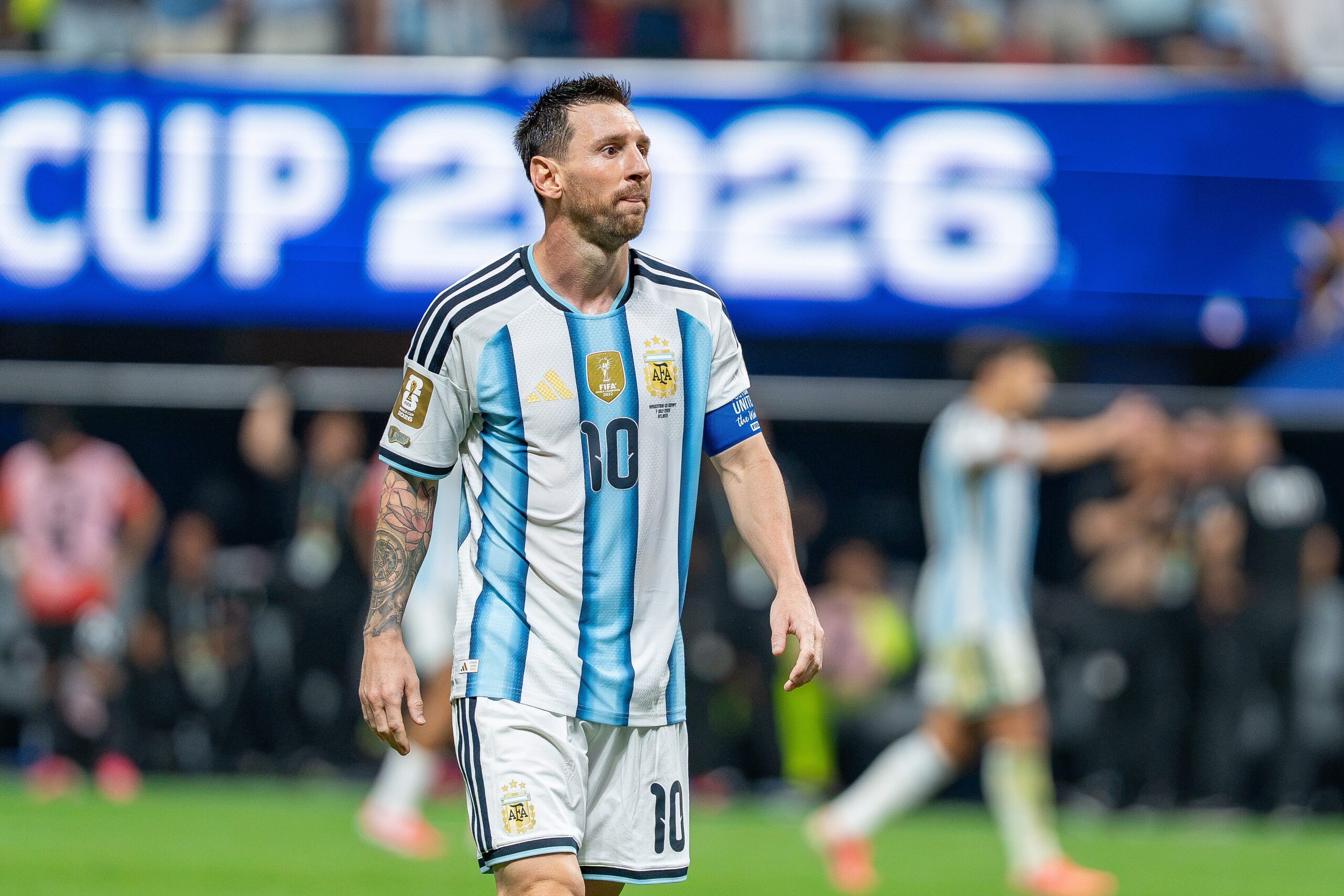
Since 2010, FIFA has identified the reigning champion with a commemorative patch on the front of their jersey. Additionally, there is a traditional patch on the right sleeve of the national teams’ jerseys featuring the logo of the tournament edition currently being played. This year, the champions wear a special gold-colored one that identifies them as such.
This year, 5 more special patches were implemented:
- Golden Boot: Worn by players who have been top scorers in any past edition, such as James Rodríguez, Harry Kane, and Kylian Mbappé.
- Golden Ball: For those chosen as the best player in a tournament, worn by Lionel Messi and Luka Modric.
- Golden Glove: For the best goalkeeper, worn by Thibaut Courtois and Emiliano Martínez.
- The Debut: For all those playing a World Cup match for the very first time, highlighting players like Lamine Yamal and Erling Haaland.
- The Legacy: For players who have participated in 5 or more editions, such as Lionel Messi, Cristiano Ronaldo, Luka Modric, Manuel Neuer, Guillermo Ochoa, and Fernando Muslera.
These patches are not just commemorative. They are the gateway to one of the most talked-about partnerships of the year and the entry point to a new level of business rarely explored by football.
These patches are not just commemorative. They are the gateway to one of the most talked-about partnerships of the year and the entry point to a new level of business rarely explored by football.
The Big Shift: Topps enters the game
Topps, owned by the American company Fanatics, secured a partnership with FIFA this year to replace the Italian company Panini—a FIFA partner since 1970—starting in 2031. Topps is the most recognized company in the trading card market. Its history in this industry is very interesting; Topps started as a chewing gum company in 1938, launched its popular Bazooka (its flagship chewing gum) in 1947, and in 1951, when sales were low, decided to include baseball player cards inside the gum packaging. The success was so overwhelming that in 1952, they decided to dedicate themselves fully to the collectible card business.
The success of this company and the size of the trading card business are so immense that the most expensive collectible card ever sold was valued at USD 12.6 million in 2022. It is a Mickey Mantle baseball card, made precisely by Topps.
The above provides context regarding the player patches made precisely by Topps, as the question naturally arises: What for, and why now?
Since they will officially become FIFA partners in 2031, as mentioned earlier, they cannot currently enter that market, nor produce or sell cards featuring the intellectual property of FIFA, its tournaments, and associates. However, they are preparing the ground with these patches, as it is a category that did not exist before.
A representative from the company is responsible for collecting the patches after each match, and Topps then proceeds to store them. What the company will do is release a limited edition of cards featuring the players who wore them, which will include the actual patches. It is rumored that they will be distributed randomly; in other words, no packs will be produced indicating that they contain these patches.
What the company will do is release a limited edition of cards featuring the players who wore them, which will include the actual patches.
This is a product based on baseball, which has been another success for the company. There, they already use commemorative debut patches, inspired by packs that included a player’s card along with a piece of their uniform (jersey or pants) or a piece of the base.
While the price at which these packs will be released in 2031 remains unknown, there is no doubt that a Messi card featuring one of these patches could sell for an 8-figure sum—surpassing the Mickey Mantle card. Messi already holds the record for the most expensive football card with his Barcelona debut card from the 2004-2005 Panini Mega Cracks collection, which fetched USD 1.5 million.
A new era is approaching in the football industry. Despite being the most popular sport in the world, it is historically one of the least sought-after in the collectibles market (possibly because it is not among the most dominant sports in the United States).
A new era is approaching in the football industry.