

The World Cup has always had a way of revealing football in its purest form.
Over the past month, we have celebrated moments of brilliance, marvelled at tactical innovation and debated the performances that ultimately separated champions from everyone else.
As always, our attention settled on what we could see.
The perfectly weighted pass. The last-minute tackle. The missed penalty. The stunning goal. The celebration. The mistake.
Football gives us endless moments to analyse, and we have become exceptionally good at doing so. Every movement can be tracked. Every decision replayed. Every performance dissected through statistics, tactics and technical detail.
Yet as I watched this tournament unfold, I found myself returning to a different thought.
Perhaps the visible moment is rarely where performance begins.
Perhaps the visible moment is rarely where performance begins.
Long before a player strikes a ball, makes a decision or reacts under pressure, something less obvious has already begun to shape what follows.
That thought stayed with me throughout the tournament, not because it challenged what I already believed about football, but because it prompted a different question altogether.
Where does performance begin?
For years, football has become increasingly sophisticated in its understanding of performance.
Physical preparation has never been more advanced. Tactical analysis has never been richer. Psychology has rightly become a valued part of elite environments, helping players develop confidence, resilience and emotional regulation.
Each of these has undoubtedly moved the game forward.
Yet I found myself wondering whether they are describing performance itself or simply the expressions of something deeper.
Perhaps we have become extraordinarily good at improving what can be seen, while paying less attention to the conditions from which those visible performances naturally emerge.
One assumption quietly underpins much of modern coaching.
When something isn’t working, we tend to isolate it.
If confidence is low, we try to build confidence.
If concentration drifts, we train concentration.
If decision-making suffers, we create better decision-making exercises.
Each challenge is approached almost as though it were an individual component that can be strengthened before being placed back into the player.
There is obvious logic in that approach.
Often, it works.
But human beings rarely experience themselves as a collection of separate parts.
Our breathing changes our physiology.
Our physiology shapes our attention.
Our attention influences our decisions.
Our emotions affect what we notice.
Our thoughts alter our breathing once again.
Everything is continuously influencing everything else.
Perhaps we have become remarkably skilled at refining the individual instruments, while paying less attention to the quality of the orchestra.
This isn’t a conclusion I reached while watching football.
It is something coaching has gradually taught me.
I’ve lost count of the number of players who’ve come to me wanting more confidence.
Sometimes they want to stop overthinking.
Sometimes they want to become mentally stronger.
Sometimes they simply want to enjoy football again.
On the surface, the requests appear different.
Beneath them, they often feel remarkably similar.
Early in my coaching, I naturally responded to the request itself. If confidence seemed to be the issue, we explored confidence. If pressure was overwhelming, we worked on handling pressure.
But over time, I began noticing something I hadn’t expected.
The players who changed most profoundly rarely became confident first.
They became calmer.
More present.
More connected to themselves.
Less internally divided.
Almost without realising it, they stopped fighting themselves.
And when that happened, something interesting followed.
Confidence appeared.
Decision-making became clearer.
Communication became more natural.
Mistakes were recovered from more quickly.
Performance seemed to take care of itself.
The more often I witnessed that pattern, the harder it became to believe that confidence itself had been the starting point.
Perhaps confidence wasn’t the cause at all.
Perhaps it was emerging from somewhere deeper.
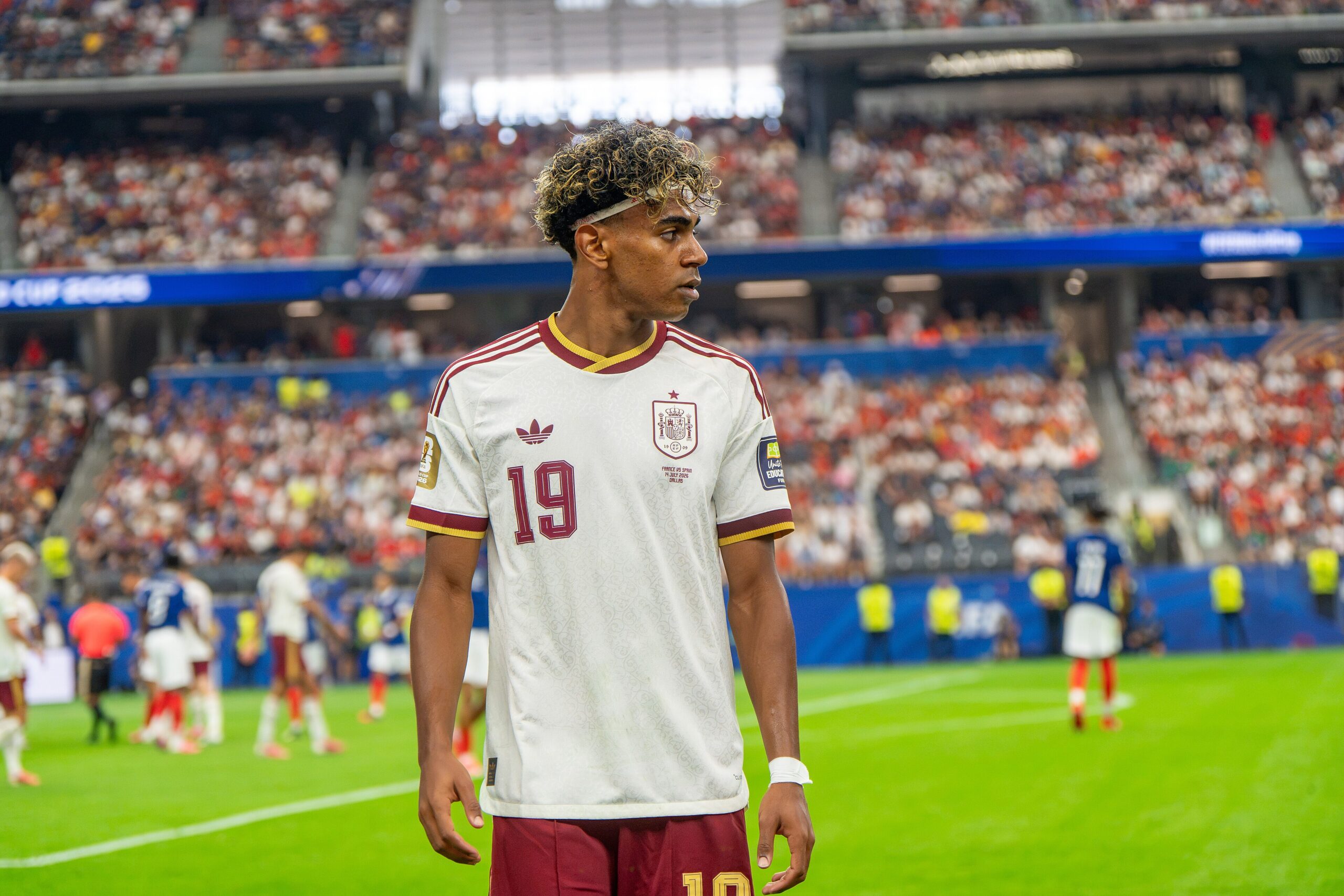
Watching Spain during this World Cup brought those observations into sharper focus.
There was something captivating about the way they played, but it wasn’t simply their technical quality. Every nation at this level possesses exceptional players. Nor was it purely tactical sophistication, although that was clearly present.
It was the feeling they created.
The ball seemed to arrive exactly where it needed to be, almost before the receiving player had asked for it. Pressing felt coordinated without ever appearing frantic. Players moved with one another rather than merely alongside one another. Even under pressure, there was a rhythm to their football that reduced the need for rushed decisions.
Watching them, you rarely found yourself thinking about individual actions.
You experienced the team as a whole.
It reminded me of listening to an orchestra.
Nobody buys a ticket to hear musicians tuning their instruments.
They come for the music.
Yet every musician understands that the performance the audience applauds is only possible because something happened beforehand.
Before the first note is played publicly, each instrument must first come into relationship with every other instrument.
Only then can the music emerge.
Perhaps football contains a similar truth.
When we watch a truly outstanding team, what captivates us is rarely the organisation itself. We notice the goals, the combinations, the creativity and the moments of brilliance. But beneath everything we admire lies a quieter form of organisation that makes those moments possible.
Perhaps what we call beautiful football is simply what organised human beings look like when they play together.
Maybe performance is less about constructing isolated strengths and more about creating the conditions from which those strengths naturally emerge.
Perhaps what we call beautiful football is simply what organised human beings look like when they play together.
There was another moment during this World Cup that lingered in my mind for very different reasons.
Penalty kicks have always fascinated me because they reveal something unique about performance. They compress the complexity of elite football into a single decision, a single movement and a single moment. There is nowhere to hide, no teammate to combine with and no opportunity to recover from hesitation. Whatever happens next belongs entirely to the player standing twelve yards from goal.
One pattern became increasingly difficult to ignore.
A growing number of players approached the ball with exaggerated pauses and stuttering run-ups, seemingly waiting for the goalkeeper to commit before deciding where to place the ball. Sometimes it worked beautifully. Just as often, it didn’t. Goalkeepers appeared increasingly comfortable refusing to move early, forcing the taker to wait longer than intended. The pause became longer, the rhythm more disrupted, and what should have been one fluid action seemed to fragment into several separate decisions.
It struck me that this wasn’t simply a technical issue.
Nor did it feel purely psychological.
It looked as though attention, intention and action had gradually become separated.
Then compare that with the penalties that felt almost inevitable.
The player had already decided.
Every step of the run-up, every breath and every movement seemed to express a choice that had already been made. The goalkeeper remained part of the environment, but not the author of the decision.
Perhaps the difference wasn’t confidence.
Perhaps it was alignment.
One player appeared to be reacting.
The other appeared to be expressing.
It is a small distinction.
Yet I wonder whether it points towards something much bigger.
For decades, coaching has become exceptionally good at teaching skills.
We teach technique.
We teach tactics.
We teach communication.
We teach emotional regulation.
We teach routines.
All of these matter enormously.
But perhaps the next frontier isn’t another skill.
Perhaps it is a deeper understanding of the states from which those skills are expressed.
Skills are things we practise.
States are the conditions from which we perform.
At first glance, the distinction seems subtle.
In reality, it may change the question entirely.
A technically gifted player performing from a fragmented internal state can appear hesitant, rushed or disconnected. The very same player, with exactly the same technical ability, can look calm, creative and decisive when their internal world is working as one.
The skill has not changed.
The state has.
Perhaps this is why confidence has always been such an elusive concept. We pursue it directly, yet it so often appears at the very moment we stop chasing it. We celebrate it after outstanding performances, even though it may have been the consequence rather than the cause.
Maybe confidence is not something we build.
Maybe it is something that emerges.
This is where I have found myself returning to a word that has quietly become more important in my own work.
Coherence.
Not as another performance technique.
Not as another psychological intervention.
Not as another model to add to an already crowded coaching toolbox.
Instead, as a way of describing what happens when the different dimensions of our humanity begin working together rather than competing for our attention.
When our thinking aligns with what we are feeling.
When our physiology supports rather than undermines our intentions.
When our attention remains anchored in the present instead of being pulled towards imagined futures or rehearsed mistakes from the past.
When action becomes a natural expression of who we are in that moment.
Perhaps coherence is to human performance what tuning is to music.
The audience never applauds the tuning.
They applaud the performance that the tuning made possible.
The audience never applauds the tuning.
They applaud the performance that the tuning made possible.
If there is any truth in that idea, it invites a different way of thinking about coaching.
For decades, we have become increasingly sophisticated at improving performance from the outside in.
Better tactics.
Better analysis.
Better conditioning.
Better psychology.
All of it valuable.
All of it necessary.
But perhaps the next frontier is different.
What if the greatest opportunity is not simply helping players become mentally stronger, but helping human beings live and perform with greater coherence?
What if presence matters as much as positivity?
What if regulation matters as much as motivation?
What if clarity emerges not because we think harder, but because there is less internal interference competing for our attention?
These questions extend far beyond elite football.
They reach into leadership, parenting, education and everyday life because none of us perform only on football pitches. The same human being who walks onto a football pitch also walks into a boardroom, returns home to their family and sits quietly with their own thoughts at the end of the day.
Perhaps there are not separate versions of ourselves after all.
Only different expressions of ourselves.
As this World Cup drew to a close, I found myself enjoying the goals, the tactical battles and the unforgettable moments as much as everyone else.
But I also found myself paying attention to something quieter.
The rhythm beneath the rhythm.
The organisation beneath the performance.
The music before the music.
Perhaps the moments we admire most are not simply displays of extraordinary technique or exceptional mentality.
Perhaps they are glimpses of what becomes possible when a human being, or even an entire team, is living in coherence with themselves.
The visible moment is what we celebrate.
It is rarely where performance begins.
Perhaps the question worth asking before every attempt to improve performance is not how we perform.
But where performance begins.