

When Money Meets the Pitch
In the previous instalment of this series, we examined how private equity and multi-club ownership (MCO) models reshape club finances, restructuring debt, optimising costs, and engineering value. The conclusion was nuanced: financial transformation is real, but it does not automatically translate into sustainable growth. Now, the question becomes even more direct: does the MCO model actually produce better football?
The answer, drawn from a growing body of evidence across European and South American leagues, is: sometimes. The outcomes are deeply asymmetric. For every Milan title run, there is a Standard Liège in crisis. For every Red Bull Salzburg churning out Champions League talents, there is a Hertha Berlin spiralling into irrelevance. Understanding why requires looking beyond the pitch, into the structural logic that governs how MCO clubs are built, managed, and measured.
The answer, drawn from a growing body of evidence across European and South American leagues, is: sometimes.
The Success Stories: When MCO Delivers on the Field
AC Milan: The RedBird Blueprint
When RedBird Capital Partners completed its €1.2 billion acquisition of AC Milan from Elliott Management in 2022, the club had already been stabilised financially. What RedBird inherited was a club primed for sporting ambition, and the results were swift. In the 2021–22 season, Milan claimed their first Serie A title in eleven years, ending a drought that had defined a decade of institutional underperformance. Beyond the Scudetto, RedBird’s approach illustrates a key thesis: financial discipline, when combined with targeted sporting investment, can accelerate results. The club’s transfer strategy shifted toward younger, undervalued profiles, Rafael Leão, Théo Hernández, and Malick Thiaw, assets that generated both sporting value and balance-sheet appreciation. Player acquisitions were no longer expenses; they became investments with measurable upside.
Player acquisitions were no longer expenses; they became investments with measurable upside.
Financial indicator: Milan’s revenue grew from €293M (2020–21) to approximately €380M (2022–23), driven by Champions League participation and renewed commercial partnerships, resulting in a direct dividend of sporting success.
Red Bull Network — The Systematic Factory
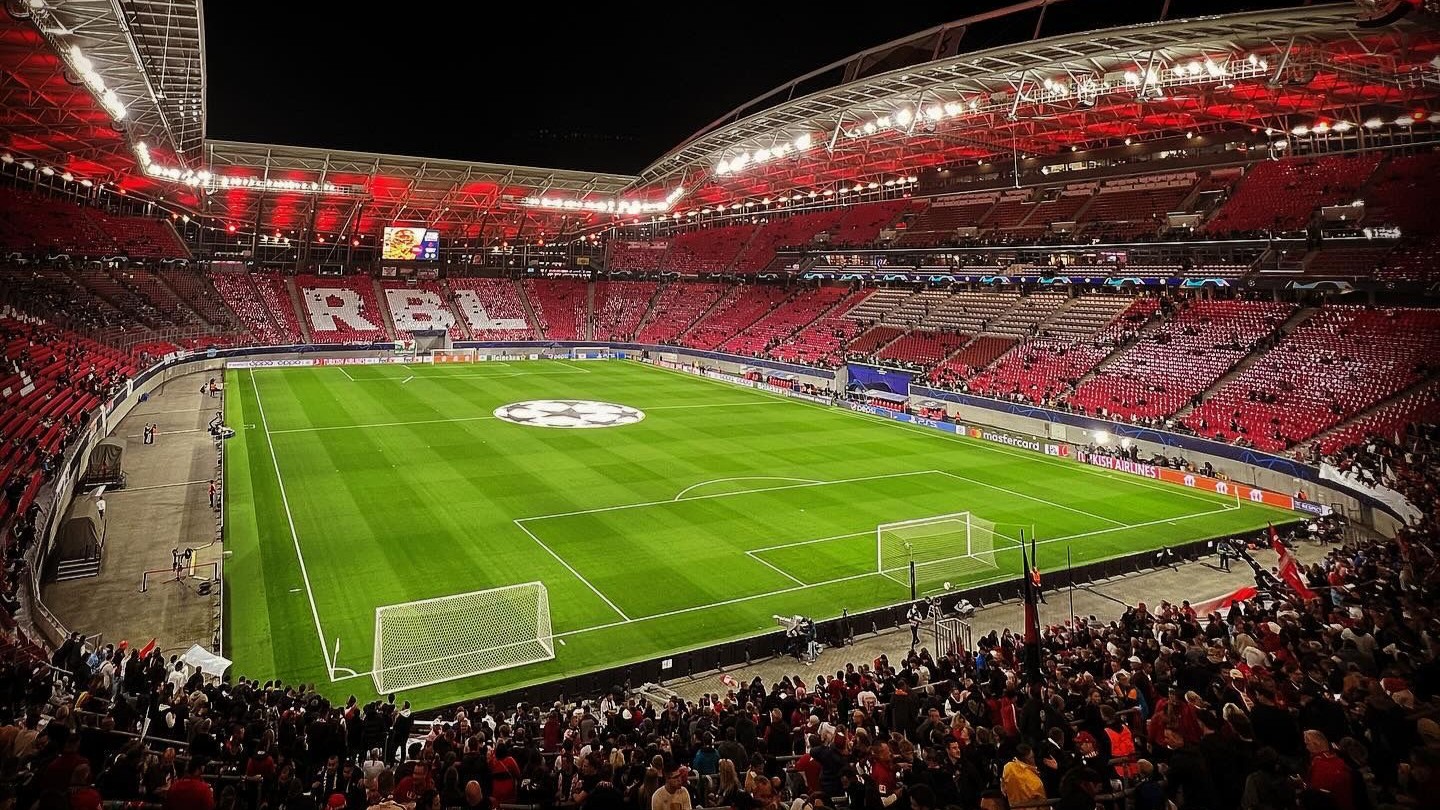
No MCO model has been more consistent in converting financial strategy into sporting output than Red Bull’s network spanning Salzburg, Leipzig, New York, Bragantino, and others. The architecture is deliberate: clubs are positioned at different stages of a talent pipeline, with Salzburg serving as the primary development node and Leipzig as the primary destination and showcase market.The results speak for themselves. Red Bull Salzburg has reached the UEFA Champions League group stage multiple times, a remarkable achievement for an Austrian club. RB Leipzig has consistently competed at the top of the Bundesliga and reached the semi-finals of the Champions League in 2020. Critically, the model generates financial returns alongside trophies: players developed internally are sold at significant premiums, with Leipzig alone spending over €500 million in net transfer activity over the past decade, funded largely by player sales from across the network.
Key transfer: Erling Haaland was purchased by Salzburg for €8M in 2019 and sold to Dortmund for €30M less than two years later, a transaction that exemplifies the MCO pipeline’s financial logic.
The Cautionary Tales: Instability as a Business Model
Standard Liège: When Governance Fails the Club
Few MCO failures are as instructive, or as painful as Standard Liège under 777 Partners. Acquired in 2022, the Liège club was positioned as the flagship Belgian asset in 777’s expanding multi-sport portfolio. The reality was far grimmer. Within two years, the club experienced multiple managerial changes, a collapsing wage structure, and growing fan unrest. Sporting results deteriorated sharply as financial instability at the parent level spilled directly onto the pitch. In May 2024, a Belgian court authorised the seizure of all 777 Partners’ assets in Belgium, including club accounts, stadium company shares, and related entities, following legal claims from former owner Bruno Venanzi over unpaid obligations. For Standard, a club with a proud European history, this represented not just a sporting failure but an existential governance crisis.
Lesson: Short coaching cycles, four managers in under three seasons, destroyed any coherent sporting identity. Without stability at management level, no tactical or recruitment philosophy can take root.
Hertha Berlin: The Investor Misalignment Case
Hertha Berlin’s recent history offers a different but equally instructive cautionary tale. A succession of high-profile investors, Lars Windhorst injecting over €374 million through Tennor Holding between 2019 and 2021, created expectations the club structurally could not meet. The capital infusion was not accompanied by proportionate sporting infrastructure. Managerial changes multiplied; three permanent head coaches and multiple interim appointments between 2020 and 2023 reflected a club unable to define its footballing identity. The consequences were both sporting and financial: Hertha were relegated from the Bundesliga in 2023, triggering significant drops in broadcasting revenue, squad value, and commercial attractiveness. For a club that had positioned itself as a potential top-six Bundesliga force, the descent represented a failure not of ambition but of execution coherence.
Financial consequence: Relegation reduced Hertha’s annual Bundesliga broadcast income by approximately €30–40M, a structural shock that destabilised the club’s ability to service existing obligations.
Vasco da Gama: Cultural Friction in South America
777 Partners also acquired a 70% stake in Vasco da Gama in late 2022, promising financial modernisation to one of Brazilian football’s most storied clubs. The execution has been turbulent. Governance disputes between the US-based ownership and the club’s traditional membership structure, a socio model deeply embedded in Brazilian football culture, led to legal battles, administrative paralysis, and sporting mediocrity. Vasco’s experience highlights a dimension of MCO risk that financial models rarely capture: institutional culture clash. Clubs in certain markets are not merely commercial entities; they are democratic institutions governed by member assemblies. Imposing a private equity operating logic onto such structures without adaptation creates friction that no amount of capital can immediately resolve.
The Structural Trends: Short Cycles, Player Trading, and the Fading of Local Identity
The Managerial Revolving Door
One of the most consistent structural symptoms of MCO governance dysfunction is the accelerated turnover of head coaches. Where a traditional owner might grant a manager three or four seasons to build a project, PE-backed MCO models, with their quarterly-inflected performance expectations, tend to pull the trigger faster. The data across 777 Partners’ clubs is illustrative: Standard Liège, Hertha, Genoa, and Vasco collectively cycled through more than fifteen managerial appointments in a five-year window. This instability is not incidental, it is symptomatic of a parent-level strategy that prioritises short-term result correction over long-term project coherence.
| Club | Owner | Managers (2019–2024) | Sporting Outcome |
|---|---|---|---|
| Standard Liège | 777 Partners | 5+ | Governance crisis, asset seizure |
| Hertha Berlin | Windhorst / 777 | 6+ | Bundesliga relegation (2023) |
| RB Leipzig | Red Bull | 3 | UCL semi-final, consistent top 4 |
| AC Milan | RedBird | 2 | Serie A title (2022) |
| Vasco da Gama | 777 Partners | 4+ | Legal disputes, mid-table |
Player Trading as a Financial Lever, Not a Sporting Strategy
In well-structured MCO models like Red Bull, player trading is a deliberate financial mechanism. Talent is acquired at a discount, developed systematically, and sold at a premium, generating both recurring transfer income and squad renewal. This is a coherent, repeatable model that aligns financial and sporting incentives. In less disciplined MCO networks, however, player trading becomes reactive rather than strategic. Clubs sell their most valuable assets not to fund a pre-planned replacement cycle, but to manage short-term liquidity crises at the group level. The result is sporting regression dressed up in transfer market activity.
Contrast: Red Bull’s structured pipeline generated over €200M in transfer profits from Haaland, Mané, and Upamecano across its network. In contrast, 777 Partners clubs frequently sold key players under financial duress, receiving below-market valuations with no reinvestment plan.
The Erosion of Local Identity and Youth Development
Perhaps the least quantifiable, but most deeply felt, consequence of MCO strategies is the gradual erosion of local talent pipelines and regional identity. Traditional clubs historically served dual roles: professional sport and community anchor, with youth academies feeding both the first team and the local footballing culture.
Under MCO models optimised for player trading and network efficiency, youth development often becomes a network function rather than a local one. Promising youngsters are moved across affiliated clubs for tax, registration, or commercial reasons. Local scouts are replaced by centralised data-driven recruitment teams. The result is clubs that feel increasingly disconnected from their cities, a slow but measurable erosion of what makes football meaningful to supporters.
The result is clubs that feel increasingly disconnected from their cities, a slow but measurable erosion of what makes football meaningful to supporters.
Conclusion: The Verdict Is Still Being Written
The evidence surveyed in this article resists a clean verdict. Multi-club ownership can produce extraordinary sporting outcomes when the model is built on coherent sporting philosophy, patient capital, and genuine network integration. The Red Bull example is not a fluke, it is a proof of concept. AC Milan’s resurgence under RedBird, though more recent and contingent, points in a similar direction.
But the wreckage at Standard Liège, Hertha Berlin, and Vasco da Gama is equally real. And the structural trends, short coaching cycles, player trading as financial management, declining local talent pathways, represent systemic pressures that affect the entire MCO ecosystem, not just its weakest nodes.
Sporting results, it turns out, are not simply a function of investment volume. They are a function of investment coherence. Capital allocated without a clear footballing vision tends to produce instability, not trophies. The clubs that have succeeded under MCO are those where financial strategy and sporting strategy were designed together, not bolted onto each other after the fact.
Yet sporting outcomes are only one side of the ledger. Behind every managerial dismissal, every intra-network transfer, and every relegation clause lies a deeper financial reality that shapes how MCO networks truly operate. In the next article, we explore that dimension directly: how the transfer market functions as a financial engine within these networks, whether rising club valuations genuinely reflect sporting health or accounting creativity, and what the real cost of sporting instability looks like on a balance sheet.