
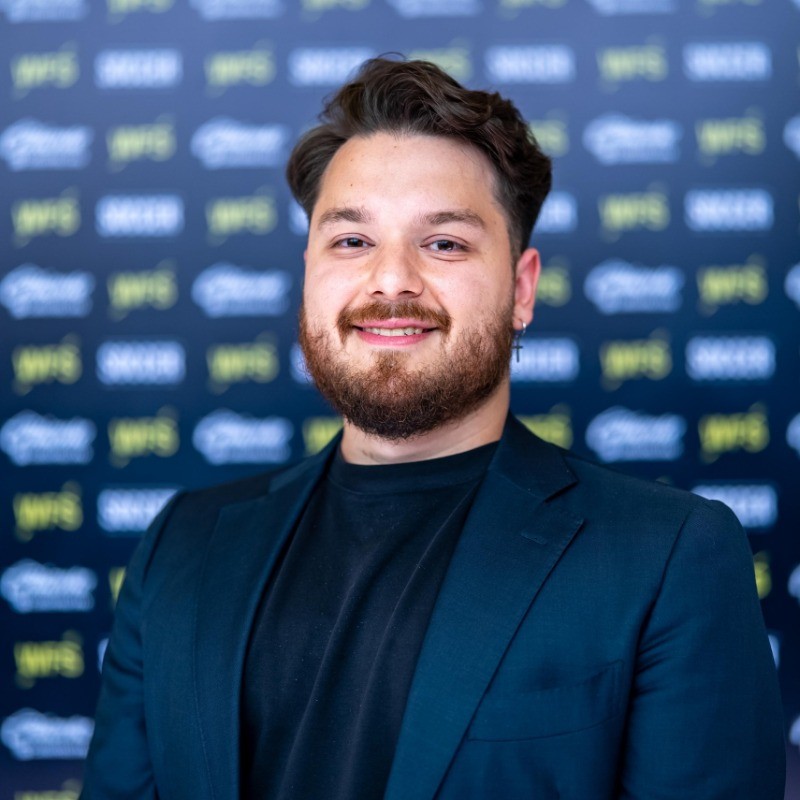

Profile
Role: Chief Scout and scouting leader
Specialisation: Scouting, recruitment, talent identification and squad planning
Experience: More than sixteen years inside professional football, fourteen of them across LaLiga clubs, including Granada, Real Valladolid and Orlegi
Focus Areas: Recruitment strategy, scouting departments, data analysis, live evaluation, regulatory context and multi-club methodology
Key Insights
- José Manuel Hernández views scouting as a strategic process of talent identification and anticipation of future performance.
- His experience includes building scouting departments at Granada and Real Valladolid and working across European, South American, Spanish and Mexican football contexts.
- He combines live evaluation, data platforms, regulatory understanding and broader strategic thinking in recruitment decisions.
Our Exclusive Interview with José Manuel Hernández
You have spent more than sixteen years inside professional football, fourteen of them across LaLiga clubs, and you describe scouting as a strategic function rather than a support role. How do you make that case to a sporting director who still treats recruitment as a service department?
The first thing I’d say is that a lack of alignment in the vision of a project condemns it to failure it’s only a matter of time. If we don’t share the basic ideas and the way we look at developing the project, cracks will eventually appear. That said, if I had to convince him of one thing, it would be this: scouting is a process of talent identification and anticipation of future performance, and like any process, it needs time to develop properly. Building a squad is one of the most delicate and important processes a club undertakes from a sporting standpoint, results depend heavily on it, and from an economic standpoint, you’re making decisions about possibly the club’s most important assets, the ones capable of generating the greatest financial return. That kind of decision-making deserves a process with timeframes that allow you to actually build a strategy.
That kind of decision-making deserves a process with timeframes that allow you to actually build a strategy.
Several of the players you helped identify and develop moved on for large multiples of their cost Bryan Zaragoza from Granada’s youth ranks to Bayern Munich, Raúl Moro to Ajax, Iván Fresneda to Sporting. When you look back, what did those calls have in common at the moment you first flagged the player?
These are very different situations. Bryan and Iván came up through the academy, and the signs that they were different were very clear what was needed was to convince the people responsible for making decisions at the time. Moro’s case was different: he was a player with an important track record, coming off a very strong half-season at Oviedo, and we saw qualities in him that suited us very well in the short term and that we believed would develop a lot in the medium term. In the first two cases, the players showed an out-of-the-ordinary talent; it was more a process of adapting our internal processes, trusting them, and finding the moment and the way to give them the opportunity to prove themselves. In Moro’s case, very close monitoring from the moment he signed for Lazio, and much closer still when he played at Oviedo, led to the decision to bring him in.
You set up and led scouting departments as Chief Scout at both Granada and Real Valladolid. When you arrive at a club whose recruitment structure is underdeveloped, what do you build first?
It’s a process of reverse engineering. You have both ends of the rope: the overall vision for the project and for the department that is, the end point and the starting point, where you actually begin. In between, you need to interpret the context: available resources, short- and medium-term demands, specific roles within the department, and you use all of that information as tools to build the process. In my view, choosing the right people and roles, and deciding where to focus, is fundamental. That will shape the club’s recruitment policy in the medium term if you’re truly a functional department, one that’s taken seriously.

You work fluently with platforms such as Impect, Driblab and Skillcorner alongside live evaluation. Where do you let the data lead, and where do you still trust the eye over the model?
As you said, data helps you, it guides you, but decisions can’t be made without qualitative analysis. Ultimately, scouting is a process of talent identification it’s people evaluating and trying to anticipate the performance of other people. Data, used well, helps cut through a lot of noise. But if you don’t know what information you want it to help you decode, and you handle it without objectives or knowledge, you’ll only get more noise. The true scout of our era is able to coexist with data, accepting it as a help rather than an enemy you need the ability to read the whole picture. If I’m watching something and the data shows me the opposite, I need to have the humility and the judgment to review both the data and my own view, to see which part of the puzzle I’m missing.
The true scout of our era is able to coexist with data, accepting it as a help rather than an enemy you need the ability to read the whole picture.
Your scouting has covered European and South American markets, and you have studied other country rules and squad frameworks. To what extent do you think the regulatory context influences the planning and construction of a squad?
It’s absolutely fundamental it’s part of the context. Regulation shapes both the macro and micro aspects of squad design. If I’m building a squad in Spain and I don’t have at least a basic understanding of the salary cap system, I’m risking wasting time and money, and I’ll likely end up getting things wrong more often than right. In MLS, for example, not knowing how rosters are built is like watching players with a blindfold on. If I’m evaluating a player as a potential signing and I’m a professional scout, I have to be able to anticipate the question my bosses will ask: is it worth using a Designated Player slot, or does my level of conviction only justify an international slot? Anticipating performance means not just identifying and evaluating, but also valuing and framing your opinions. A scout is paid for a very specific level of expertise whose almost sole output, as far as the club is concerned, is his opinion.

How does the way you value a player change as you move between those markets?
In my case, today I have to be able to understand which players can deliver the impact a second-division club in Spain needs one whose fanbase and pressure are more typical of Spain’s top division and which players can make a clear impact in a league with very different demands and context, one with a sporting and social culture that is close to Spain’s but still quite different, with everything that implies. I need a deep understanding of each club’s sporting, social, regulatory, and squad-need context, to interpret and translate those needs, and to picture whether the player in front of me can deliver and if so, what exactly he can bring to each context while accepting the opportunity cost involved if things don’t turn out as expected.
At Orlegi you scout inside a multi-club group that spans Spanish and Mexican football. How do you align methodology and reporting standards so that a recommendation made in one club’s context still holds up across the group?
The first step is not to generalize to understand that these are very different, specific contexts. A report’s structure generally has a lot in common across clubs; where things really diverge is the moment you report on and propose something concrete. For a player to be potentially viable across the group’s clubs, he needs to align with a set of basic characteristics set by ownership and leadership. Once he clears that filter, you have to assess whether his profile’s tactical fit can realistically be put to use in the contexts the group offers and from there, a lot depends on other factors as to whether that move across clubs can actually happen effectively.
You trained in law and political science before completing your master’s as a sporting director. How does that earlier training show up in the way you structure recruitment decisions today?
Without deliberately seeking it out, they’ve proven useful in an organic way. My law degree gave me tools not just to take an interest in regulatory systems but to actually study and understand them, giving them the weight they deserve, and to be able to factor many things into a single decision regulatory and contractual legality, financial context, tax context, and so on. Political science helps develop the more strategic side of your mindset the way you look at the bigger picture of a situation, a project, or a problem shapes your perspective. One of political science’s aims is to be able to see all the possible angles of a problem before analyzing it, and that’s something that applies to almost any area of life.
One of political science’s aims is to be able to see all the possible angles of a problem before analyzing it, and that’s something that applies to almost any area of life.
FAQ
Who is José Manuel Hernández?
José Manuel Hernández is a scouting and recruitment professional with more than sixteen years inside professional football, fourteen of them across LaLiga clubs.
Which clubs has José Manuel Hernández worked with?
José Manuel Hernández has worked as Chief Scout at both Granada and Real Valladolid, and also scouts inside Orlegi, a multi-club group that spans Spanish and Mexican football.
What is José Manuel Hernández’s approach to scouting?
José Manuel Hernández describes scouting as a strategic function focused on talent identification, anticipation of future performance, data, live evaluation and context.