

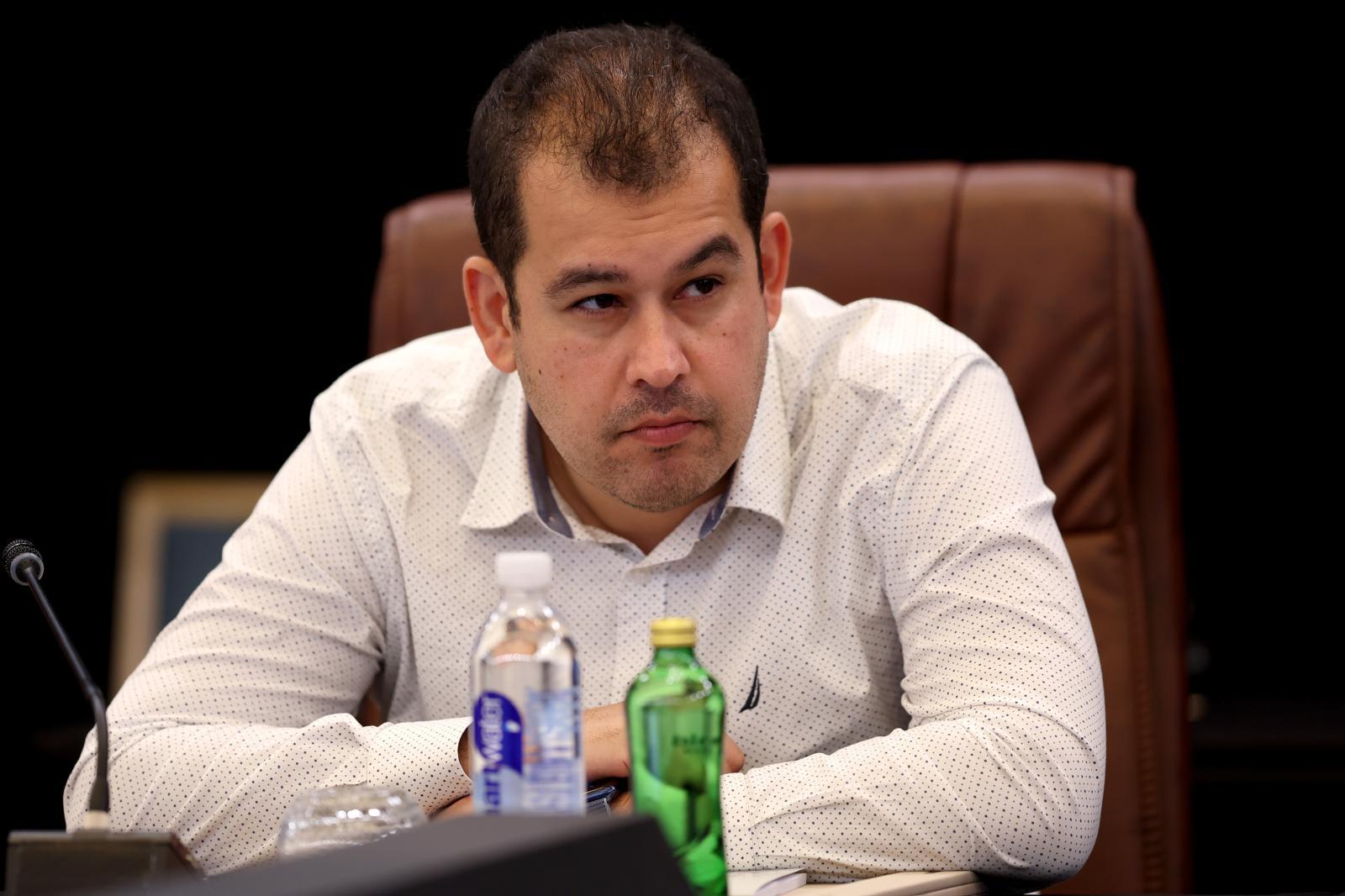
Profile
Role: Football executive, General Manager, Sporting Director, scouting leader and General Coordinator of the Turkish First League Clubs’ Union Association
Specialisation: International relations, general management, scouting, sporting direction, league governance and recruitment
Experience: Guadagno Sports Assessoria Esportiva, Giresunspor, Kardemir Karabükspor, Adanaspor, İstanbulspor, Trabzonspor and Turkish First League Clubs’ Union Association
Focus Areas: Club management, sporting strategy, scouting, player identification, governance, recruitment, squad planning and football education
A Rare Profile in Turkish Football
Eren Mert represents a rare profile in Turkish football: an executive who has built genuine expertise across nearly every functional layer of a football club, from international relations and general management to scouting and sporting direction. Over almost two decades, he has combined hands-on operational leadership with one of the most extensive academic educations in the industry, positioning him as a sophisticated and globally connected football executive.
Eren Mert represents a rare profile in Turkish football: an executive who has built genuine expertise across nearly every functional layer of a football club, from international relations and general management to scouting and sporting direction.
International Relations and Club Management
Mert began his career outside Turkey, working as Turkey Representative for the Brazilian agency Guadagno Sports Assessoria Esportiva between 2007 and 2009, an experience that gave him early exposure to South American football networks and international player markets. He then returned to Turkey, joining Giresunspor in international relations before moving to Kardemir Karabükspor as General Manager Assistant and Interpreter, roles that combined administrative responsibility with the cross-cultural fluency that would come to define much of his career.
Promotion Success at Adanaspor and İstanbulspor
His first major executive position came at Adanaspor, where he served as General Manager and Presidential Advisor from 2013 to 2017. During this period, the club won the Turkish First League title and secured promotion to the Süper Lig in 2016, a significant achievement that established Mert as a credible figure in senior club management. He carried that momentum into an even longer tenure at İstanbulspor, where he held the dual role of General Manager and Sporting Director for six years, from 2017 to 2023. Under his leadership, İstanbulspor won the Turkish First League play-offs and achieved promotion to the Süper Lig in 2022, a result that underlined his ability to combine organisational management with sporting strategy over a sustained period.
Trabzonspor and Turkish Football Governance
Between 2023 and 2026, Mert was part of the leadership structure at Trabzonspor, one of Turkey’s most prominent clubs, initially as Chief Scout and Presidential Advisor and subsequently as Presidential Advisor and Head of Scouting. During his time at Trabzonspor, the club reached consecutive Turkish Cup finals, finishing as runner-up in 2024 and 2025 before winning the trophy outright in 2026, a trajectory that reflects the sustained competitiveness the organisation maintained throughout his involvement. Mert has now concluded his chapter at Trabzonspor and is available for new challenges.
Throughout his career, Mert has remained closely connected to the structural side of Turkish football as General Coordinator of the Turkish First League Clubs’ Union Association, a position he has held since 2020 alongside his club duties. This role has given him a broader institutional perspective on the league system, governance, and the collective interests of First League clubs, complementing his club-level experience with a wider understanding of how Turkish football is organised and governed.
Academic Preparation and Modern Scouting
What distinguishes Mert most clearly is the depth of his academic preparation. He holds a degree in Business Administration from Koç University, a postgraduate degree in Football Management from the Johan Cruyff Institute in Spain, a UEFA Certificate in Football Management from the University of Lausanne, and a Master in Sports Management from Bahçeşehir University. He has since added the UEFA Elite Scout Programme, a FIFA Diploma in Club Management, and the UEFA Sporting Director Programme to his qualifications, and is currently completing a PhD in Sports Management at İstanbul Gedik University. Few executives in Turkish football combine this level of formal football education with such varied operational experience.
Few executives in Turkish football combine this level of formal football education with such varied operational experience.
Fluent in Turkish, English and Portuguese, with an upper intermediate command of Spanish, and proficient across the major scouting and data platforms used in modern recruitment including Wyscout, InStat and TransferRoom, Mert operates comfortably across both the relational and analytical dimensions of contemporary football. His career path, from international representative to general manager, sporting director and scouting leader at one of Turkey’s most prominent clubs, reflects a professional who has continually expanded his remit while deepening his expertise, and whose profile is now available to organisations seeking an executive of rare breadth and proven impact.
Key Insights
- Eren Mert has built experience across international relations, general management, sporting direction, scouting leadership and league governance.
- He helped Adanaspor and İstanbulspor achieve promotion to the Süper Lig and later contributed to Trabzonspor’s sustained Turkish Cup competitiveness.
- His profile combines operational football leadership, extensive academic preparation and modern scouting knowledge across data, relationships and judgement.
Our Exclusive Interview with Eren Mert
You began your career working internationally with a Brazilian sports agency before returning to Turkey to take on roles in club management. How did that early international experience shape the way you later approached recruitment, governance and club leadership in Turkish football?
Looking back, I believe starting my career outside Türkiye was one of the greatest advantages I could have had.
Before I developed fixed ideas about football, I had the opportunity to experience a completely different football culture. That shaped the way I think to this day. It taught me that while talent may be universal, the environments that develop, value and manage talent are not. Every football market has its own culture, its own dynamics and its own way of making decisions.
That experience fundamentally changed how I approached recruitment.
For many people, recruitment starts with identifying talented players. For me, that has never been enough. Talent is only the beginning. The more important question is whether a player is the right fit for a particular club, a particular coach and a particular football environment.
Over the years, I have come to believe that successful recruitment is rarely about finding the most talented player. More often, it is about finding the right player, at the right moment, for the right club.
Working internationally also influenced my understanding of leadership. Experiencing different football cultures taught me not to look for perfect models to copy, but for principles that could be adapted. Every successful club has its own identity. There is no universal blueprint. The challenge is to build an organisation that reflects its own culture, ambitions and long-term vision.
That belief has remained constant throughout my career, whether I have worked in general management, sporting leadership or scouting.
Football is often described as a people business, and I agree. But I also believe it is a decision-making business. Players, coaches and executives all become part of that process.
The better the environment, the better the decisions. And over time, better decisions build better football clubs.
The better the environment, the better the decisions. And over time, better decisions build better football clubs.
You have held the dual role of General Manager and Sporting Director at both Adanaspor and İstanbulspor, leading both clubs to promotion to the Süper Lig. What does it take to align administrative leadership and sporting strategy effectively when you are responsible for both at the same time?
Holding both roles taught me one lesson that has stayed with me throughout my career.
Football decisions and business decisions are never separate.
Every sporting decision has financial consequences, and every financial decision eventually influences what happens on the pitch. If those two perspectives are not aligned, a club gradually starts working against itself.
That is why I never saw my responsibility as simply building a better squad. My responsibility was to build alignment. Alignment between ownership and the football department. Between the coaching staff and recruitment. Between ambition and financial reality.
When everyone understands the same objective, decision-making becomes clearer. And when decision-making becomes clearer, the club becomes more stable.
People often remember promotion because of an important match or a successful transfer. My experience has been different. Promotion is usually the result of hundreds of small decisions made consistently over a long period of time. Recruitment, contract management, budget discipline, communication, planning. None of those things make headlines on their own. Together, they build winning organisations.
One principle has guided me throughout my career. Transfer windows should never be the moment when clubs decide what they need. They should be the moment when months of preparation are executed with clarity and conviction. Good organisations don’t react well. They prepare well.
Looking back, I don’t think our greatest achievement was simply reaching the Süper Lig. It was creating an environment where good decisions could be made consistently, even under pressure. Because success is rarely built on one exceptional decision. It is built on a culture that allows good decisions to be repeated, year after year.
Since 2020, you have also served as General Coordinator of the Turkish First League Clubs’ Union Association alongside your club roles. How has this institutional perspective on the league as a whole influenced the way you evaluate decisions at club level?
Working at league level gave me something that club football alone could never provide.
Perspective.
Inside a club, every decision feels urgent because you naturally see the game through the needs of one organisation. Results, transfers and daily challenges become your immediate focus. Working with the First League Clubs’ Union allowed me to step back and see the bigger picture. It reminded me that football is not simply a competition between clubs. It is an ecosystem where the quality of the whole ultimately affects the quality of each individual club.
That experience changed the way I make decisions. Today, I try to separate urgency from importance. Not every problem should be solved immediately. Some problems require patience. Some require better structures. Some require cooperation rather than reaction.
I also became much more aware of the role governance plays in sporting success. Financial sustainability, competition regulations, youth development and institutional stability may not attract the same attention as transfers or results, but they influence every important decision a football club makes.
One habit I developed during that period has stayed with me ever since. Whenever we face an important decision, I ask myself two questions. Will this help us today? And will it still be the right decision three years from now? If both answers are yes, we are usually moving in the right direction.
Football will always reward good teams. Over time, it also rewards well-governed clubs.
Your transition from General Manager and Sporting Director into scouting leadership at Trabzonspor marked a shift toward a more specialised recruitment function. What unique advantages does your background in executive management bring to your work in scouting and player identification?
People often think scouting is about finding talented players.
I believe it is about reducing uncertainty.
Every transfer carries risk. The role of a scouting department is not to eliminate that risk, that is impossible, but to make better-informed decisions before the club commits to one.
My background in executive management naturally shapes the way I approach recruitment because I understand everything that happens after a player signs. A transfer does not only affect the starting eleven. It affects the budget. The dressing room. The academy. Future transfer windows. Even the identity of the team.
That is why I have never evaluated players in isolation. Technical ability will always matter. But so will personality, professionalism, adaptability, decision-making and character. Sometimes the most talented player is not the right player. The right player is the one who strengthens the club, not just the team.
Today we have more information than ever before. Data helps us identify profiles. Live observation helps us understand behaviours. Experience helps us interpret both. The objective is not to collect information. The objective is to make better decisions because of it.
Ultimately, I don’t believe the quality of a scouting department should be measured by the number of players it recommends. It should be measured by the quality of the decisions it helps the club make.
Ultimately, I don’t believe the quality of a scouting department should be measured by the number of players it recommends.
Trabzonspor reached three consecutive Turkish Cup finals during your time with the club, culminating in winning the trophy in 2026. What role did scouting and squad planning play in building the depth and consistency required to compete at that level over multiple seasons?
People often judge a squad by its starting eleven.
I have always believed that successful seasons are built far beyond the starting eleven.
Winning one important match is difficult. Remaining competitive over several seasons is much more demanding. That requires planning long before problems appear. In football, injuries, suspensions, fixture congestion and fluctuations in form are not unexpected events. They are part of every season. The role of scouting is to anticipate those moments before they arrive.
That is why squad planning should never focus only on today’s needs. It should also anticipate tomorrow’s challenges. We constantly ask ourselves difficult questions. Where are we vulnerable? Which positions will need succession in twelve or twenty-four months? How can we improve the squad without disrupting its balance? Those conversations are just as important as identifying talented players.
At clubs competing for trophies every season, depth is not simply about numbers. It is about maintaining the same football identity regardless of who is on the pitch. The objective is to build a squad where every player understands his role, accepts his responsibility and can contribute when the moment arrives.
In my experience, consistency is never created during a final. It is created months earlier, through disciplined planning, patient recruitment and thousands of decisions that supporters rarely see. The trophy is only the visible outcome. The real work happens long before it is lifted.
You hold an unusually broad academic portfolio, including qualifications from the Johan Cruyff Institute, the University of Lausanne, UEFA’s Elite Scout and Sporting Director Programmes, a FIFA Diploma in Club Management, alongside an ongoing PhD. How directly do you draw on this academic background in your day-to-day decision making, and which programme has had the greatest practical impact on your work?
I have never viewed education as something separate from professional experience.
For me, they strengthen one another.
Experience teaches you what happened. Education challenges you to understand why it happened. That distinction is extremely valuable in football, where decisions often need to be made quickly and under constant pressure.
Every programme I have completed has contributed something different. Some expanded my understanding of governance. Others improved my approach to recruitment, leadership or organisational structure. Just as importantly, they allowed me to exchange ideas with professionals working in different countries and different football cultures. Those conversations have often been as valuable as the curriculum itself.
If I had to identify the programme that has influenced my daily work the most, I would probably point to the UEFA Sporting Director Programme. Not because it provided ready-made answers, but because it encouraged me to ask better questions. Over time, I have realised that the quality of an executive is often determined not by how many answers he has, but by the quality of the questions he asks before making an important decision.
That mindset has stayed with me throughout my career.
I also believe education should make you more adaptable rather than more certain. Football evolves constantly. Markets change. Technologies change. Leadership challenges change. The willingness to keep learning is, in my opinion, one of the most important responsibilities of anyone working in modern football.
No qualification replaces experience. But the right education allows experience to become better judgement.
Modern scouting increasingly depends on data platforms such as Wyscout, InStat and TransferRoom, yet you also bring nearly two decades of relationship-driven experience across different football markets. How do you balance data-driven analysis with experience and personal judgement when making recruitment decisions?
People sometimes describe data and experience as if they represent two different philosophies.
I have never believed that.
For me, they are simply different sources of information serving the same objective.
Data has transformed modern recruitment. It allows us to analyse more players, compare profiles more objectively and identify opportunities that might otherwise remain unnoticed. No modern football club can ignore those advantages.
At the same time, football remains a game played by people. Statistics can explain performance. They cannot fully explain personality, resilience, adaptability or character. Those qualities still require observation, conversation and experience.
That is why I never want one source of information to replace another. Data should challenge our opinions. Live scouting should challenge the data. Experience should challenge both. Only then do we begin to see the complete picture.
Throughout my career, I have learned that the quality of recruitment rarely depends on how much information you collect. It depends on how well you interpret it.
Technology will continue to evolve, and rightly so. But football will always require judgement. Because in the end, data does not make decisions. People do. The responsibility of a modern football executive is to make sure those decisions are informed by every available source of knowledge, without ever forgetting the human side of the game.
Having worked across international relations, general management, sporting direction, league governance and now scouting leadership, which of these functions do you believe is most misunderstood by clubs? And if you could change one thing about the way Turkish clubs structure their football departments, what would it be?
Without hesitation, I would say the role of the Sporting Director.
Too often, it is reduced to transfers or recruitment.
In reality, its responsibility is much broader. A Sporting Director should be the guardian of the club’s football identity. Players will change. Coaches will change. Executives will change. The club’s football philosophy should not. That continuity is what allows an organisation to improve year after year instead of rebuilding itself every few seasons.
If I could change one thing, it would not simply be organisational charts or job titles. It would be the alignment between people. The strongest football departments are not necessarily those with the biggest budgets. They are the ones where ownership, executive leadership, coaching staff, recruitment, academy, medical and performance departments all work towards the same long-term objective.
Structure matters. But shared purpose matters even more.
Throughout my career, I have become increasingly convinced that football clubs are not ultimately defined by the transfers they complete or the trophies they win. They are defined by the quality of the decisions they make over many years.
Results will always matter. They should. But results are usually the consequence of decisions made long before match day. If, over time, a club becomes stronger, healthier and better prepared because of the decisions you helped make, then I believe you have fulfilled your responsibility as a football executive.
For me, that is the real measure of success.
FAQ
Who is Eren Mert?
Eren Mert is a Turkish football executive with experience across international relations, general management, sporting direction, scouting leadership and league governance.
Which clubs has Eren Mert worked with?
Eren Mert has worked with Guadagno Sports Assessoria Esportiva, Giresunspor, Kardemir Karabükspor, Adanaspor, İstanbulspor, Trabzonspor and the Turkish First League Clubs’ Union Association.
What is Eren Mert’s area of expertise?
Eren Mert’s expertise spans club management, sporting strategy, scouting, player identification, governance, recruitment, squad planning and football education.