

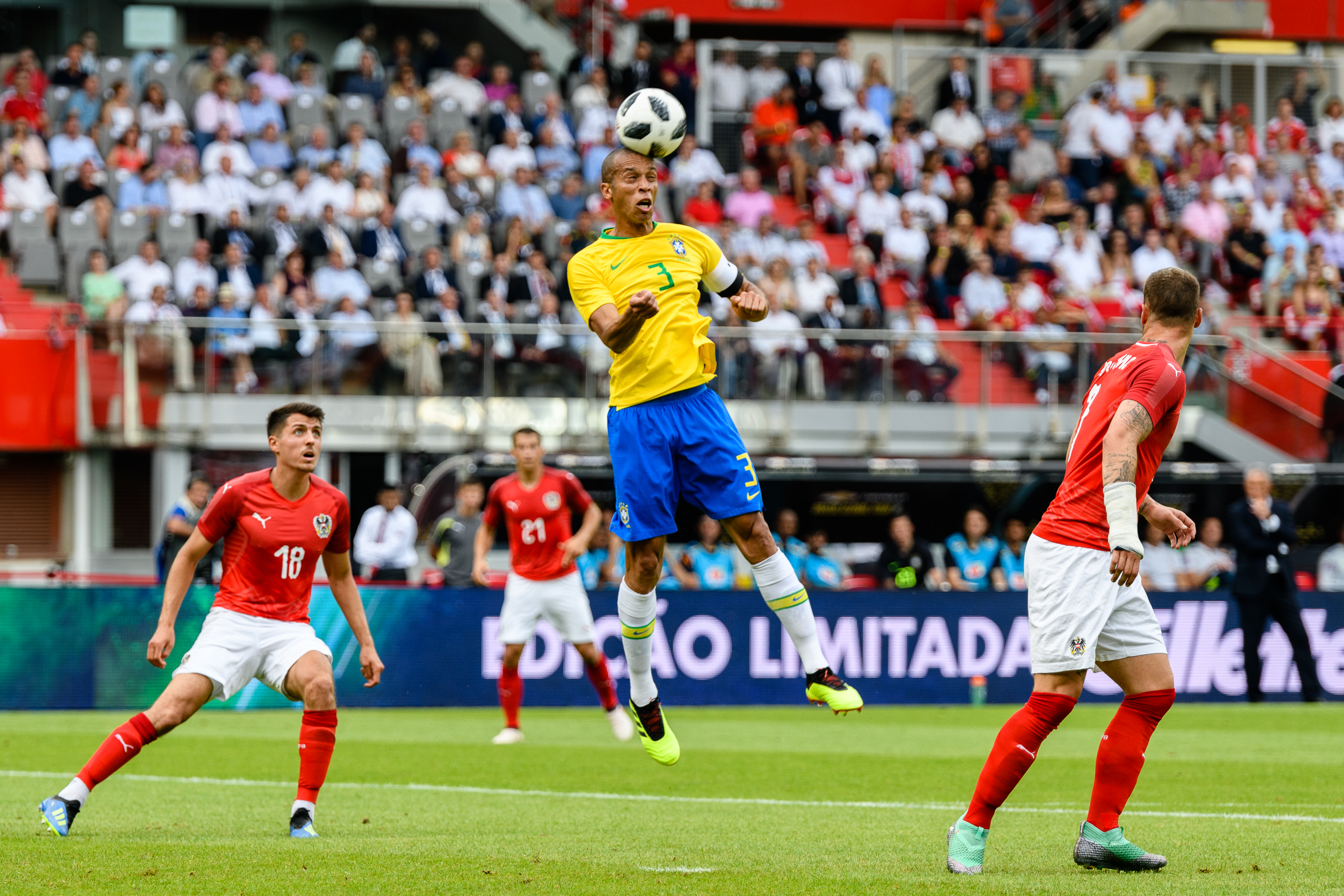

A friendly match is usually seen as a normal part of tournament preparation. Coaches test tactical ideas, players gain rhythm, and national teams adapt to local conditions before a major competition.
Before the FIFA World Cup 26, however, a friendly may become more than a sporting exercise. If it is played in one of the host countries during the pre-tournament period, it may also fall within a wider legal framework shaped by FIFA’s approval rules, media rights, commercial restrictions, brand protection rules, disciplinary jurisdiction and player protection mechanisms.
This does not mean that every friendly becomes an official World Cup match. It does not. But it does mean that the legal status of a pre-tournament friendly can be more complex than it first appears.
A match may remain a friendly on the pitch, while becoming World Cup-related content, a regulated commercial asset and a risk-management issue off the pitch.
A match may remain a friendly on the pitch, while becoming World Cup-related content, a regulated commercial asset and a risk-management issue off the pitch.
The legal starting point: Article 17 of the FIFA World Cup 26 Regulations
Article 17 of the FIFA World Cup 26 Regulations deals specifically with friendly and preparation matches. It allows each participating team to play friendly matches and other preparation matches, including closed-door training matches, from the date of its arrival in one of the host countries until five days before its first World Cup match. However, this is subject to the approval procedure under the FIFA Regulations Governing International Matches and to prior approval from the relevant host member association, the confederations concerned and FIFA.
Article 17 also imposes clear restrictions. Friendly or preparation matches in stadiums selected for use during the final competition are prohibited in principle. Requests to play at Team Base Camp Training Sites or Venue-Specific Training Sites may be considered, but FIFA may withhold approval, especially to protect pitch quality before the tournament. Teams drawn into the same World Cup group may not play against each other.
This shows that FIFA does not treat these matches as ordinary private events. They sit in a controlled space between national team preparation and tournament organisation.
Official friendlies and closed-door training matches should not be confused
Article 17 refers both to friendly/preparation matches and to closed-door training matches. But not every closed-door session should be understood in the same way as an official international “A” friendly.
Under the FIFA Regulations Governing International Matches, a tier 1 international match is a match involving the “A” representative teams of the member associations concerned. Such matches must follow the relevant authorisation procedure. FIFA’s match-agent and international match framework also distinguishes ordinary friendly arrangements from regulated international matches.
For approved friendly/preparation matches under Article 17, the FIFA World Cup 26 Regulations state that the matches must be played in accordance with the Laws of the Game because they count towards the FIFA/Coca-Cola Men’s World Ranking. Neutral FIFA referees from the 2026 FIFA Refereeing International Lists must also be appointed.
However, an informal or internal closed-door training exercise should not be presented as having the same legal status as an authorised international “A” friendly. The distinction matters for rankings, referee appointments, match reporting, insurance, discipline and commercialisation.
Commercialisation is allowed, but only within limits
Article 17.2 is central to the legal analysis. It provides that rights arising from an approved friendly and/or preparation match in a host country may be commercialised by the teams participating in that match. These rights include financial rights, audiovisual and radio recording rights, reproduction and broadcasting rights, multimedia rights, marketing and promotional rights and ticketing rights.
In practical terms, a national association may be able to sell tickets, arrange a broadcast, produce digital content, license highlights or activate its own partners around a pre-tournament friendly.
But this commercial freedom is not unlimited.
Article 17.2 expressly states that no association may be made with the FIFA World Cup 26 unless authorised. It gives the example of wording such as “Preparation match for the FIFA World Cup 26” as prohibited messaging if it creates an unauthorised association under FIFA’s Media and Marketing Regulations.
This is the key distinction. A national association may commercialise an approved friendly. But it cannot market that match as part of the official FIFA World Cup commercial programme unless FIFA allows it.
Ambush marketing is the real risk
The more precise term for unauthorised commercial association in this context is ambush marketing.
FIFA defines ambush marketing as prohibited marketing activity that seeks to take advantage of the public interest in an event by creating a commercial association or obtaining promotional exposure without authorisation. FIFA also states that ambush marketing may occur through advertising, promotions, ticket giveaways, indirect campaigns or physical on-site presence in or around event sites such as stadiums.
This matters because a national association sponsor is not automatically a FIFA World Cup sponsor. A brand may be allowed to appear in federation content, but it cannot imply that it is officially connected to FIFA or to the tournament.
For example, a sponsor of a national association may want to promote a friendly with phrases such as “Road to the World Cup”, “World Cup warm-up”, “official preparation match” or “countdown to 2026”. Some of these expressions may be acceptable in an editorial or generic sporting context. But once used in a commercial campaign, especially next to a brand logo or sponsorship message, they may create an unauthorised commercial association.
FIFA’s Intellectual Property Guidelines state that FIFA holds the intellectual property, media, marketing, licensing, ticketing and other commercial rights relating to the FIFA World Cup 26. The same guidelines explain that only FIFA rights holders are permitted to use official intellectual property for commercial purposes.
The legal issue is therefore not only whether a sponsor uses the official logo. It is whether the sponsor creates the impression that it is commercially associated with the World Cup.
Clean sites and Clean Zones also matter
The venue and timing of the friendly also matter.
If the friendly takes place at a Team Base Camp Training Site or a Venue-Specific Training Site, commercialisation is only permitted if the match takes place earlier than five days before the opening match of the World Cup. From five days before the opening match, only non-commercialised friendly or preparation matches may take place at those sites. If the match does not take place at an official competition site, commercialisation is permitted until five days before that team’s first World Cup match.
Even then, the permission to commercialise should not be read as a general licence to ignore FIFA’s clean event structure. The FIFA World Cup 26 Regulations provide that official training sites must be free of commercial activities and identifications, except for those of FIFA’s Commercial Affiliates, from at least 14 days before the opening match until the relevant end date set out in the regulations.
This compliance issue extends beyond the stadium gates. FIFA explains that Clean Zones around World Cup stadiums and other event sites are used to protect the integrity of the commercial programme. These zones are defined by map, not by a physical barrier, and restrict the commercial activities of unauthorised businesses on matchdays and in the days leading up to a match. FIFA also states that Clean Zones are generally prescribed by local laws or regulations and may restrict activities such as distribution of promotional items or flyers by non-sponsor businesses, unauthorised trading, counterfeit goods and unauthorised ticket sales.
This creates a practical compliance issue. A friendly may be commercially exploitable in principle, but the relevant site, signage, sponsor exposure, broadcast presentation, promotional activations and surrounding public areas must still be checked against FIFA’s clean site, Clean Zone and brand protection rules.
FIFA’s right to film the match
One of the most important provisions is Article 17.2(d). FIFA reserves the right to film any friendly or preparation match played by a participating member association in a host country after the Final Draw and before the start of the final competition. FIFA filming crews and photographers may be accredited for that match. Any footage captured may be provided to FIFA’s Media Rights Licensees as source material or as part of fully produced features and may be used in competition-related programming.
This is where a friendly can clearly become World Cup content.
This is where a friendly can clearly become World Cup content.
The match itself is still not an official World Cup match. But FIFA may use footage from that match in the wider tournament media ecosystem. This is commercially logical. Broadcasters need build-up material before the opening match: team arrivals, training footage, player stories, tactical previews, interviews and national team features.
This is why the legal control of pre-tournament friendlies matters. The match is not just a sporting preparation tool. It can also become broadcast material, sponsor-sensitive content and a source of digital storytelling.
The disciplinary layer: a friendly can still have sporting legal consequences
A pre-tournament friendly can also have disciplinary consequences.
The FIFA Disciplinary Code gives FIFA jurisdiction over international “A” friendly matches, friendly matches and competitions between representative teams or clubs belonging to different confederations, and matches involving invitational teams composed of players registered with clubs from different confederations.
This does not mean that every incident in a friendly automatically affects the World Cup. The correct position is more nuanced.
Under the FIFA Disciplinary Code, match suspensions imposed in relation to friendly matches are generally carried over to the representative team’s next friendly match. If a host representative team is not required to play qualifiers and its next official match is in the final competition, the Code still provides that the suspension is carried over to the representative team’s next friendly match.
Therefore, it would be too broad to say that a standard red card in a pre-tournament friendly automatically suspends the player for the first World Cup match.
However, serious disciplinary offences create a different level of risk. The FIFA Disciplinary Code identifies serious infringements such as discrimination, manipulation of football matches and competitions, misconduct against match officials, forgery and falsification, sexual abuse or harassment as matters that may justify wider disciplinary consequences, including worldwide extension of sanctions.
For that reason, national associations should not treat a friendly as legally harmless simply because it is not an official World Cup match. A serious incident before the tournament may lead to FIFA disciplinary proceedings, reputational damage, wider sanctions and potential player-availability risk, depending on the match status, the offence and the decision imposed.
The insurance layer: FIFA Club Protection Programme
There is another important layer: injury risk.
Professional players are employed by clubs, but during international duty they play for their national associations. If a player suffers a serious injury during a pre-tournament friendly or preparation period, the economic impact is often felt by the club that continues to pay the player’s salary.
The FIFA Club Protection Programme is designed to address part of this problem. FIFA’s 2023-2026 Technical Bulletin states that clubs are protected in cases of temporary total disablement caused by an accident suffered by a player during the operative time, where the injury prevents the player from playing for the club for more than 28 consecutive days.
The programme is limited. Compensation is based solely on the fixed salary paid directly by the club to the player as employer. It does not include variable amounts, one-off payments, irregular payments, performance bonuses, signing-on bonuses, appearance fees, expenses or amounts due for other services.
The compensation is also capped. Under the current programme parameters, the maximum compensation is EUR 7,500,000 per player per accident. This is calculated at a daily pro rata compensation of up to EUR 20,548, payable for a maximum of 365 days. The programme also has an aggregate annual limit of EUR 80,000,000.
For clubs with highly paid elite players, this is important. Any salary exposure above the cap, as well as sporting loss, transfer value loss, replacement-player cost and performance-related damage, remains outside the scope of the programme.
This is highly relevant for pre-World Cup friendlies. A national association may want the match to be properly approved and documented not only for sporting or commercial reasons, but also because the player protection and claims framework depends on whether the match falls within the relevant covered category.
The role of FIFA licensed match agents
Pre-tournament friendlies are often not organised only by the two associations. In practice, third-party organisers, promoters or match agents may be involved in arranging the match, venue, travel, broadcasting, ticketing and commercial packages.
FIFA states that member associations may arrange friendly matches independently. However, where associations belonging to different confederations engage individuals to arrange friendly matches between their teams, those individuals must hold a FIFA match agent licence in accordance with the Match Agents Regulations.
The FIFA Match Agents Regulations provide that agents who arrange matches between teams belonging to different confederations must hold a FIFA licence. The regulations also require written contracts and set out required contractual provisions, including travel, board and basic living costs, net indemnification, force majeure cancellation terms and the consequences if a player expected to appear does not play.
This matters for contract drafting.
If a match agent or third-party organiser is involved, the national association should ensure that the contract covers at least the following points:
- FIFA approval and host association approval.
- Compliance with the FIFA Regulations Governing International Matches.
- Compliance with Article 17 of the FIFA World Cup 26 Regulations.
- Compliance with the FIFA Match Agents Regulations.
- Commercial rights actually granted to the organiser.
- Rights that remain with the national associations.
- FIFA’s filming access and media rights licensee use.
- Ticketing and hospitality restrictions.
- Sponsor visibility, Clean Zone restrictions and ambush marketing controls.
- Liability for unauthorised use of FIFA intellectual property.
- Insurance, medical reporting and cooperation in case of injury.
- Disciplinary reporting and cooperation obligations.
- Governing law and dispute resolution.
The legal risk is not only that the match is poorly organised. The greater risk is that rights are sold or promised by a party that does not actually control them.
Why this matters for national associations
For participating member associations, the key question is not simply: “Can we play a friendly?”
The better question is: “What legal status will this friendly have?”
That status affects approval, ranking, referee appointments, match reporting, commercial rights, sponsor exposure, FIFA filming access, player protection and potential disciplinary consequences.
Before organising or commercialising a pre-tournament friendly, the association should therefore conduct a legal review covering:
- Whether the match is an authorised international “A” friendly or an informal training match.
- Whether FIFA, confederation and host association approvals are required and obtained.
- Whether the match falls within Article 17 of the FIFA World Cup 26 Regulations.
- Whether the venue is an official competition site, Team Base Camp Training Site, Venue-Specific Training Site or non-official venue.
- Whether commercialisation is permitted at that venue and at that time.
- Whether the proposed marketing creates an unauthorised association with the World Cup.
- Whether sponsors or broadcasters are using protected FIFA intellectual property.
- Whether Clean Site or Clean Zone restrictions apply.
- Whether FIFA’s filming rights and media rights licensees have been accounted for.
- Whether the match is covered by the FIFA Club Protection Programme.
- Whether any match agent or promoter has the required status and contractual authority.
This review should be done before tickets are sold, broadcast rights are granted or sponsor campaigns are launched.
Why this matters for sponsors and broadcasters
Sponsors need to understand the distinction between association rights and FIFA rights.
A sponsor of a national association may be able to appear in federation content. But that does not mean it can present itself as a World Cup sponsor. The difference is especially important in social media campaigns, countdown posts, highlight packages, match-day graphics, ticket giveaways and “presented by” formats.
Broadcasters face a different issue. A broadcaster may acquire rights to show a friendly from the participating associations or the relevant organiser. But that does not automatically allow the broadcaster to package the match as an official FIFA World Cup broadcast product. If FIFA has its own right to film the match and provide content to its Media Rights Licensees, the relationship between association-controlled match rights and FIFA-controlled tournament content must be addressed in advance.
The safest approach is to define the rights clearly before the match: live rights, delayed rights, highlights, archive use, social clips, behind-the-scenes access, sponsor integration, territory, language, duration and permitted wording.
Jurisdiction and dispute resolution
The dispute resolution route will depend on the nature of the issue.
Disciplinary matters may fall within FIFA, confederation or member association jurisdiction, depending on the match status and the teams involved. The FIFA Disciplinary Code gives FIFA jurisdiction over international “A” friendly matches and certain cross-confederation friendly matches, while confederations generally deal with friendly matches between teams belonging to the same confederation, provided that the competition is not organised by FIFA.
Club Protection Programme disputes require a more careful distinction. The Technical Bulletin states that disputes between football clubs and FIFA or other football governing bodies arising in relation to the programme are submitted to CAS. However, where FIFA assigns rights under its insurance policy to a club, disputes between the club and one or more insurers are subject to Swiss law and resolved by ad-hoc arbitration under the insurance framework. FIFA also states that it will compensate clubs only to the extent that it receives indemnification from the insurers, and that clubs accepting an assignment of rights waive further rights against FIFA.
Intellectual property and ambush marketing disputes may follow a different route. They may involve FIFA regulations and contractual undertakings, but they can also involve local trademark law, copyright law, unfair competition law, passing off, clean zone rules and other host-country enforcement mechanisms. FIFA’s IP Guidelines state that FIFA’s official intellectual property is protected by copyright, trademark and other forms of intellectual property, as well as laws such as unfair competition and passing off.
This is why legal teams should not assume that every dispute goes to the same forum. A single friendly may create FIFA regulatory issues, insurance-related claims, contractual disputes, CAS-related matters and local IP enforcement risks at the same time.
Conclusion
A pre-World Cup friendly is not automatically an official FIFA World Cup match. But if it is played in a host country, after the Final Draw and close to the tournament, it enters a regulated legal environment.
Article 17 allows teams to prepare and, in certain circumstances, to commercialise approved friendly or preparation matches. But that permission is limited by FIFA approval rules, clean site obligations, Clean Zone restrictions, media and marketing rules, ambush marketing controls and FIFA’s own filming rights.
The match may also have consequences beyond commercial rights. If it is an authorised international “A” friendly, it may affect rankings, trigger disciplinary jurisdiction and fall within the FIFA Club Protection Programme. If a third-party match agent or organiser is involved, the contractual chain must reflect FIFA’s approval and rights structure.
The practical lesson is simple: before a national association organises or sells rights to a pre-tournament friendly, it should treat the match as both a football fixture and a rights-management exercise.
In the World Cup environment, preparation is never just preparation.
In the World Cup environment, preparation is never just preparation.
Sources
- FIFA, Regulations for the FIFA World Cup 26, especially Article 17 on friendly/preparation matches and Article 21 on training sites.
- FIFA, Regulations Governing International Matches, especially the approval framework for tier 1 international matches.
- FIFA, FIFA Disciplinary Code 2025, especially jurisdiction, carrying over match suspensions and worldwide extension of sanctions.
- FIFA, FIFA Club Protection Programme 2023-2026, Circular no. 1852 and Technical Bulletin, especially coverage, limits, claims process, assignments of rights and dispute resolution.
- FIFA, FIFA World Cup 26 Intellectual Property Guidelines, June 2024, version 2.0, especially official IP, unauthorised association and commercial use.
- FIFA, Brand Protection, especially ambush marketing and Clean Zones.
- FIFA, Match Agents and FIFA Match Agents Regulations, especially the licensing requirement for arranging matches between teams from different confederations.