


What the Five Oldest Players at the 2026 FIFA World Cup Teach Us About Greatness, Leadership and Longevity
Every FIFA World Cup introduces a new generation of stars.
Teenagers become household names overnight. Clubs invest hundreds of millions in young talent, believing they represent the future of football. Scouts search relentlessly for the next prodigy, while supporters eagerly anticipate the rise of tomorrow’s heroes.
Yet amid all the excitement surrounding youth, the 2026 FIFA World Cup quietly told another story one that may prove even more valuable.
It was the story of five men who refused to let age define them.
At 43, 41, 40, 40 and 39 years old, they continued to compete on football’s greatest stage, proving that while talent may introduce a player to elite football, professionalism is what keeps him there.
At 43, 41, 40, 40 and 39 years old, they continued to compete on football’s greatest stage, proving that while talent may introduce a player to elite football, professionalism is what keeps him there.
These players are not simply surviving. They are redefining what longevity looks like in modern football.
Today’s game has never been more demanding. Data analysts evaluate every movement. Artificial intelligence predicts performance. Sports scientists monitor every heartbeat. Nutritionists, psychologists and recovery specialists have become as important as technical coaches.
Every sprint is measured. Every training session analysed. Every decision scrutinised.
In such an environment, remaining at the highest level into your forties is nothing short of extraordinary.
Longevity is never an accident. It is the result of thousands of disciplined decisions made every single day.
Craig Gordon ( Scotland -43 )
The Definition of Resilience
Craig Gordon’s career is one of football’s greatest comeback stories.
Early in his career, he established himself as one of Britain’s finest goalkeepers, earning a then record transfer for a British goalkeeper when he joined Sunderland.
Then everything changed.
Serious knee injuries threatened not only his career but also his future in professional sport. Many believed retirement was inevitable.
Years of rehabilitation followed. Countless hours in the gym replaced match days. There were moments when simply walking without pain became a victory.
Many players never recover from injuries of that magnitude.
Craig Gordon did.
He rebuilt his body. He rebuilt his confidence. And eventually, he rebuilt his career.
Returning to Heart of Midlothian before reclaiming Scotland’s number-one shirt, Gordon proved that resilience is not measured by how often life knocks you down but by your willingness to stand up one more time.
True professionals are defined not by the obstacles they face, but by the determination with which they overcome them.
Cristiano Ronaldo ( Portugal-41)
The Ultimate Standard of Professionalism
Very few athletes in the history of sport have extended excellence across more than two decades like Cristiano Ronaldo.
His physical condition at 41 has become almost as famous as his goals.
But muscles alone do not explain his success. Discipline does.
Every aspect of Ronaldo’s daily life is planned with remarkable precision. Training. Recovery. Nutrition. Sleep. Mental preparation. Nothing is left to chance.
Yet another factor often receives less attention. His career decisions.
Moving from Sporting CP to Manchester United under Sir Alex Ferguson gave him the perfect environment to develop not only as a footballer but also as a professional. Real Madrid elevated him to global superstardom. Juventus presented a new tactical challenge.
Each move reflected ambition rather than comfort. Each chapter demanded adaptation. Each challenge made him better.
Sir Alex Ferguson once became a father figure as much as a manager, teaching Ronaldo that talent alone was never enough.
Great careers require great mentors.
Talent may impress the world, but discipline earns its respect.
Talent may impress the world, but discipline earns its respect.
Perhaps Ronaldo’s greatest achievement is not the goals he has scored, but the professional standard he has established for future generations.
Guillermo Ochoa ( Mexico-40 )
Consistency Creates Greatness
Some players become famous because of spectacular moments. Guillermo Ochoa became legendary because he consistently delivered them.
Across multiple FIFA World Cups, Ochoa produced performances that captured the imagination of football fans around the globe. His unforgettable display against Brazil in 2014 remains one of the finest goalkeeping performances in World Cup history.
Despite never enjoying the global commercial profile of some of his contemporaries, he repeatedly rose to the occasion whenever Mexico needed him most.
That reliability earned something more valuable than headlines. It earned trust.
Every national team dreams of having players whose teammates become calmer simply because they are on the pitch. Ochoa became exactly that player.
Leadership is not always loud. Sometimes leadership is quiet confidence. Sometimes leadership is showing up every single time your country needs you.
Consistency is often more valuable than occasional brilliance. Reliability is one of football’s most underrated qualities.
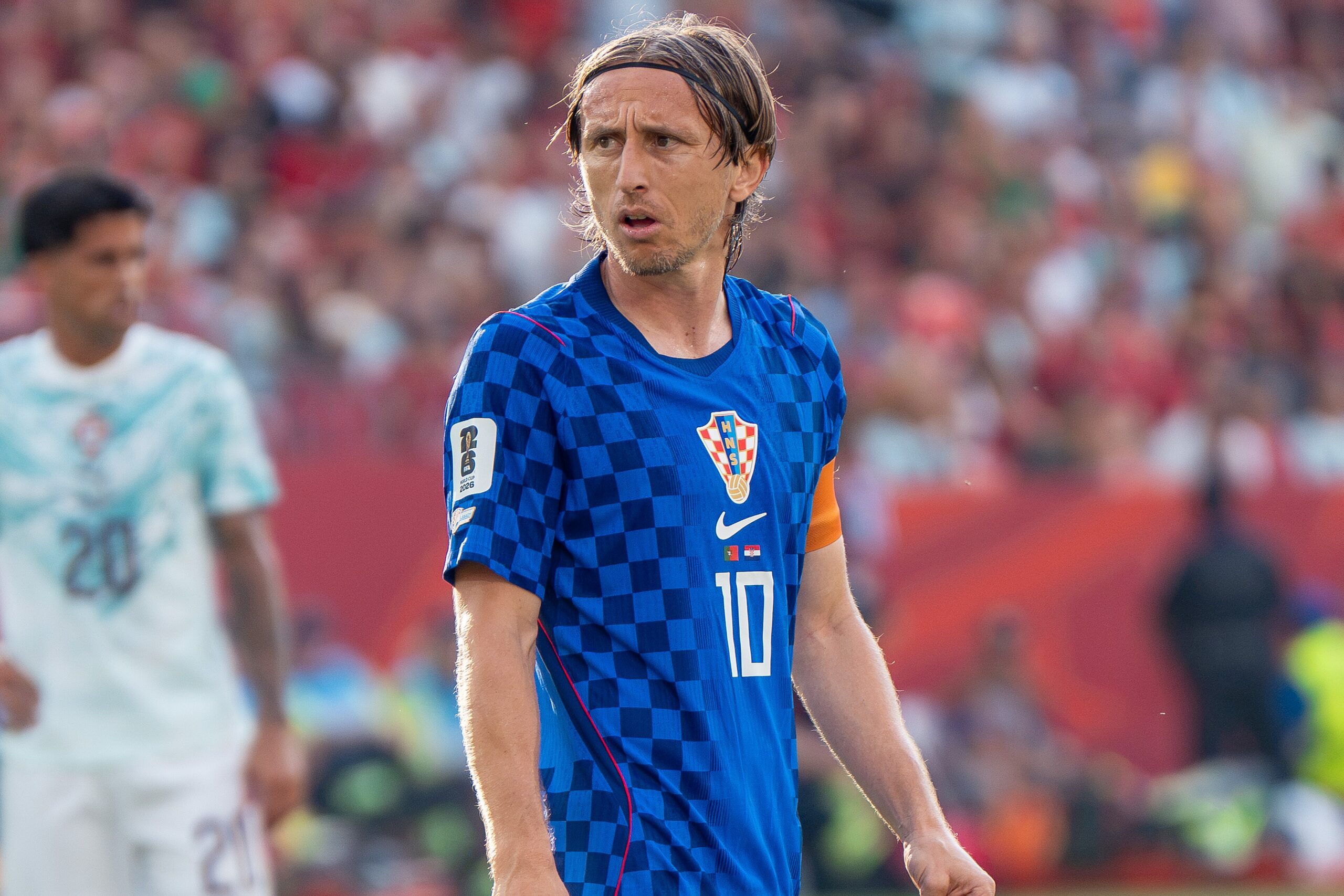
Luka Modrić ( Croatia -40 )
Class Is Permanent
Luka Modrić’s story begins far away from the glamour of the Santiago Bernabéu.
As a child, he experienced the brutality of war in Croatia. His family was forced to flee. His childhood was shaped by uncertainty rather than comfort.
Few could have imagined that the quiet boy from Zadar would one day become one of the greatest midfielders football has ever produced.
From Dinamo Zagreb to Tottenham Hotspur and ultimately to Real Madrid, Modrić continuously evolved his game. He became the heartbeat of one of the most successful club teams in football history.
Six UEFA Champions League titles. League championships. Countless individual honours.
And in 2018, he achieved something many believed impossible. He broke the decade-long Ballon d’Or dominance of Lionel Messi and Cristiano Ronaldo.
Despite all his success, Modrić never allowed fame to define him.
He remained humble. Elegant. Respectful. He always allowed his football to speak louder than his words.
Class is permanent because character is permanent.
True leaders do not seek attention—they naturally earn respect.
Lionel Messi ( Argentina -39)
When Genius Meets Opportunity
Football has produced many extraordinary players. Very few have transformed the game itself. Lionel Messi is one of them.
His journey almost ended before it truly began.
As a young boy in Rosario, Messi was diagnosed with a growth hormone deficiency. His family could not afford the expensive treatment required to continue his development.
Many clubs admired his talent. Only Barcelona believed enough to invest in his future.
That decision changed football forever.
What followed became one of the greatest careers in sporting history. Eight Ballon d’Or awards. Multiple UEFA Champions League titles. Countless individual records. Copa América glory. Finally, the FIFA World Cup that completed his extraordinary legacy.
Yet perhaps Messi’s greatest quality has never been his left foot. It has been his humility.
Despite becoming one of the most celebrated athletes in history, he has always placed the team above himself.
His story reminds us that talent alone is never enough. Talent also requires opportunity.
Someone must recognise it. Someone must believe in it.
Sometimes a single opportunity changes not only one career but football history itself.
Genius flourishes when talent meets opportunity. Humility allows greatness to endure.
The Greatest Lesson for the Next Generation
Young footballers often ask one simple question.
“What does it take to become successful?”
The answer is far more complicated than simply training harder.
Learn new languages. Develop emotional intelligence. Respect your teammates. Choose your coaches wisely. Surround yourself with people who challenge you rather than flatter you. Find mentors who care about your future not only your next contract.
Above all…
Never stop learning.
Football evolves every season. The players who refuse to evolve slowly disappear. The players who continue learning remain relevant for decades.
Talent opens the first door. Character keeps it open.
Talent opens the first door.
Craig Gordon teaches resilience. Cristiano Ronaldo teaches discipline. Guillermo Ochoa teaches consistency. Luka Modrić teaches humility. Lionel Messi teaches that genius reaches its full potential only when talent meets opportunity.
Together, these five remarkable footballers remind us that football is about far more than winning trophies.
It is about building a reputation. A legacy. A standard that inspires generations still to come.
Because trophies eventually gather dust. Records are eventually broken. Statistics are eventually forgotten.
But professionalism…
Professionalism never grows old.
Age is just a number.
Character is timeless.