

The Repricing of Football’s Most Visible Asset
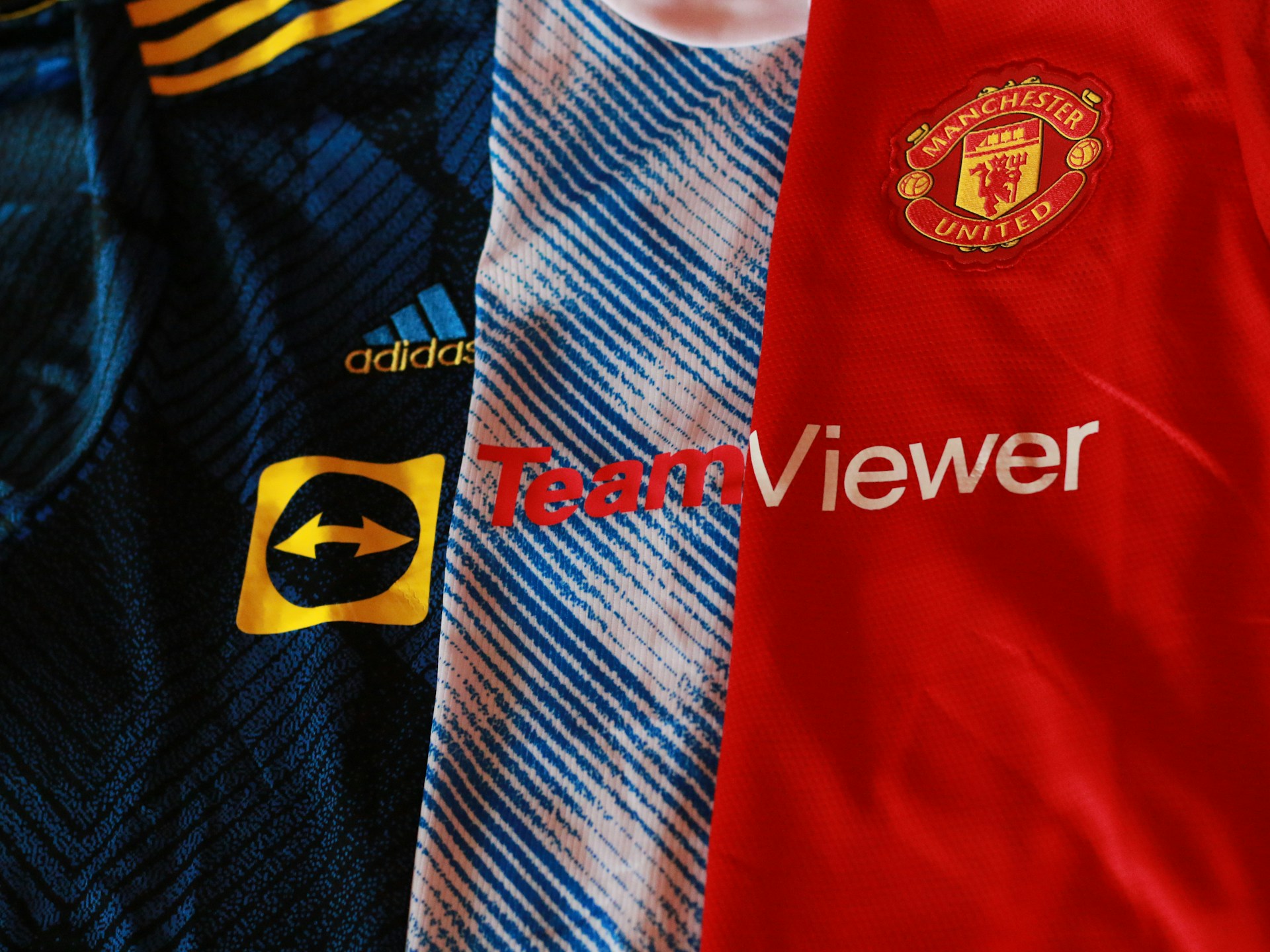
The front of a Premier League shirt is often called the most expensive billboard in sport, and the description is easy to justify. A logo there travels into hundreds of millions of homes, week after week, stitched into the identity of clubs that supporters carry with them for life. It is one of the most valuable pieces of commercial real estate in global sport, and across much of the league, the brands willing to pay the most for it were betting companies.
From the 2026/27 season, they will be gone. Premier League clubs have voluntarily agreed to remove gambling sponsors from the front of matchday shirts, and the category that paid the steepest premiums for the league’s most visible space is leaving the market at once. The clubs are left with a collective shortfall reported at around £80 million, and with a question more interesting than the number.
Because a billboard is only worth what someone will pay to stand on it. The price of this one was set, for years, by a single category of buyer that valued it for reasons almost no other industry shared. Now that buyer is walking away. What follows is not really the story of a category leaving football. It is the story of an asset about to learn what it is actually worth.
What follows is not really the story of a category leaving football. It is the story of an asset about to learn what it is actually worth.
The Anatomy of a Premium
Start with the question the clubs themselves rarely asked out loud: why did betting companies pay so much?
The figures were never modest. For years, when a mid-table club put its shirt front on the market, the betting offer was routinely the highest in the room, often well clear of anything a conventional brand would put forward. Independent valuation work has put the gap at around 38% above what the same space was worth to the wider market. For one club, Bournemouth, analysts put the betting deal at close to 50% above fair value. These were not rounding errors. They were a different scale of bid entirely.
The reasons had little to do with football. Gambling is a crowded industry selling a largely undifferentiated product, in which the main constraint on growth is the cost and difficulty of reaching new customers. Television advertising is restricted. The regulatory window for mass visibility was closing. And many of the most aggressive bidders were operators aimed at overseas markets, particularly across Asia, for whom a Premier League shirt was not a connection to English supporters at all. It was the cheapest way to put a logo in front of a global television audience.
The Buyer Sets the Price
This is where the story stops being about gambling and starts being about value itself.
Think of a bottle of water. In a supermarket it costs almost nothing. Carried to someone stranded in a desert, it can be worth a fortune. The bottle has not changed. What changed is the need of the person buying it. An advertising asset works the same way. It has no fixed worth waiting to be discovered. It is worth whatever it lets a particular buyer accomplish, and different buyers arrive trying to accomplish entirely different things.
To a betting operator, a Premier League shirt was never advertising in the ordinary sense. It was a customer acquisition engine pointed at a global audience. A single new customer in that industry is worth a great deal over time, and the usual routes to reach one were restricted or shutting. Against that math, paying that kind of premium was not extravagance. It was rational. The shirt was worth more to a gambling firm than to anyone else because it solved a problem that was theirs alone.
So the price the market had grown used to was never the asset speaking. It was one industry, bidding against its own deadline. And a price built on the needs of a single category carries a quiet condition inside it: that the category stays.
So the price the market had grown used to was never the asset speaking.
Two Kinds of Buyer
If the shirt was worth more to a betting firm than to anyone else, it is worth asking who the anyone else is. Because the brands now circling the Premier League’s empty shirt fronts are not all buying the same thing, and the difference between them explains almost everything about what happens next.
Broadly, there are two kinds of buyer for an asset like this. The first wants exposure. It needs to be seen, by as many people as possible, as quickly as possible, and it is largely indifferent to where. A logo on a shirt, a banner at an airport, a board behind a press conference, these are interchangeable to a buyer like this, judged only by how many eyes they reach for the money. The gambling operators were exposure buyers in their purest form. They did not need to belong to the club. They needed to be seen on it.
The second kind of buyer wants something quieter and harder to purchase. It wants association. It is buying the meaning of the club, the trust and belonging that supporters feel, in the hope that a little of it transfers to the brand. An airline or a bank on the front of a shirt is not chasing a quick conversion. It is renting the club’s standing and asking to be judged by the company it keeps. For this buyer, fit is everything. A poor match does not just waste money. It actively transfers the wrong meaning.
The same piece of fabric sells two completely different products. The departing category wanted only the first. Most of the brands that can replace them are buying the second. That single shift, from selling exposure to selling association, is the real story of the reset, and it is felt most sharply not in the boardrooms of the clubs but on the other side of the table, where the brands decide.
Inside the Room
I spent a good part of my career on the buying side of these decisions, at brands choosing where, and whether, to place their name in sport. The view from there looks nothing like the view from the stands.
From the outside, a sponsorship looks like a question of reach: how many people will see the logo, and is that worth the fee. Inside the room, reach is rarely the hard part. The hard part is a conversation between marketing and finance, in which someone has to explain to the person holding the budget why a feeling is worth millions of pounds. Exposure can be counted. Association cannot, and association is usually the real reason a serious brand wants the shirt. Much of the work of a sponsorship decision is finding language for something that resists being put on a spreadsheet.
Two things outsiders almost always miss. The first is that the fee is the cheap part. Paying for the logo only buys the right to begin. Making the association mean anything costs as much again, often more, in everything you build around it, and a brand that does not understand this buys a place on the shirt and very little else. The second is that the question asked most seriously in the room is not how many people will see this. It is what is the worst thing this could one day tie us to. A betting firm never had to ask that. A bank does, every time.
And not every buyer is even after the supporter. When Crystal Palace replaced its betting sponsor with Temporal, a software company whose technology runs invisibly inside firms like OpenAI and Netflix, the logo was not aimed at the fan in the replica kit. Temporal sells nothing that fan could buy. It was reaching the executive watching the match, the engineer who will later sign off on a contract worth far more than the sponsorship itself. The shirt became a signal of seriousness, aimed at a few thousand people who would never think of themselves as its audience.
The Uneven Fall
Once the highest bidder leaves, the rest follows with a kind of logic that is painful to watch and impossible to argue with.
The clubs outside the elite are discovering the gap all at once. Replacement offers for the shirt front are arriving at roughly half of what the betting deals paid, and several clubs entered the summer with the most valuable space in their commercial inventory still empty. The reasons are not mysterious. A dozen clubs are selling the same asset in the same window, which favours the buyer. The single category that paid the most is gone, so the next-best offer is now the only offer. And the bidding war that used to push the price up, betting firms outspending one another for a closing opportunity, has simply stopped. A price held up by competition falls when the competition walks away.
What is striking is who feels it and who does not. At the top, the numbers barely move. By independent valuation, Liverpool and Manchester United still command shirt values of around £60 million, and Real Madrid more than that, because their asset was never propped up by the betting premium in the first place. They were always selling association, and association does not leave with the bookmakers. Lower down, the fall is steep, and it lands hardest on the clubs that were most dependent on a single category to begin with. Even a club’s results show through: by the same valuations, Tottenham’s shirt value has dropped by around 40% after two seasons finishing seventeenth, a reminder that this asset is priced on what the club means, not on what one industry was willing to overpay.
Which raises the question the clubs are now living inside. Is the lower number a wound, or a correction? Some in the market expect a partial recovery as the glut clears and a handful of clubs compete again for the same brands. Others think the premium is simply gone, and that what looks like a collapse is just the asset, at last, being priced at what it is worth to buyers who are not running from a deadline. Both may be right. But neither changes the lesson underneath, which is the part worth carrying out of football altogether.
Beyond the Shirt
So carry it out of football, because the lesson is not really about shirts.
Any business that lets a single category set the price of its most valuable asset is making the same unspoken trade the clubs made. While the premium lasts, it feels like strength. Revenue is high, the buyer is eager, the number flatters everyone who reports it. But a price that depends on one category staying is not a strength a business owns. It is a strength it is renting, on terms set by someone else, for as long as that someone else chooses to stay. There is a difference between the revenue a business controls and the revenue it merely receives, and the gap between the two stays invisible until the day the receiving stops.
Football has watched this happen before, in another sport. For decades, tobacco money built Formula 1, shaping its budgets and its colours the way betting money came to shape the shirt fronts. When tobacco was phased out by 2006, the warnings were of ruin. What followed instead was a forced and ultimately healthier diversification, into technology, finance, telecoms, the kind of broad base that no single regulator could remove in one stroke. And tobacco, tellingly, did not vanish. It drifted back in quieter forms, through smoke-free product branding and softer logos, because money pushed out of the front door rarely leaves the building. A banned category migrates. It does not disappear.
That is the real reset underway in the Premier League. Not the loss of a sponsor, but a market relearning an old discipline: that the highest bid is not the same as the truest value, and that resilience is built on revenue a club can stand on without asking permission for it to remain. The betting era taught clubs how much could be charged for a shirt. The years after it will teach them what a shirt is actually worth. The most useful question, for anyone who owns something valuable, is not how high the best offer climbs. It is how much of that number you would keep if the highest bidder simply walked away.
The betting era taught clubs how much could be charged for a shirt. The years after it will teach them what a shirt is actually worth.