

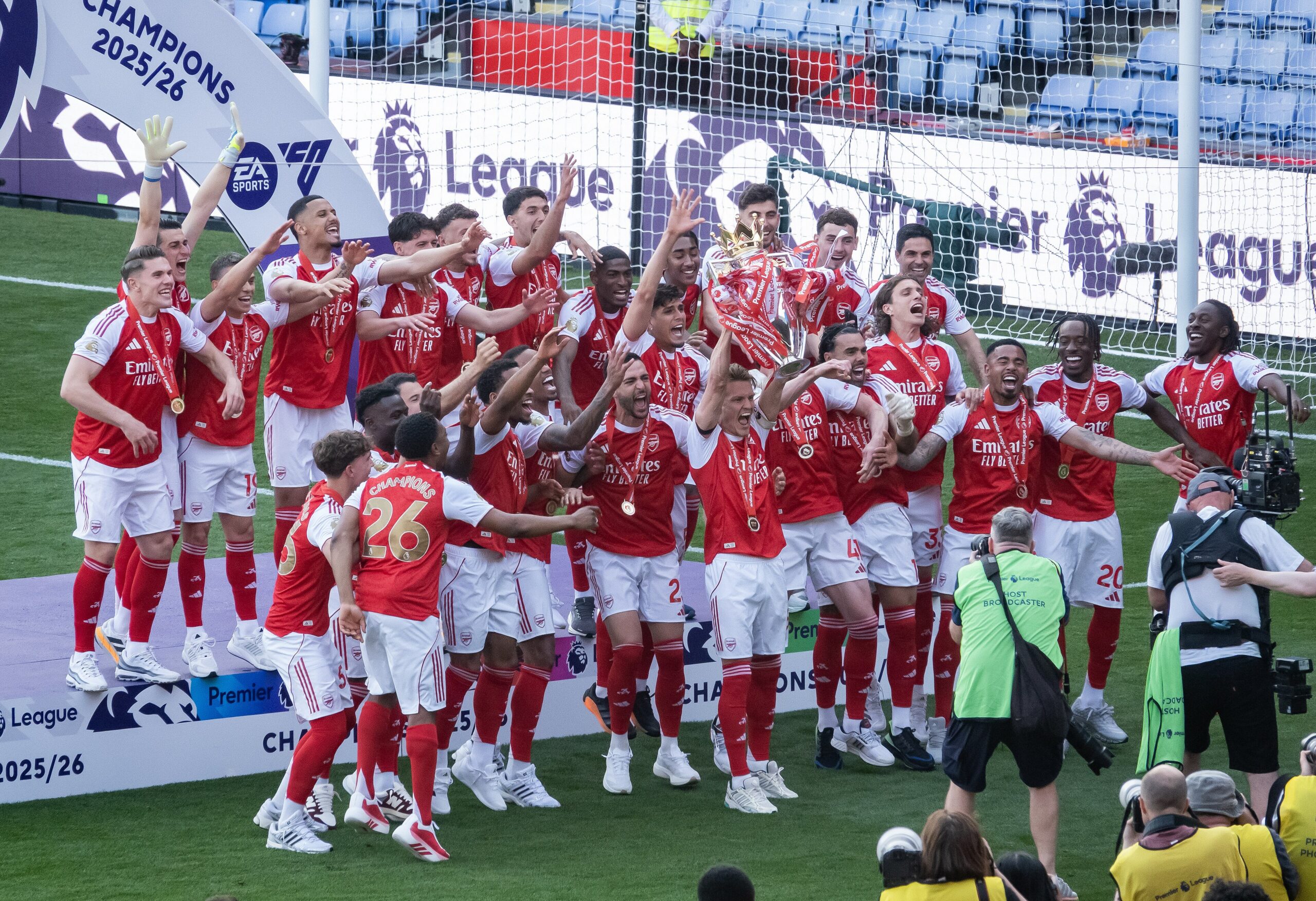

One of the defining stories of this football season has been the intensity of title races across Europe. From Scotland to Italy, from Germany to England, leagues have remained competitive deep into the final weeks of the campaign. Every result has carried significance. Every dropped point has shifted momentum. Every fixture has felt connected to something larger than a single match. That tension is one of football’s greatest strengths.
At its core, football depends on uncertainty. The sport remains compelling because outcomes are never fully predictable. Supporters invest emotionally because possibility always exists, including the possibility of success, collapse, recovery, surprise, and transformation.
At its core, football depends on uncertainty.
Title races magnify all of those emotions simultaneously. This season’s Scottish Premiership race once again highlighted how competition can energise an entire football ecosystem. When leagues remain open late into the campaign, attention increases not only around the clubs involved but across the sport itself. Stadium atmospheres improve, media interest grows, and supporter engagement becomes stronger week after week.
Competitive football environments raise standards naturally. When clubs believe success is realistically achievable, investment tends to improve across multiple areas. Recruitment becomes more strategic, coaching structures become more sophisticated, and long-term planning becomes more important. Pressure creates evolution.
Historically, some of football’s strongest eras emerged during periods of intense domestic competition. Rivalries between multiple high-performing clubs often forced tactical innovation and organisational improvement throughout entire leagues.
Italian football during the 1990s provides a strong example. Serie A’s competitiveness during that era attracted elite players, managers, and tactical thinkers from across world football. Clubs continuously adapted in response to one another, creating one of the strongest league environments football has ever seen.
The same principle applies today. When leagues become predictable over long periods, competitive intensity can decline. Clubs outside the dominant group may reduce ambition, supporters may lose emotional investment, and broader league development can stagnate. Close title races counteract that effect.
Importantly, modern title races are not decided solely through individual talent. Contemporary football places enormous emphasis on structure, depth, and consistency across an entire season. Squad management, injury prevention, tactical flexibility, and psychological resilience often determine outcomes just as much as technical quality.
The physical demands of the modern calendar make this even more significant. Teams competing across domestic leagues, cup competitions, and European tournaments must maintain performance levels for nearly ten months. Fixture congestion creates enormous pressure on players physically and mentally. Clubs capable of managing these demands effectively often separate themselves during decisive moments of the season.
This is where elite organisational structures become crucial. Successful clubs increasingly rely on integrated departments involving sports science, recruitment analysis, tactical preparation, nutrition, and recovery management. Winning modern title races is rarely accidental. It usually reflects years of strategic planning operating behind the scenes. Supporters often see only the final ninety minutes. In reality, title-winning consistency is usually built through processes developed far away from matchday itself.
Winning modern title races is rarely accidental.
Competitive leagues also benefit younger players significantly. When clubs face stronger competition, they are often encouraged to improve development pathways and integrate emerging talent more effectively. Academy systems become more valuable because depth and squad rotation are essential over long seasons.
This creates opportunities for younger footballers to gain meaningful experience earlier. Many of Europe’s strongest football cultures have historically combined competitive domestic structures with strong youth development. The relationship between the two is important. Competitive pressure forces clubs to search constantly for improvement, and academy systems frequently become part of that solution.
There is also an important commercial dimension to title races. Modern football operates within a global entertainment landscape competing for audience attention. Leagues that maintain unpredictability naturally generate stronger international interest because supporters are drawn toward uncertainty and narrative tension.
Broadcasters and sponsors value competitive balance because engagement remains higher for longer periods during the season. Final-day drama, late title swings, and meaningful fixtures increase global visibility and commercial value.
This is one reason football organisations increasingly discuss competitive sustainability across leagues. The long-term health of domestic competitions depends not only on elite clubs succeeding internationally, but also on maintaining meaningful competition domestically. Leagues become stronger when multiple clubs remain ambitious and structurally capable of challenging near the top of the table.
At the same time, title races reveal the psychological side of football perhaps more clearly than any other part of the sport. Pressure intensifies dramatically during final weeks of a season. Every match carries emotional weight. Momentum shifts quickly. Players must maintain concentration while dealing with public expectation, media scrutiny, and physical fatigue. Mental resilience becomes essential.
Some teams thrive under pressure because they remain emotionally stable during difficult moments. Others struggle when expectation increases. Managing those emotional swings is one of the most difficult aspects of elite sport.
Managers therefore play a critical role during title races. Beyond tactics, coaches must manage confidence, communication, squad morale, and emotional balance across the entire group. Leadership often becomes just as important as technical preparation during decisive periods.
Supporters contribute significantly as well. Football atmospheres become uniquely intense during title races because supporters recognise the stakes involved. Stadiums carry greater emotional energy, and that connection between team and crowd often becomes an important competitive advantage. These moments help define football culture itself.
Long after seasons end, supporters often remember not only trophies but the emotional journey surrounding them, including the tension, uncertainty, setbacks, recoveries, and decisive matches that shaped the race. That emotional investment is what continues separating football from many other forms of entertainment.
This season’s title races across Europe have once again demonstrated that football is strongest when competition remains genuine. The sport becomes more compelling when ambition spreads across leagues, when outcomes remain uncertain, and when success must be earned consistently over time.
The sport becomes more compelling when ambition spreads across leagues, when outcomes remain uncertain, and when success must be earned consistently over time.
Ultimately, great title races do more than determine champions. They strengthen leagues, improve standards, develop players, energise supporters, and preserve the unpredictability that makes football globally compelling. That is why competitive balance remains one of the most important foundations of the modern game.