

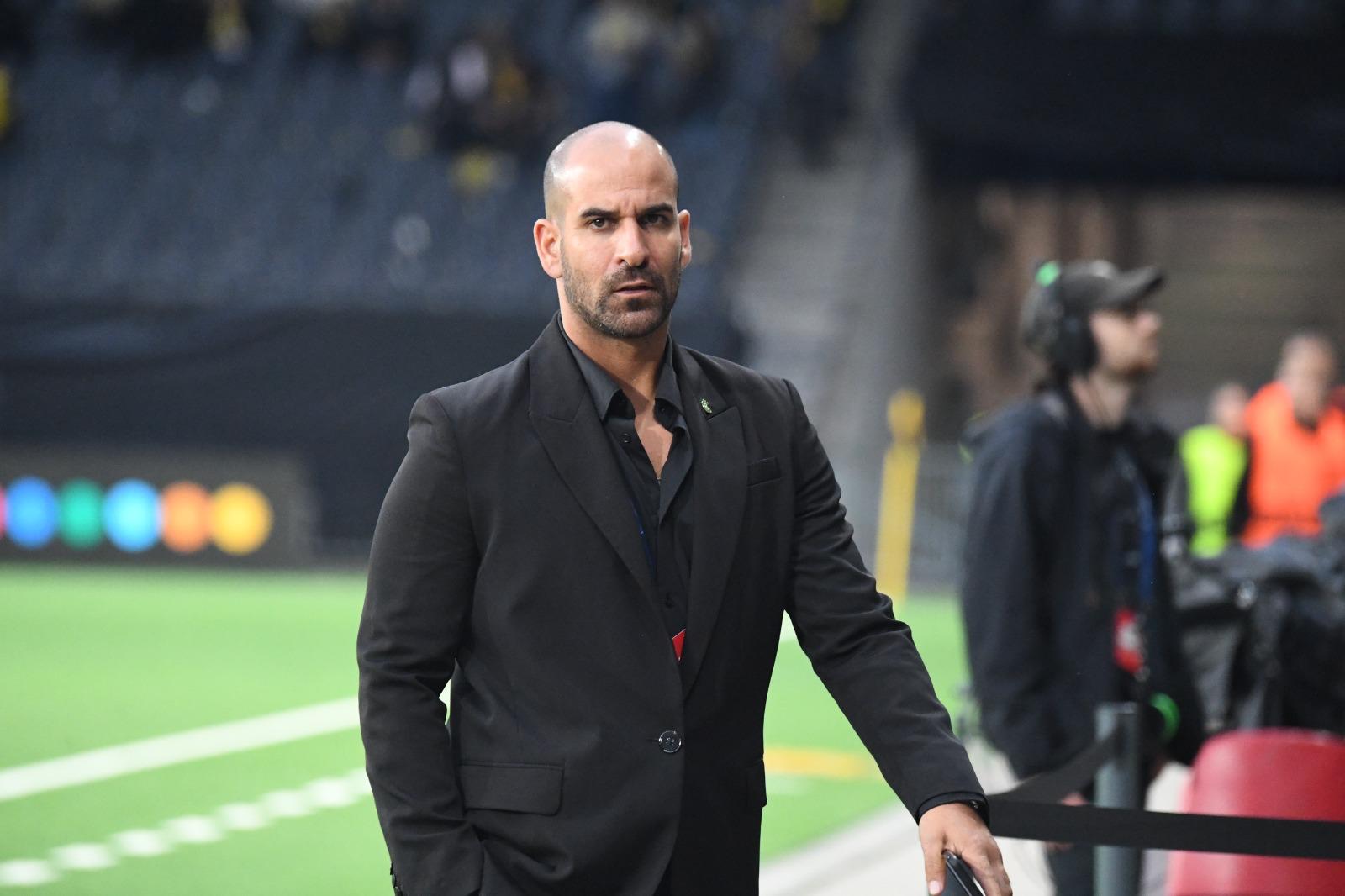
Profile
Role: Sporting Director
Specialisation: Squad Building, Football Department Structure, Recruitment and Player Development
Experience: Israel, Bundesliga, European Competition and Maccabi Haifa
Focus Areas: Club Alignment, Data-Based Scouting, Academy Pathways, European Competition and Long-Term Football Strategy
Gal Alberman represents one of the most compelling profiles in modern football management: a former elite player who has translated a distinguished playing career into equally distinguished executive leadership, delivering historic results as Sporting Director at the highest level of Israeli football and in European competition. His ability to build high-performance structures from the ground up, develop homegrown talent into sellable assets, and lead a club through periods of both extraordinary success and national adversity places him among the most complete sporting directors to have emerged from the Middle Eastern football environment.
Born on 17 April 1983 in Petach Tikva, Alberman developed as a player at Maccabi Petah-Tikva, earning promotion from the academy to the first team and becoming a regular starter at the age of 19. Over a playing career spanning more than 500 appearances across the Israeli Premier League, the Bundesliga, Spain’s second tier, the UEFA Champions League, and the UEFA Europa League, he accumulated five Israeli league championships, two State Cups, two Toto Cups, and 36 caps for the Israeli national team. His time at Beitar Jerusalem produced two championships and a State Cup, and in the 2007/08 season he was named Israeli Footballer of the Year, the highest individual honour in the domestic game. He also spent two seasons at Borussia Mönchengladbach in the Bundesliga and a spell at CD Tenerife in La Liga 2, giving him direct experience of two of Europe’s most demanding professional football environments.
Alberman retired from playing at Maccabi Haifa at the age of 36 in 2019, and rather than stepping away from the game, he immediately began building his second career within the same club. He began as Assistant Coach before moving into the Head of Scouting role in 2020, and was appointed Sporting Director in 2021. What followed over the next four years was one of the most transformative periods in Maccabi Haifa’s modern history. The club had gone ten years without a league title when Alberman took over sporting responsibility. He oversaw three consecutive Israeli league championships, two Super Cups, and one Toto Cup, ending the drought and restoring the club to sustained domestic dominance.
The European achievements during this period were equally remarkable. Under Alberman’s sporting leadership, Maccabi Haifa qualified for the UEFA Champions League group stage, reaching a milestone that placed the club in the same competition as the continent’s elite clubs for the first time in a decade. The club also reached the Last 16 of the UEFA Conference League and participated in UEFA Europa League group stage football, making Haifa one of the most consistent Israeli representatives in European competition during the early 2020s. These results were not achieved through financial excess but through structural intelligence: a data-driven scouting system, a coherent recruitment philosophy, a productive satellite club network, and an internal development pathway that consistently turned academy products into marketable professional footballers.
The market performance Alberman oversaw at Maccabi Haifa demonstrates the sophistication of his recruitment and talent development model. His most significant transaction was the sale of Anan Khalaili, a homegrown player transferred to Union Saint-Gilloise for 7.5 million euros, a record transfer fee for an Israeli player. Ilay Feingold, also homegrown, was sold to New England Revolution for 2.5 million euros. Mohammad Abu Fani, another academy product, went to Ferencvaros for 1.5 million euros. Frantzdy Pierrot was purchased for 1.6 million euros and sold to AEK Athens for 2.5 million. Pierre Cornud was signed for 150,000 euros and sold to Saint-Etienne for 1.1 million. Across the portfolio, the pattern is consistent: intelligent acquisition, structured development, and profitable sales that reinvested value back into the club’s ecosystem.
Alberman’s tenure was also notable for what he built organisationally. He established a modern, structured football department with a high-performance culture, introduced technology-driven scouting and recruitment systems, defined and implemented the club’s tactical identity and football philosophy, and built a domestic partnership network including a structured satellite club programme. He also navigated the unique and demanding challenge of maintaining competitive performance and player wellbeing during periods of wartime instability in Israel, a dimension of his leadership that reflects a level of resilience and human management that goes well beyond conventional sporting director responsibilities.
His academic development has kept pace with his executive growth. He completed the UEFA MIP Executive Master for International Players in Sports Management between 2019 and 2022, earned his UEFA Pro Licence in 2021, and in 2025 completed the UEFA and ECA Sporting Director Programme, one of the most prestigious educational qualifications available to football executives in Europe. Fluent in Hebrew, English, and Spanish, Alberman operates comfortably across multiple football markets and cultures.
Having completed one of the most successful chapters in Maccabi Haifa’s history and departed the club on his own terms at the end of the 2024/25 season, Alberman is now available for the next challenge in his executive career. The combination of elite playing experience across multiple countries and leagues, proven track record in building winning structures from scratch, demonstrable commercial value creation through player trading, and a rigorous academic grounding in modern sporting leadership makes him a rare profile in today’s global football market.
Key Insights
- Gal Alberman explains how his playing career shaped his understanding of squad building, dressing-room dynamics and player character.
- He highlights the importance of aligning a club around one clear professional direction, from ownership to the football department.
- He discusses recruitment, academy pathways, European competition, leadership during instability and the value of formal sporting director education.
Our Exclusive Interview with Gal Alberman
You went from Player of the Year in Israel and a career across the Bundesliga and European competition to becoming one of the most successful sporting directors in Israeli football history. What did your playing career actually teach you about building a squad and running a football department that you could not have learned any other way?
As a player, it is very difficult to see what is waiting for you around the corner at the end of your career. But looking back, I believe my playing career gave me many tools that are almost impossible to learn from the outside. The daily experience of being a professional athlete – dealing with pressure, expectations, dressing-room dynamics, different coaches, success and failure – gives you a real understanding of how a team functions and how players think and feel inside a system.
That becomes extremely important when you move into the role of sporting director, because you quickly understand that squad building is not only about technical ability or performance data. It is also about character, personality, how a player deals with pressure, how he fits into a dressing room, and how he connects to the coach and to the club’s way of working. Those are things that are very difficult to fully understand only through video, reports or data.
It is also about character, personality, how a player deals with pressure, how he fits into a dressing room, and how he connects to the coach and to the club’s way of working.
At the same time, I also learned that a playing career on its own is not enough. It gives you a very strong foundation, but if you want to lead a football department you have to be open enough to keep learning, to go deeper, to join educational programmes, and to expose yourself to areas you were never really part of as a player – scouting, decision-making processes, management, data and organisational structure. For me, the key is to take the values and experience you built on the pitch, but also to be humble enough to learn the world outside the pitch from the beginning.
When you took over sporting responsibility at Maccabi Haifa in 2021, the club had gone ten years without a league title. What were the first things you changed structurally and culturally, and how long did it take before you could see that the direction was right?
Structurally and culturally, the first objective was to align the entire club around one clear and consistent professional direction. For me, the role of a sporting director is not only to make decisions about the squad. It is to build a clear football vision together with the head coach, and then connect that vision to the wider structure of the club. That starts with the board and senior leadership, and continues through everyone working inside the organisation.
I believe that from top to bottom – from the president to every person working at the club – everyone needs to understand what the club wants to be and what standards it wants to set for itself. Once you create a shared professional language, decision-making becomes cleaner, more consistent and healthier.
Once you create a shared professional language, decision-making becomes cleaner, more consistent and healthier.
In the end, a club cannot afford to waste energy on internal battles, lack of clarity or conflicting directions. The sporting challenges of a club should come from outside – from your rivals, from competition, from the pressure to win – not from inside your own organisation. For me, that was the foundation for everything: creating alignment, trust and one professional language that everyone was committed to.
As for when I felt the direction was right, it was not after one game or one result. I felt it when the club began to make decisions through the same professional language across different levels of the organisation, and when the daily work started to reflect the same ideas, standards and priorities. The trophies came later, but for me the first sign was that the system itself had started to function as one.
You introduced a technology-driven, data-based scouting and recruitment system at Maccabi Haifa. What did the department look like before that, and what resistance did you encounter when trying to change how recruitment decisions were made?
To be honest, the football department already existed, but in practice it was not synchronised enough with the coaching staff and the day-to-day life of the first team. For me, that was one of the first problems that had to be solved, because a football department cannot work effectively if it operates in parallel to the professional side rather than as a real part of it.
One of the first things I did was to consolidate the department and move it physically to the training ground instead of having it operate from offices away from the football environment. It may sound like a technical step, but for me it had a much deeper professional meaning. I wanted the football department to be part of the daily rhythm of the club – close to the coach, the staff, the players and the decision-making process itself. Connecting all parts of the puzzle was essential, because only then can you create a shared language, better information flow and better professional decisions.
After that process of integration, the department began to work in full synchronisation with the professional side of the club, and I see that as one of the most important assets we built during that period. Beyond immediate results, it was important for me to build something that would remain after my time at the club – a football department that works in a connected, organised and effective way from within the club itself.
As with any professional change, there was some resistance, but not necessarily because people were against the idea itself. In many cases it was more about habit and a different way of working. In football, many decisions have traditionally been made through experience, intuition and personal knowledge, and I do not think that should be dismissed. My goal was never to replace the professional eye with data. It was to build a more complete decision-making process, where information, video, live scouting and human understanding of the player work together. Once people understood that the objective was not to take authority away from them but to improve the quality of the decision, things started to connect.
Several of your most significant transfers involved homegrown players: Khalaili for a record €7.5 million, Abu Fani to Ferencváros, Feingold to New England Revolution. How do you build a pathway from the academy to the first team that consistently produces players good enough to sell at those values, rather than losing them too early or holding them too long?
One of the biggest challenges in player development and player trading is timing – knowing when it is the right moment to sell. In my view, that is one of the most complex decisions a club has to make, because you are constantly balancing the competitive needs of the team with the professional and commercial opportunity that may arise around a certain player.
As a shared strategy with the club ownership, we had a very clear approach: homegrown players should first contribute to Maccabi Haifa on the pitch, be part of the team’s success, and only afterwards become a major transfer sale. The objective is not simply to produce a player who can be sold. It is to develop a player who matures inside the club, contributes to its achievements, and only then takes the next step in his career. At the same time, every case has to be judged individually, because no two players have the same path, the same development curve or the same market.
To even reach the point where you are asking whether to sell a player and for how much, you first have to create a real pathway for him inside the club. Sometimes the integration of homegrown players is a process. Some go out on loan, and even then you have to monitor them closely, support them and make sure they return as better and more mature players. Some need to learn how to produce high-level performances in very limited minutes with the first team, and some make the transition in a much more natural and seamless way. There is no single pathway that fits everyone, so the responsibility of the club is to identify what is right for each player, at what pace to promote him, and how to create the best possible conditions for his development.
The case of Anan Khalaili, for example, was exceptional. His progress was very fast, and together with an outstanding U20 World Cup, it created an unusual jump both in professional terms and in market demand. In that kind of situation, the club made an exceptional decision according to the circumstances – to sell him for a record fee after only one full senior season. That was not necessarily the standard template, but a decision based on the timing, the market and the overall potential of the deal.
Over the years, Maccabi Haifa has been known as a club that develops players and sells them, and I believe that will remain part of its DNA in the future. My focus was to sharpen and expand that ability – to create a clearer pathway from the academy to the first team, increase the number of players who can reach that level, and maximise the professional and financial value the club can generate from them. In the end, a healthy club has to know how to compete for titles while also creating football and financial assets from within.
In the end, a healthy club has to know how to compete for titles while also creating football and financial assets from within.
Maccabi Haifa qualified for the Champions League group stage and reached the Last 16 of the Conference League under your sporting leadership. Competing against clubs with ten times the budget in Europe requires specific preparation. What does a sporting director actually do differently in European cycles compared to domestic league management?
When a club is in a period of success and is being built to compete in Europe while also competing domestically, the professional approach has to change accordingly. The first priority is obviously building a deeper squad – not only in terms of numbers, but also in terms of versatility, profile balance and the ability to cope with injuries, fixture congestion and the very different demands of domestic and European football.
In the domestic league, when you are a dominant team, you feel it almost every week – in the rhythm of the game, in the control, in the initiative, in the expectation to win. But in most cases, once you reach the group stage of a European competition, you arrive from a completely different position. There you face opponents who are richer, deeper and, in many cases, stronger than you in almost every parameter. That makes squad building more complex, because you are not building a team only to dominate domestically. You are building a team that also has to compete at a high level against opponents who ask very different questions of you.
For us, the idea was to preserve our identity in Europe, but to do it intelligently. Not to abandon our football, but to make adjustments according to the opponent, the rhythm, the level and the type of game. We tried to highlight the strongest qualities of our squad and minimise our weaker points as much as possible against opponents with greater resources and very high quality.
And once we reached the group stage, I felt very strongly that we could not be there just to participate. We understood that we were on the main stage, and that the club had to play with courage, belief and a clear identity, even at the risk of losing. In the end, if you want to grow as a club and truly compete at those levels, you cannot only react to the opposition. You also have to bring your own football, your own style and your own conviction onto the pitch.
You led the club’s football operations during a period of significant national instability in Israel. How did you manage player welfare, squad cohesion and sporting performance when the external environment was putting pressure on everything inside the club?
It was one of the most difficult periods I have experienced in football, because the challenge was not only professional, but first and foremost human. This was not a reality that stayed outside the club. It came inside and affected players, staff, families and the wider club community in a very direct way. The club community was also affected directly, with Maccabi Haifa supporters and people from the wider club environment among those murdered in the events of 7 October and the period that followed. In moments like that, the role of a sporting director changes very quickly. It is no longer only about squad building, recruitment or results. It becomes first and foremost about people, responsibility, communication, stability and the ability to hold a system together inside an abnormal reality.
The first thing for me was to understand what every person inside the system needed in order to keep functioning. That was true for players, staff, and of course for our foreign players and their families, who were living through a very complex reality while being far from home. A big part of the work during that period was to create as much clarity, calm and support as possible inside the club, even when there was almost no certainty outside it. It meant staying close to people, listening, identifying when a player or staff member needed support, and trying to preserve a sense of stability inside a situation that was not stable in any way.
From a professional point of view, the challenge was to maintain standards and cohesion without ignoring what was happening around us. It was obvious that we could not behave as if everything was normal, but at the same time it was important to preserve structure, routine and professional focus, because sometimes in a reality like that the club has to become an anchor for people. We still had to make good football decisions, but we had to do it with sensitivity and with the understanding that the load on the group was not only physical or professional, but also emotional and mental.
In the end, it was a period that taught me that leadership in sport is not tested only by the ability to build a good team or make the right decisions in the transfer market. It is also tested by your ability to keep people together, to communicate honestly, to protect the group from within, and to help the club continue functioning when the reality around it is deeply unstable. It was one of the biggest and most complex challenges I have faced, but also one of the most important lessons for me as a manager.
You hold a UEFA Pro Licence, a UEFA MIP Executive Master, and have completed the UEFA and ECA Sporting Director Programme. How do you think formal academic education changed the decisions you made in practice?
The decision to keep learning and to invest in my education, especially in the later stages of my playing career, was one of the most important decisions I made in my professional life. Some of the programmes and licences I completed were genuinely life-changing for me, because they did not only expand my knowledge – they changed the way I look at a club, at processes and at decision-making.
The most important part for me was the combination of learning and day-to-day work in the field. On one side, I was gaining experience as a manager inside a big and demanding club. On the other, I was going through an academic and professional journey that gave me a framework, a language and the tools to better understand what I was doing. If in the past I might have looked at decisions mainly through the direct football lens of a former player or coach, those studies helped me look at them through their wider impact on the structure of the club, on processes, on allocation of resources and on long-term building.
That combination of practical experience and theoretical learning helped me make decisions from a much wider perspective – not only through the instinct of a former player, but also through a deeper understanding of organisational structure, recruitment processes, management, data, strategy and long-term planning. In the end, education did not replace my football experience. It sharpened it, expanded it and gave me more confidence as a manager. It helped me become a better executive in a relatively short period of time, mainly because it pushed me out of my comfort zone, forced me to learn areas I did not know well enough, and helped me build a much broader professional base for the role.
Looking at the next chapter of your career, what type of club or project is most interesting to you, and what would an owner or board working with you for the first time understand about your approach that they might not expect from a former player turned executive?
In general, even as a player I set myself a very clear objective. I knew that I might not always be the most talented or the most naturally gifted player in the squad, but I wanted to be the best team player in it. A player who understands the system, connects people, thinks about the team before himself, and helps the environment around him function better. In that sense, I believe I brought exactly the same mechanism into management.
For me, the role of a sporting director is first and foremost to connect. To connect the owner’s vision with the team’s performance on the pitch, to connect the head coach, the football department and the organisational structure of the club, and to create full alignment between all parts of the system. Beyond that, I believe strongly in setting clear and realistic objectives, building a consistent professional pathway, and creating an environment in which everyone knows what is expected of them and where the club wants to go. Maybe that is the part people do not always expect from a former player – not only football intuition, but a systems view, a strong team mentality and a real desire to build something healthy and sustainable over the long term.
As for the next chapter, I am very open to the right challenge. The possibility of working outside Israel definitely interests me, and in particular I am very interested in the football landscape in the United States, which is a market I follow closely and find professionally and strategically fascinating. At the same time, Israeli football is also very close to my heart, and if the right long-term opportunity opens here – one with a real vision and a genuine desire to build something meaningful – I would absolutely consider it seriously. For me, the most important thing is less about the location and more about the quality of the project – ownership or leadership with a clear vision, a willingness to work in a structured way, and a real ambition to build a strong, modern and stable football department.
FAQ
Who is Gal Alberman?
Gal Alberman is a former professional player and sporting director who has worked in Israeli football, the Bundesliga and European competition.
What did Gal Alberman focus on at Maccabi Haifa?
Gal Alberman focused on club alignment, squad building, football department structure, recruitment, academy pathways and long-term planning.
What is Gal Alberman interested in for the next chapter of his career?
Gal Alberman is open to the right challenge, including opportunities outside Israel and projects with clear vision, structure and long-term ambition.