The Homeless World Cup brings together players who have experienced homelessness or social disadvantage, giving them the chance to represent their country on an international stage. Through football, the movement helps participants rebuild confidence, create support networks and open pathways toward housing, education and employment.
At a Glance
What it is: A global movement that uses sport to help people rebuild their lives.
Founded: 2003
Network: 75 Member Countries
Impact: More than 1.7 million people have been supported through Homeless World Cup programmes worldwide.
Tournament Format: An eight-day street football tournament featuring more than 500 players.
Focus Areas: Confidence, wellbeing, social connections, housing stability, education, and employment opportunities.
The Homeless World Cup is more than an international street football tournament. It is a global movement using football to support people experiencing homelessness, rebuild confidence and create pathways toward lasting change.
Every year, hundreds of players from around the world put on their national jerseys and represent their countries on the international stage. What makes the Homeless World Cup different is that every player has experienced homelessness or significant social disadvantage.
- Advertisement -
More than a football tournament, the Homeless World Cup is a global movement that uses sport to help people rebuild their lives.
More than a football tournament, the Homeless World Cup is a global movement that uses sport to help people rebuild their lives.
A Global Movement for Social Change
The Homeless World Cup Foundation works with 75 Member Countries that run football and support programmes for people experiencing homelessness and social exclusion.
Using football as a gateway to wider support, these programmes help participants improve their confidence, wellbeing, social connections, housing stability, education, and employment opportunities.
Since 2003, more than 1.7 million people have been supported through Homeless World Cup programmes worldwide.
The Annual Homeless World Cup Tournament
Each year, around 50 nations compete in the Homeless World Cup, an eight-day street football tournament featuring more than 500 players.
Small-sided matches are played on compact pitches in iconic public spaces, bringing football, and conversations about homelessness, into the heart of communities.
Since the first tournament in Graz, Austria, in 2003, the event has been hosted in cities including Edinburgh, Cape Town, Rio de Janeiro, Amsterdam, Paris, Glasgow, Seoul, Oslo, and Mexico City. The next tournament will take place in Mexico City in January 2027.
While the football is exciting, the tournament’s real significance lies in what it represents for the players involved.
Why Was the Homeless World Cup Created?
The Homeless World Cup was founded by Mel Young and Harald Schmied, who recognised that homelessness is about far more than lacking a home.
Many people facing homelessness also experience isolation, poor mental health, addiction, unemployment, and a loss of confidence and opportunity.
The founders believed football could help people reconnect with society, build friendships, improve wellbeing, and begin moving forward with their lives. In 2003, they launched the first Homeless World Cup with teams from 18 countries. More than two decades later, that vision continues to grow.
Some of the most powerful moments happen after the final whistle. The Homeless World Cup creates space for empathy, friendship and human connection across teams and backgrounds.
How Football Helps Change Lives
Football alone cannot end homelessness, but it can provide a powerful starting point.
Being part of a team creates routine, structure, friendships, and support networks while helping participants rebuild confidence and self-belief.
- Advertisement -
Through Member Country programmes, participants can also access support around:
Housing
Employment
Education and training
Physical and mental health
Addiction recovery
Social support networks
For many players, the tournament acts as a catalyst for wider change and new opportunities.
Football alone cannot end homelessness, but it can provide a powerful starting point.
The Power of Representing Your Country
For Homeless World Cup participants, representing their country can be life-changing.
Many arrive having spent years feeling invisible or defined by their circumstances. Suddenly, they are wearing their national shirt, travelling internationally, meeting people from around the world, and being celebrated for their achievements.
The experience often transforms how they see themselves. Instead of identifying with their struggles, they begin to see themselves as athletes, teammates, leaders, and ambassadors.
Many former participants have gone on to secure housing, find employment, return to education, reconnect with family, and become coaches, mentors, and community leaders.
The Homeless World Cup gives every team the chance to represent more than a result on the scoreboard. It is also about identity, pride and belonging on an international stage.
Stories of Transformation
The Homeless World Cup has produced thousands of success stories.
Richard Koné represented Ivory Coast at the Cardiff 2019 Homeless World Cup after experiencing homelessness as a teenager. The tournament helped provide a platform for his talent, and he went on to earn professional contracts with Wycombe Wanderers and Queens Park Rangers before representing Ivory Coast internationally.
Lisa Wrightsman represented the United States at the Rio 2010 Homeless World Cup after overcoming addiction and homelessness. She later became a coach, leader, and Managing Director of Street Soccer USA Sacramento, helping others transform their lives through football.
Their journeys are very different, but both began with the same opportunity: being part of a team and believing in a different future.
Challenging Misconceptions About Homelessness
The Homeless World Cup also helps challenge common misconceptions about homelessness.
Homelessness is not simply the result of poor choices, nor does it only affect people sleeping rough. It can be caused by relationship breakdown, domestic abuse, mental or physical health challenges, addiction, bereavement, unemployment, or a lack of affordable housing.
By sharing players’ stories, the Homeless World Cup helps people see the individual behind the issue and better understand the realities of homelessness.
Beyond Football
The movement has expanded beyond the tournament through initiatives such as Cities Ending Homelessness, which brings together city leaders, policymakers, service providers, and people with lived experience to develop practical solutions to homelessness.
The aim is to encourage collaboration between housing, health, education, employment, and community organisations to create lasting change.
More Than a Tournament
At first glance, the Homeless World Cup looks like an international football competition.
In reality, it is a global movement built on the belief that people experiencing homelessness are not defined by their circumstances. They have talent, resilience, and enormous potential.
For more than two decades, the Homeless World Cup has used football to help people rebuild confidence, rediscover purpose, and create opportunities for a better future.
The tournament may last only a week, but for many participants, its impact lasts a lifetime.
The tournament may last only a week, but for many participants, its impact lasts a lifetime.
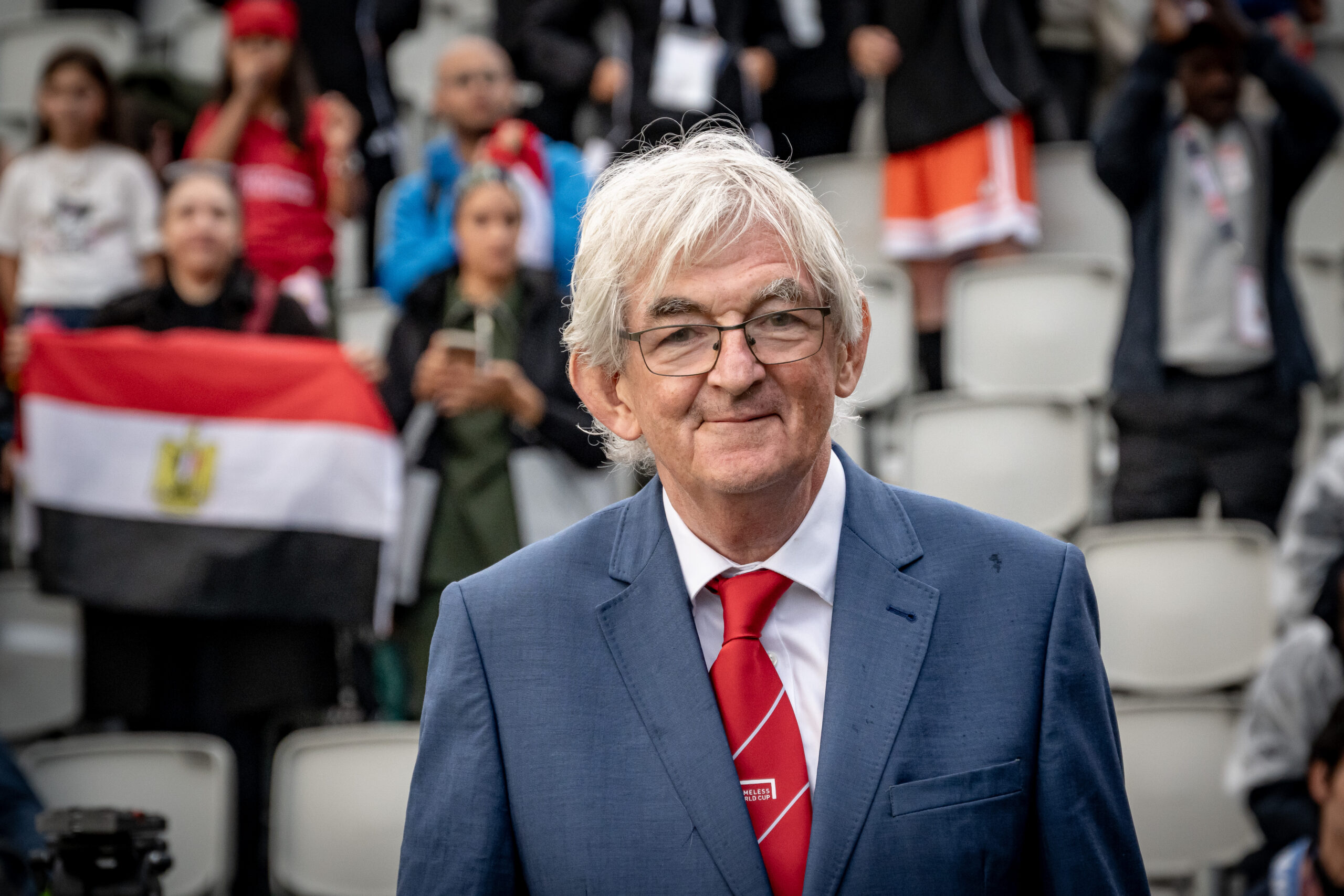
Mel Young co-founded the Homeless World Cup with Harald Schmied in 2003, building a movement that uses football to support people experiencing homelessness and social exclusion. More than two decades later, the tournament continues to show how sport can create confidence, connection and new opportunities.
Here’s our exclusive interview with The Homeless World Cup
For someone hearing about it for the first time, what is the Homeless World Cup?
The Homeless World Cup is a global football movement that uses the power of football to help people experiencing homelessness and social exclusion rebuild their lives.
Every year, 75 countries across our global Member Country network run football and support programmes that help people improve their confidence, physical and mental wellbeing, social connections, housing, education and employment opportunities.
The annual Homeless World Cup tournament brings together teams and players from around the world who have experienced homelessness or significant social disadvantage. For many participants, representing their country is a life-changing moment and part of a much bigger journey towards stability and opportunity.
Since the movement began in 2003, more than 1.7 million people have been supported through Homeless World Cup Member Country programmes around the world.
At the tournament, 50 Homeless World Cup Member Countries compete in an 8-day street football tournament with over 500 players represented.
Since the first tournament in Graz, Austria, in 2003, the Homeless World Cup has been hosted in cities across the world including Edinburgh, Cape Town, Melbourne, Rio de Janeiro, Mexico City, Amsterdam, Paris, Glasgow, Seoul and Oslo.
The format is fast, exciting and unique, with small-sided matches played on compact pitches in iconic public spaces, helping bring the issue of homelessness into the heart of communities and cities.
At its heart, the Homeless World Cup is about changing lives through football.
What inspired the creation of the Homeless World Cup, and what problem are you trying to solve?
The Homeless World Cup was inspired by the belief that homelessness is not simply about lacking a home – it’s about social exclusion, lost confidence, isolation and a lack of opportunity.
Homeless World Cup co-founder Mel Young and Harald Schmied realised first-hand how football, a universal language, could help people reconnect with society, build friendships, improve their wellbeing and begin moving forward with their lives.
They realised something powerful: football could be far more than a sport. It could be a tool for social change.
In 2003,Scot Mel and Austrian Harald launched the first Homeless World Cup in Graz, Austria, bringing together teams from 18 countries. The idea was simple but ambitious: create a global movement that uses football to inspire and support people experiencing homelessness to change their lives.
More than two decades later, the movement has grown into a network of 75 Members and the 21st edition is taking place in Mexico City in January 2027.
The problem the Foundation is trying to solve is homelessness and social exclusion. We know football alone doesn’t end homelessness, but it can be a powerful starting point.
Through football, people build confidence, develop support networks, access housing, education, training and employment opportunities, and begin to see a different future for themselves.
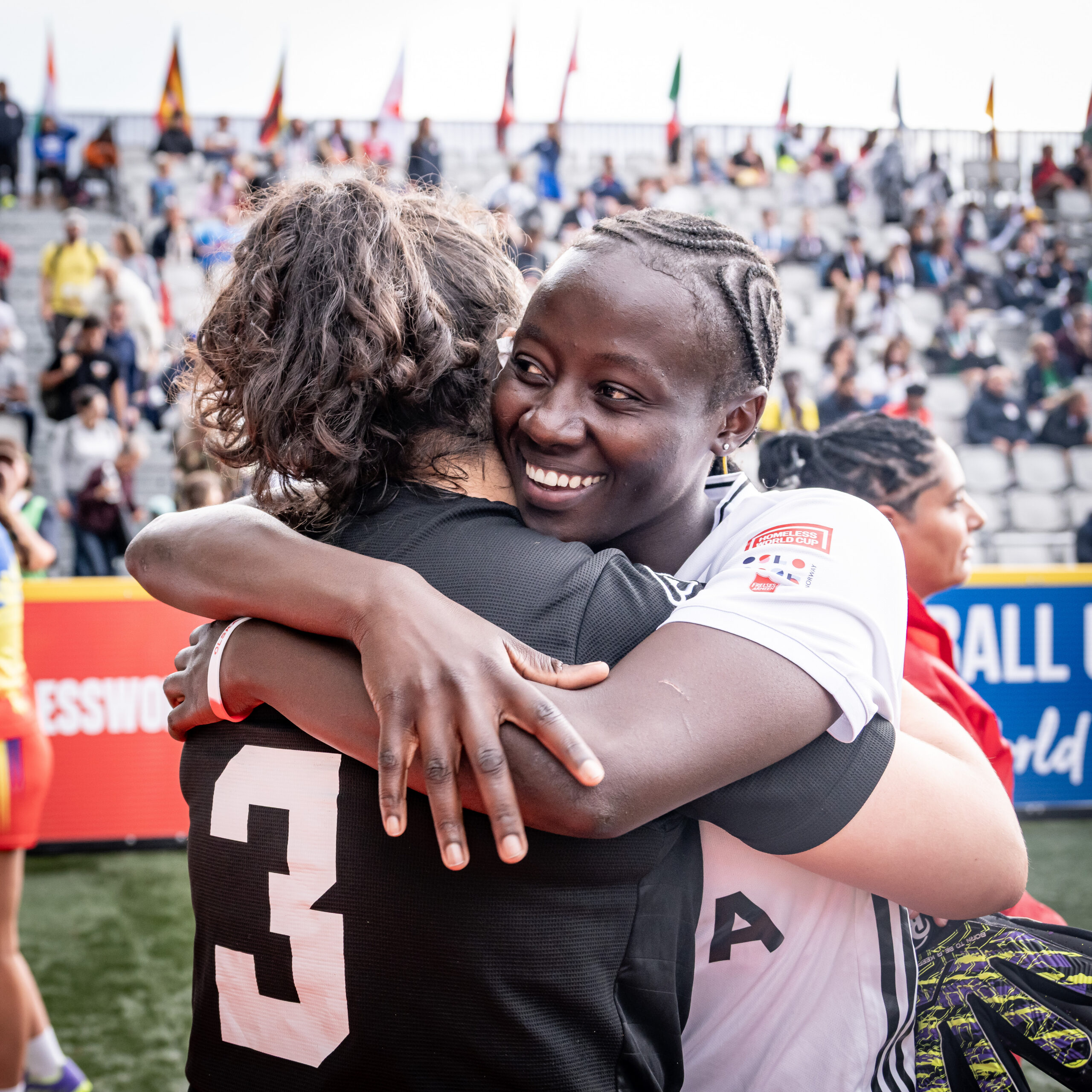
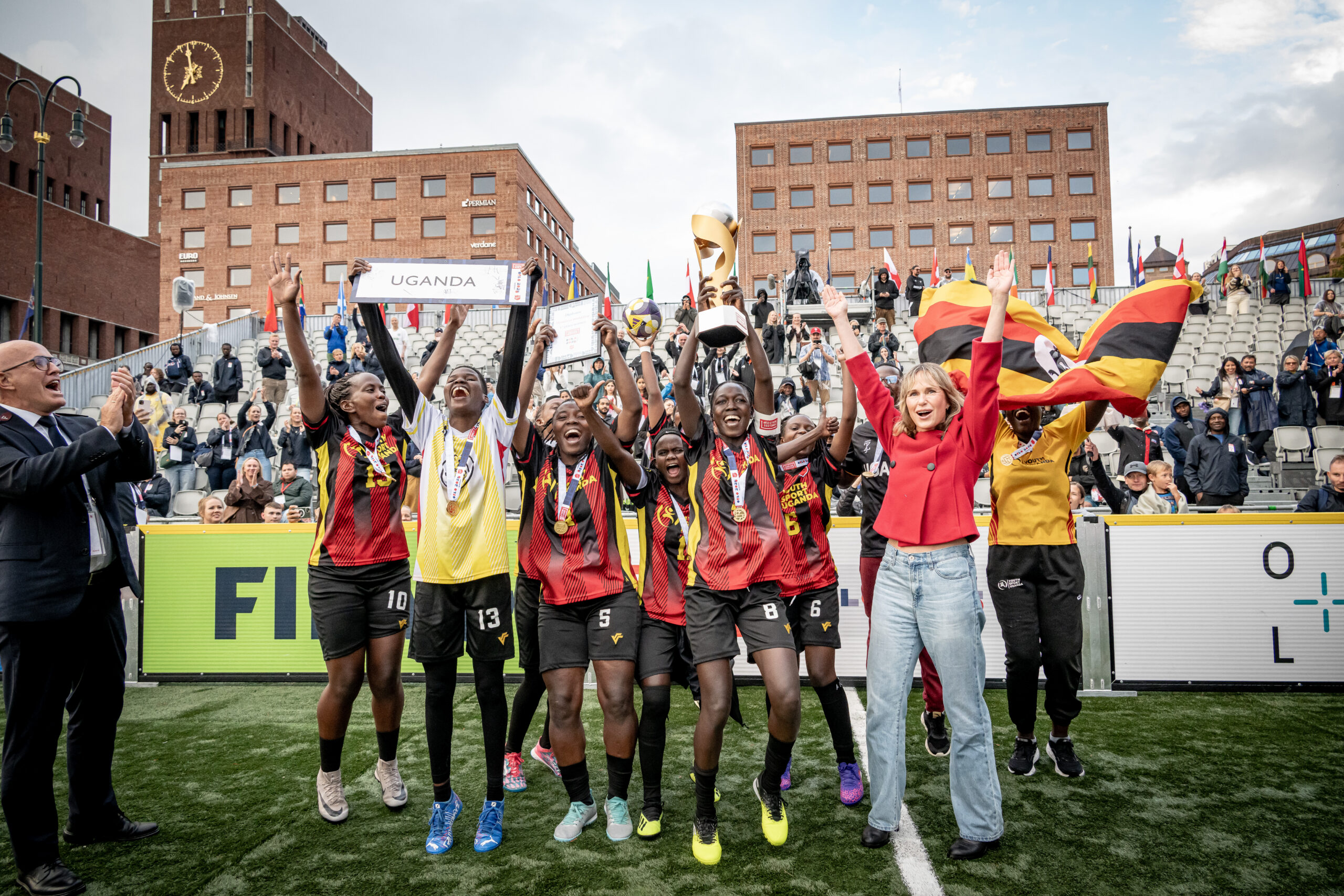
Celebration scenes like this show the joy and recognition the tournament can bring. Success on this stage represents far more than a title, especially for players whose journeys have been shaped by adversity.
How can a football tournament help someone overcome homelessness?
Many people experiencing homelessness face far more than a housing issue. They may be dealing with isolation, low confidence, poor mental health, addiction, trauma, unemployment or a lack of support networks.
Football provides a powerful first step.
When someone joins a Homeless World Cup Member Country programme, they become part of a team. They build friendships, develop routine and structure, improve their physical and mental wellbeing, and start to regain confidence and self-belief.
That confidence often becomes the foundation for wider change.
Through our Member Countries, participants can also access support around:
Housing
Employment
Education and training
Physical and mental health
Addiction recovery
Social support networks
The annual Homeless World Cup tournament acts as a catalyst. For many participants, representing their country is a life-changing moment. It gives them a goal to work towards, a sense of achievement and proof that they are capable of much more than they may have believed.
We’ve seen players go on to:
Secure stable housing
Return to education
Find employment
Reconnect with family
Become coaches, mentors and community leaders
Support others facing similar challenges
Can you share a story or two of participants whose lives have transformed through the program?
There’s millions of people who have changed their lives thanks to the Homeless World Cup and our Member Countries, two that stand out are Richard Kone who played at the Cardiff 2019 Homeless World Cup and Lisa Wrightsman who played at the Rio 2010 tournament and has coached at tournaments since.
Richard Koné (Ivory Coast)
Richard Koné arrived at the Cardiff 2019 Homeless World Cup representing Ivory Coast after experiencing homelessness as a teenager. Football was his passion, but opportunities were limited and life was incredibly challenging. The Homeless World Cup gave him the chance to travel abroad for the first time, represent his country and be seen by a wider football community.
After the tournament, Richard’s football journey accelerated dramatically. He joined Athletic Newham in England, worked his way through non-league football, earned a professional contract with Wycombe Wanderers, and later signed for Queens Park Rangers. He has since gone on to represent Ivory Coast at international level.
Richard’s story is a powerful reminder that talent can be found anywhere, but opportunity often cannot. The Homeless World Cup didn’t make him a footballer as he already was one. What it did was provide a platform, confidence and opportunity at a critical moment in his life.
Lisa Wrightsman (USA)
Lisa’s journey demonstrates that success isn’t always measured by professional contracts.
A talented college footballer, Lisa struggled when her dream of playing professionally didn’t materialise. The loss of structure, purpose and identity contributed to serious addiction issues that ultimately led to homelessness, arrests and time in jail. After entering rehabilitation and supported housing, she reluctantly agreed to attend a Street Soccer USA training session.
That decision changed everything.
Lisa represented the United States at the 2010 Homeless World Cup in Rio de Janeiro and describes the experience as transformational. For the first time in years, she found purpose, belonging and a positive vision of what her future could look like.
But the story didn’t end there.
After returning home, Lisa helped establish women’s programmes through Street Soccer USA, became a coach, a leader within the movement, and eventually Managing Director of Street Soccer USA Sacramento. In 2023 she played a major role in bringing the Homeless World Cup to her hometown of Sacramento, having gone from participant to coach, organiser and host city leader.
Why these stories matter
Richard and Lisa took very different paths.
One became a professional footballer.
The other became a community leader helping thousands of others.
Yet both stories began with the same thing: someone being given an opportunity to belong to a team, believe in themselves again and see a future beyond their current circumstances.
That’s the real impact of the Homeless World Cup.
How are players selected to represent their country at the Homeless World Cup?
The Homeless World Cup doesn’t select players directly.
Instead, we work with a global network of Member Country organisations. These organisations apply to join the Homeless World Cup movement and must meet a set of criteria before becoming an official Member Country.
Once part of the network, each Member Country delivers football and social inclusion programmes within their own community and is responsible for selecting the players who will represent their nation at the Homeless World Cup.
Selection isn’t based solely on football ability. Every Member Country has its own process, but players are often chosen because of their commitment, progress and personal journey. For many, representing their country recognises the determination they’ve shown in rebuilding their lives through football.
The Homeless World Cup is built on fair play, inclusion and opportunity. Every team plays every day of the tournament, and every nation competes on Finals Day for a trophy within their own competition tier after group games. This ensures every player has the opportunity to represent their country, compete, and experience the pride of playing on the final day of the tournament.
The standard of play and focus on the pitch are a key part of the tournament’s appeal. Each match brings intensity, discipline and genuine competitive spirit.
What are the biggest misconceptions people have about homelessness?
A common misconception is that homelessness is simply the result of poor choices or that it only affects people sleeping rough on the streets.
In reality, homelessness is often caused by a combination of factors such as relationship breakdown, domestic abuse, mental or physical health challenges, addiction, bereavement, unemployment or a lack of affordable housing. For many people, a single crisis can trigger a chain of events that leads to homelessness. It can and does happen to anyone.
It’s also important to understand that homelessness doesn’t just mean sleeping rough. Many people experiencing homelessness are living in temporary accommodation, hostels, shelters, insecure housing or are sofa surfing with friends and family. The visible homelessness we see on the streets is only part of a much bigger issue.
Another misconception is that people experiencing homelessness don’t want help. The reality is that many desperately want their situation to improve, but they may also be dealing with trauma, poor mental health, addiction, isolation or a lack of trust in support services.
Recovery is rarely a straight line and often requires ongoing support, encouragement and opportunities.
Finally, homelessness is not just a housing problem. While access to safe housing is critical, many people also need support to rebuild confidence, improve their wellbeing, develop social connections, access education or employment, and reconnect with their communities. That’s why organisations like the Homeless World Cup focus on the whole person, using football as a way to build confidence, belonging and hope alongside practical support.
Ultimately, homelessness is a complex issue that can affect far more people than many realise, and lasting solutions require more than simply putting a roof over someone’s head.
What does it mean for participants to represent their country on the international stage, and how does that experience impact their confidence and sense of identity?
For many participants, representing their country at the Homeless World Cup is one of the most important moments of their lives.
Many arrive having experienced homelessness, addiction, mental health challenges, social exclusion or significant personal trauma. Some have spent years feeling invisible, disconnected from society or defined by their circumstances rather than their potential.
Then, suddenly, they are pulling on their national shirt.
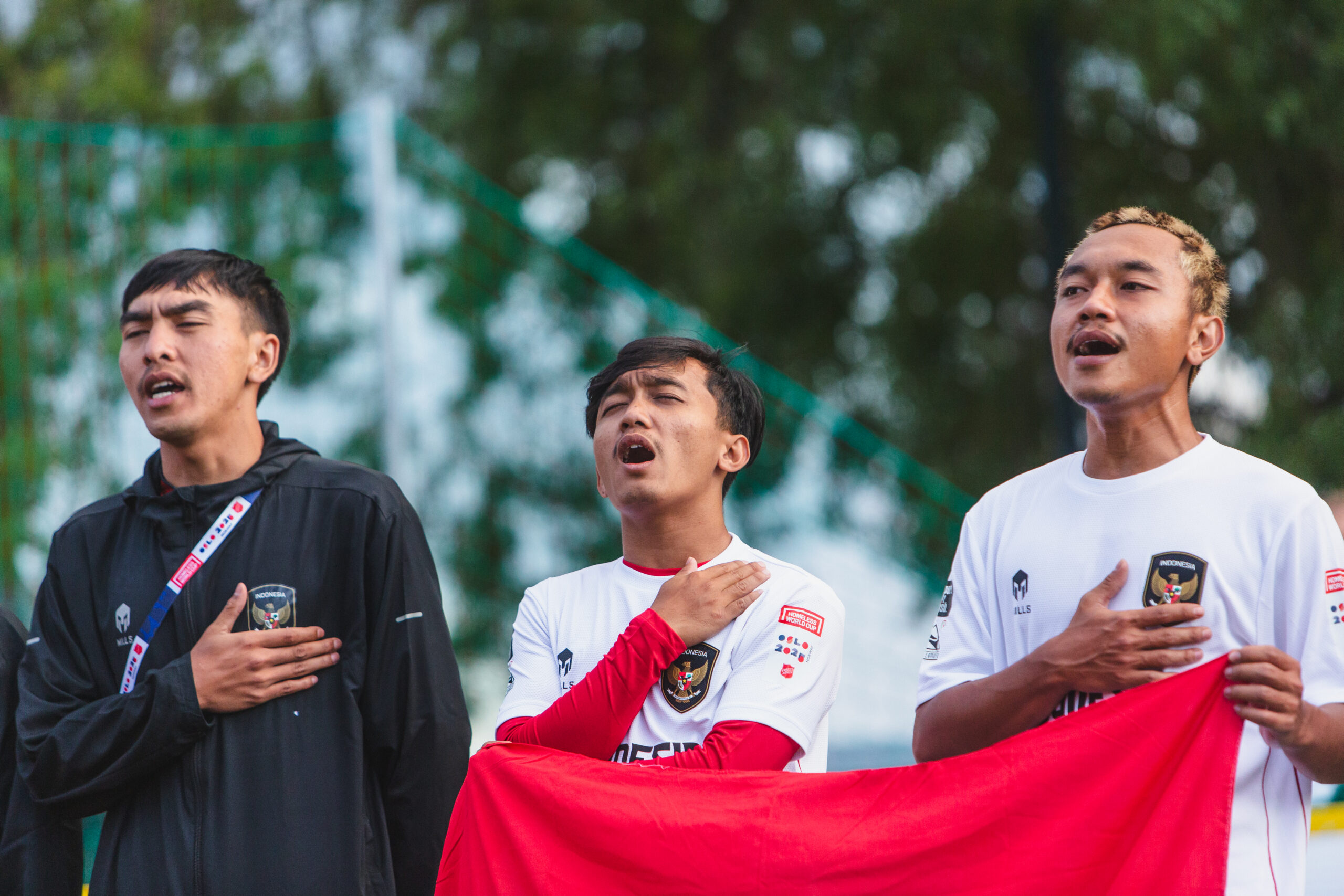
They are standing alongside teammates, hearing their country’s name announced, singing the national anthem, travelling internationally for the first time, meeting people from around the world and representing something bigger than themselves. For many participants, it is the first time they have ever felt recognised, valued or celebrated.
That experience can have a profound impact on confidence and identity.
Instead of seeing themselves as someone who is homeless or struggling, they begin to see themselves as an athlete, a teammate, a leader and an ambassador for their country. They gain confidence from achieving something they never thought possible and often return home with a renewed sense of purpose and self-belief.
We regularly hear participants say that the tournament helped them realise they were capable of more than they thought. That shift in mindset can become the foundation for wider change, whether that’s moving into housing, returning to education, finding employment, reconnecting with family or supporting others facing similar challenges.
The tournament lasts just one week, but the impact of representing your country can stay with someone for the rest of their life.
At its heart, the Homeless World Cup is about much more than football. It’s about helping people rediscover their confidence, rebuild their identity and recognise their own potential.
What impact have you seen on players after they return home from the tournament?
The impact we see after the tournament is often far greater than what happens during the tournament itself.
For many participants, the Homeless World Cup acts as a catalyst for change. The experience of representing their country, travelling internationally and being part of a team can fundamentally change how they see themselves and what they believe is possible.
After returning home, we regularly see participants move into more stable housing, access education and training opportunities, secure employment, improve their physical and mental wellbeing, reconnect with family and build stronger support networks within their communities.
Perhaps most importantly, many return with a renewed sense of confidence and purpose. They are no longer defined solely by their circumstances. They have achieved something significant, represented their country and become part of a global movement.
Lasting change requires ongoing support from our Member Country organisations. But what we consistently see is that the tournament gives people confidence, hope and motivation, while the year-round programmes provide the support needed to turn that momentum into lasting change.
That’s why we often say the tournament is not the destination — it’s part of a much bigger journey. The real success stories are what happen when players return home and begin building the next chapter of their lives.
The final celebration captures the emotional high point of the tournament. It is a reminder that the Homeless World Cup delivers both unforgettable football moments and lasting social impact.
If policymakers and community leaders attended the Homeless World Cup, what would you want them to learn?
If policymakers, city leaders and decision-makers attended the Homeless World Cup, I would want them to leave with a deeper understanding of both the complexity of homelessness and the incredible potential that exists within people experiencing it.
Too often, homelessness is viewed purely as a housing issue or through the lens of crisis and emergency response. What the Homeless World Cup demonstrates is that people experiencing homelessness are not defined by their circumstances. They have talents, ambitions, resilience and enormous potential. Given the right support, opportunities and belief, people can and do rebuild their lives.
I would also want leaders to see that lasting change requires more than one organisation working alone. The most successful approaches bring together housing providers, health services, employers, education providers, sports organisations, charities and local government around a shared goal.
That’s one of the reasons we launched Cities Ending Homelessness in 2023 at the Sacramento 2023 Homeless World Cup and at the Oslo 2025 tournament, the event ran across all 8 days of the tournament. The initiative recognises that while homelessness is a global challenge, solutions are often created at a local level. By bringing together cities from around the world, we aim to share ideas, build partnerships and accelerate practical action that helps prevent and reduce homelessness.
Most importantly, I would want policymakers to spend time listening to the players themselves. The tournament is full of people whose lives have been shaped by homelessness, addiction, trauma, mental health challenges, family breakdown and social exclusion. Yet it is also full of stories of recovery, resilience and hope.
When you watch a player represent their country, hear their story and see their confidence grow throughout the week, it becomes impossible to view homelessness as simply a statistic or policy challenge. You begin to see the individual behind the issue.
Ultimately, the lesson is a simple one: homelessness is not inevitable, and people are capable of extraordinary change when communities, organisations and leaders work together to create opportunities, support and pathways forward.
With the 2026 Homeless World Cup set to take place in Mexico City, what are the key goals and priorities for the tournament and the wider movement moving forward?
The 2026 Homeless World Cup in Mexico City will be much more than a football tournament. It will be an opportunity to showcase the power of football to change lives, bring together our global movement and shine a spotlight on innovative solutions to homelessness and social exclusion.
For the tournament itself, our priority is to deliver a world-class experience for the hundreds of players who will represent their countries. We want every participant to leave Mexico City with greater confidence, stronger connections and a renewed belief in what they can achieve. For many, this will be a once-in-a-lifetime opportunity to wear their national colours, represent their country and share their story with the world.
Beyond the tournament, our focus is on strengthening the impact of the movement year-round. Today, more than 70 Homeless World Cup Member Countries use football as a tool to support people experiencing homelessness and social exclusion. We want to help those organisations reach more people, share more best practice and create more pathways into housing, education, employment and community support.
A key area of focus is our Cities Ending Homelessness initiative. Homelessness is ultimately experienced locally, and cities have a critical role to play in creating solutions. Through the initiative, we are bringing together city leaders, policymakers, service providers and community organisations to share ideas, learn from one another and develop practical approaches that can help reduce and prevent homelessness. Mexico City provides a powerful platform to continue those conversations on a global stage.
Importantly, Cities Ending Homelessness is solution based and involves input from those with lived experience, our players.
Looking further ahead, our ambition is simple: to reach more people, support more communities and ensure that football continues to be a catalyst for social change. Since 2003, the movement has supported more than 1.7 million people worldwide. Our goal is not only to grow that impact, but to demonstrate that when sport, communities, cities and support services work together, meaningful and lasting change is possible.
FAQ
What is the Homeless World Cup?
The Homeless World Cup is a global football movement that uses the power of football to help people experiencing homelessness and social exclusion rebuild their lives.
How does the Homeless World Cup help people experiencing homelessness?
Through football, people build confidence, develop support networks, access housing, education, training and employment opportunities, and begin to see a different future for themselves.
How many people has the Homeless World Cup supported?
Since the movement began in 2003, more than 1.7 million people have been supported through Homeless World Cup Member Country programmes around the world.
Support the Homeless World Cup
Help fund football programmes that tackle homelessness and create opportunities across 75 countries.