

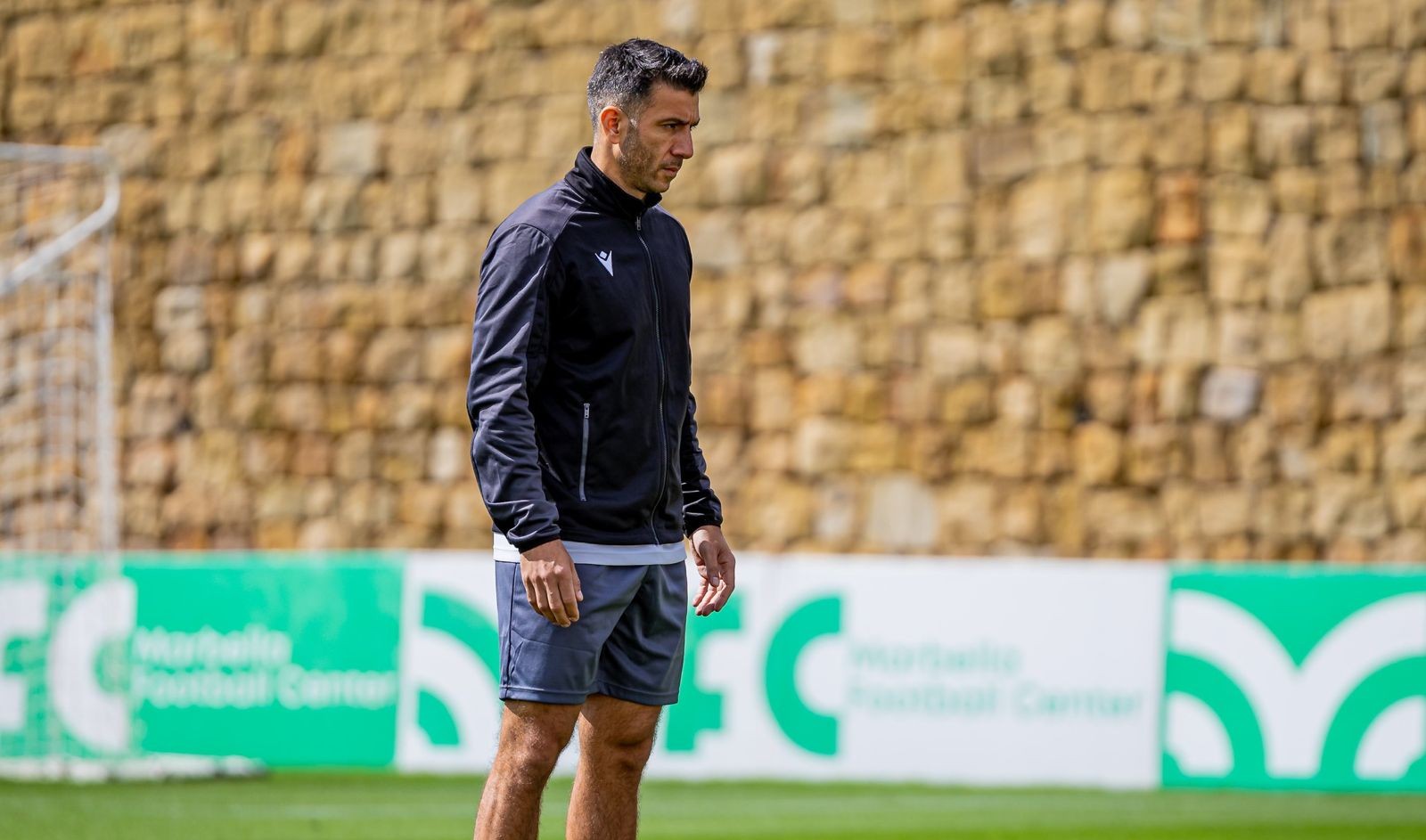
Profile
Role: UEFA A Licensed Coach and Head of Scouting currently working at Al Ula SC in Saudi Arabia
Specialisation: Coaching, scouting, analysis, player development and strategic leadership
Experience: Portugal, England, Gibraltar, Saudi Arabia, and international football environments
Focus Areas: Academy development, elite coaching, scouting operations, tactical analysis, performance consultancy and long term academy models
Building Modern Football Through Development, Analysis, and Strategic Leadership
Modern football increasingly demands professionals who can combine tactical understanding, player development, recruitment strategy, data analysis, and organizational structure into one clear football identity. Pedro Castro represents exactly this modern profile.
Pedro Castro represents exactly this modern profile.
As a UEFA A Licensed Coach and Head of Scouting currently working at Al Ula SC in Saudi Arabia, Pedro Castro has built an international career that combines academy development, elite coaching, scouting operations, tactical analysis, and performance consultancy across several football environments.
What makes his profile particularly interesting is the balance between technical football expertise and strategic organizational thinking. Castro is not only involved in coaching players on the pitch, but also in designing football structures, development systems, recruitment processes, and long term academy models.
His current role at Al Ula SC reflects the growing demands of modern football organizations. Working as Head of Scouting and Assistant Manager for the U17 and U18 teams, he contributes across multiple departments including player development, tactical periodization, scouting, match preparation, data analysis, and academy infrastructure.
One of his most significant contributions has been the creation of the club’s scouting and analysis department from the ground up. He designed a national U10 to U21 player database integrating advanced performance metrics while also helping establish domestic and international scouting networks. This reflects an increasingly important trend in modern football where successful clubs no longer rely purely on traditional scouting, but instead integrate analytics, structured profiling, and long term development planning into recruitment strategy.
Beyond recruitment, Pedro Castro has also focused heavily on individualized player development. Through the implementation of Individual Development Plans and tactical performance analysis, he works closely with players to improve decision making, tactical understanding, technical execution, and overall game intelligence.
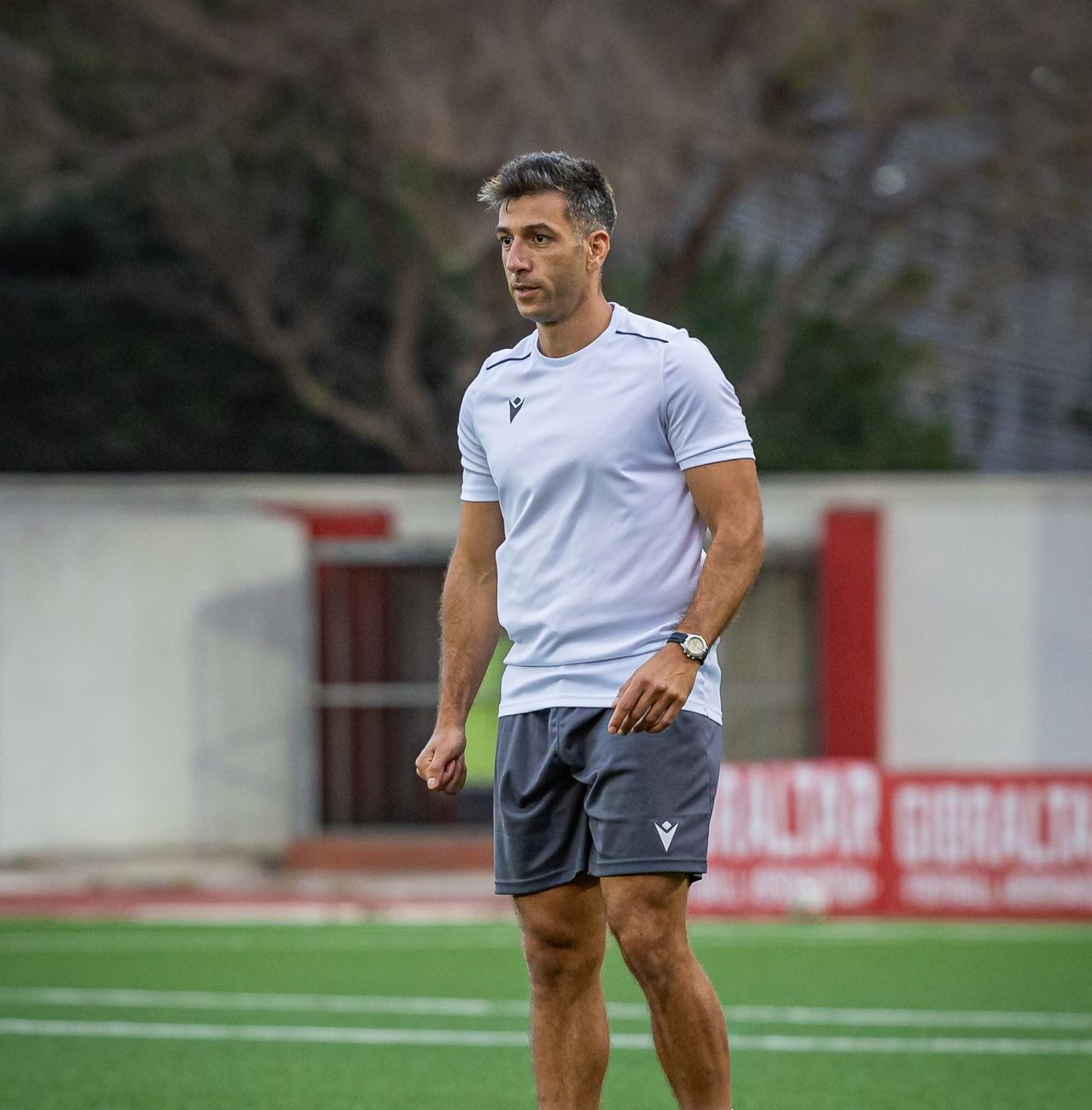
His portfolio demonstrates a highly detailed and structured football methodology. From tactical microcycle planning to game model implementation and opposition analysis, his work reflects a process driven approach built around modern performance principles. The integration of video analysis, positional coaching, transition principles, and individualized tactical feedback highlights his commitment to creating high performance learning environments for players and teams.
Castro’s football journey has taken him through several international environments. Earlier in his career, he worked within the academy structure of SL Benfica, one of the world’s most respected talent development institutions. He later worked at the Portuguese Primeira Liga club First Team, CD Nacional (where all started for Cristiano Ronaldo) held roles at CS Marítimo, Arsenal Soccer Schools, Wingate and Finchley, FC Bruno’s Magpies, Abha Club, and the Gibraltar Football Association, continuously expanding his understanding of player development across different football cultures and competitive levels.
His experience at FC Bruno’s Magpies in Gibraltar further strengthened his exposure to senior football and European competition environments. During his time there, the club qualified for the UEFA Conference League and achieved a notable victory over Derry City FC in the qualifying rounds.
Academically, Pedro Castro combines football experience with strong educational foundations. He holds a PG Diploma in Sports Coaching from Loughborough University and a Sports Science degree from the Polytechnic Institute of Guarda. In addition to his UEFA A Licence and Elite Youth A Licence, he has pursued further education in tactical methodology, set pieces, systems based coaching, and even Python coding to strengthen his analytical and technological capabilities.
This continuous investment in education reflects one of the defining characteristics of his professional philosophy: football development should evolve alongside modern technology, data interpretation, and tactical innovation.
Football development should evolve alongside modern technology, data interpretation, and tactical innovation.
Alongside his club roles, Pedro Castro is also the founder of PPC360, a performance consultancy platform where he advises professional and international players through remote tactical analysis, video breakdowns, and individualized development support. His client portfolio includes players connected to clubs such as Inter Miami, Inter Milan Women, Sassuolo, Como 1907, and SSC Bari.
Testimonials from coaches and players consistently highlight his attention to detail, tactical clarity, communication skills, and ability to improve individual player understanding.
At a time when football organizations are increasingly looking for professionals capable of combining coaching, scouting, analysis, and strategic planning into one integrated process, Pedro Castro represents a modern football operator with both technical expertise and long term developmental vision.
His profile reflects a broader evolution within the game itself: football leadership today is no longer defined only by experience on the training pitch, but by the ability to connect methodology, data, recruitment, communication, and player development into one sustainable football ecosystem.
Key Insights
- Pedro Castro represents exactly this modern profile.
- One of his most significant contributions has been the creation of the club’s scouting and analysis department from the ground up.
- Football development should evolve alongside modern technology, data interpretation, and tactical innovation.
Our Exclusive Interview with Pedro Castro
Your work combines coaching, scouting, analysis, and player development. How important is it today for football professionals to understand multiple areas of the game instead of specializing in only one role?
I think the game is moving towards people having a broader understanding of football rather than operating inside one isolated department. If you look at player development properly, it is impossible to separate coaching, analysis, recruitment, psychology, physical work and individual development. They all affect each other on a daily basis. A coach who understands scouting profiles can individualise development better. An analyst who understands coaching methodology can communicate information in a way that actually impacts training. Someone leading an academy or performance department today needs to understand how all these areas connect operationally as well as technically.
It reminds me a lot of how players themselves have evolved. Years ago, football was far more position-specific. Now you see centre-backs stepping into midfield, full-backs becoming playmakers, forwards pressing like midfielders and players adapting to multiple game models. Staff profiles are evolving in the same direction. Clubs increasingly value people who can move between departments, communicate across different areas of the club and understand the bigger picture rather than only their own silo.
At the same time, I think there is still a divide between more traditional football environments and modern structures. In some old-school clubs, someone with experience across coaching, scouting, analysis and player development can sometimes be viewed as “a bit of everything, but what are they really specialised in?” That perception still exists. But many modern clubs are actually searching for those hybrid profiles because football operations have become more interconnected. The ability to link departments together, align methodology and understand the full player pathway is becoming a major strength rather than a weakness.
At Al Ula SC, you helped build the scouting and analysis department from the ground up. What were the biggest priorities when creating a modern football structure from scratch?
The biggest priority was first to understand what the club actually needed rather than trying to copy what bigger clubs were doing. When you build a department from scratch, especially in an environment that is still developing structurally, you have to be very strategic with the process. There is no point creating complicated workflows, expensive reporting systems or large scouting structures if the day-to-day football reality of the club cannot support them. We focused a lot on creating something practical, sustainable and useful for coaches, management and players immediately.
One of the biggest challenges was staffing. None of the people who eventually became full-time members of the scouting and analysis department had previous professional experience in those areas. Because of that, the recruitment process was much more about identifying the right attributes than looking at CVs. Curiosity, reliability, willingness to learn, communication skills and football understanding were far more important to me than whether someone already knew how to use a specific software. There was also the challenge of working across Portuguese/English and Arabic native speakers, so communication and adaptability became a huge part of the process. A lot of the work early on was not only building a department, but also building a shared football language internally.
The other major part was selecting the right tools within the reality of the budget. In football, it is easy to waste money on software or hardware that looks impressive but does not actually improve workflow. We spent a lot of time identifying what would genuinely make the process more efficient for scouting, video analysis, reporting and communication between departments. The aim was always to maximise output with the resources available rather than chase the most expensive solutions.
I also think an important part of building any modern football structure is creating trust between departments. Analysis and scouting can sometimes become isolated if coaches or management feel they are receiving information instead of collaboration. From the start, I wanted the department to support decision-making rather than simply produce reports. That relationship side is probably just as important as the technical side when you are building something new inside a football club.
Modern academies increasingly focus on Individual Development Plans and data driven coaching. How do you balance data and analytics with the human side of player development?
I think data and analytics are extremely valuable in modern player development, but only if they help the player understand the game and themselves better. One of the biggest mistakes academies can make is overloading players with information that is too complicated or disconnected from their reality on the pitch. For me, the key is always how the information is delivered. It has to be clear, concise and built around a simple shared language that the player understands immediately. Same goes to session design. The objective is not to impress the player with data or shinny drills, it is to help them improve performance and decision-making. Everything with do must have a clear purpose.
Another important aspect is understanding the person behind the player. Two players can receive exactly the same feedback and react completely differently. Some players respond well to detailed information, others need very simple coaching points and confidence-building. Even how you present the information (Tactical Board, video feedback, in front of a group of people or individually, etc). The human side of development is still fundamental because football also has an emotional component. Building trust with the player is what allows the information to actually have an impact.
I also think data should support observation, not replace it. Numbers can help identify trends, strengths or areas for improvement, but they do not always explain context. A player’s role, tactical demands, physical maturity, confidence level or even personal situation can completely change how performance should be interpreted. That is why video, live observation and daily interaction with the player remain just as important as any dashboard or report.
The best environments are usually the ones where data, coaching staff and player communication are all aligned. When the messages coming from coaches, analysts and development staff are consistent, players understand their pathway much more clearly and the whole process becomes more effective.
You have worked in Portugal, England, Gibraltar, Saudi Arabia, and international football environments. How have these different football cultures shaped your coaching and leadership philosophy?
I think the biggest influence on my coaching and leadership philosophy has not necessarily been the countries or environments themselves, but the people I worked with along the way inside those environments. Across Portugal, England, Gibraltar, Saudi Arabia and international football settings, I came across very different personalities, working methods and leadership styles. Some of them connected with me more than others and definitely shaped the way I see football operations, player development and leadership today.
One thing I strongly believe in is creating environments where people feel comfortable discussing any topic openly, including uncomfortable ones. In football, a lot of problems stay hidden because people are afraid to challenge ideas, question decisions or speak honestly. I think strong leadership is not about controlling every conversation, but about creating trust and accountability inside the environment. The best staff environments I have experienced were the ones where people could disagree professionally, challenge each other and still move in the same direction afterwards.
From a coaching perspective, my philosophy is very holistic. I do not see player development or performance as isolated areas. Technical, tactical, physical, psychological and environmental factors all influence each other daily. I also believe there is always margin for improvement, whether that is in ourselves, our staff structures, communication, training methodology or operational processes. The moment a club or coach believes they already have all the answers, development usually stops. I
Working across different football cultures also reinforced the importance of adaptability. Not every environment works the same way and not every player responds to the same approach. You have to understand the people in front of you, the cultural context and the reality of the club. At the same time, I think modern football increasingly rewards people who are creative, innovative and constantly looking for ways to improve performance. That hunger to evolve is something I value a lot both in myself and in the people I work with.
I also think it is very important for football to continue learning from other high-pressure industries and sports. There are a lot of valuable lessons outside football in areas such as leadership, communication, marginal gains, operational efficiency and performance culture. Sports like Formula 1 and the NBA, or even industries like aviation, are constantly evolving because they analyse processes in extreme detail and are never satisfied with standing still. Modern football is moving more and more in that direction as well, and I think clubs that stay open-minded and willing to learn from outside environments will continue to have an advantage.
Your portfolio highlights a very detailed tactical methodology and structured microcycle planning. How important is clarity and organization in creating high performance environments for young players?
I think clarity and organisation are fundamental in any high-performance environment, especially with young players. At academy level but also First Team level, players are already dealing with a huge amount of information and pressure daily, so one of the responsibilities of the staff is to create structure around them. The clearer the environment is, the easier it becomes for players to understand expectations, focus on development and perform consistently.
For me, structured microcycle planning and tactical methodology are not just about designing sessions or creating documents. It is about aligning every part of the process. Training content, physical load, tactical principles, analysis, individual development objectives and communication between departments all need to connect. When there is no alignment, players receive mixed messages and development becomes inconsistent.
The best people I have worked with in football are the ones who can understand and explain complex concepts in simple language, both theoretically and on the pitch.
Football is evolving rapidly through technology and performance analysis. Which innovations do you believe will have the biggest impact on scouting and player development over the next five years?
I think football is moving towards a much deeper integration between technology, performance analysis and decision-making across all departments of the club. A lot of the tools already exist today, but over the next five years I believe they will become far more accurate, accessible and integrated into daily workflows.
One area that I think will have a massive impact is advanced computer vision models. The ability to extract highly detailed positional and behavioural data directly from video is improving very quickly. We are moving beyond basic event data into much deeper analysis of movement patterns, scanning behaviour, off-ball positioning, pressing relationships, decision-making speed and tactical interactions between players. That will completely change both scouting and player development because clubs will be able to identify profiles and behaviours that are currently difficult to quantify consistently.
Wearable technology will also continue evolving, especially around injury prevention, load management, recovery and cognitive performance monitoring. At the moment, a lot of clubs still mainly use wearables for physical outputs, but I think we will start seeing more integration between physical, neurological and psychological data to create a more complete understanding of player readiness and development.
I also believe VR technology will become much more relevant in football environments. There are already some very interesting platforms in the market, particularly around decision-making, scanning, tactical understanding and scenario repetition. For younger players especially, the ability to repeatedly experience game situations cognitively without physical load could become a very valuable development tool.
Another area that I think will grow significantly is technology linked to the mental side of performance. Football has traditionally focused heavily on physical and tactical development, but areas such as emotional control, focus, stress management, confidence and decision-making under pressure are becoming increasingly important. I think clubs will invest much more into tools that help measure and develop these aspects in a more structured way.
From a recruitment perspective, I also think performance prediction and fit models will become much more sophisticated. Not only evaluating whether a player is individually talented, but whether they actually fit a specific game model (some platforms already do this well), dressing room dynamic or partnership structure within a team. In the future, platforms will increasingly try to predict chemistry between players and understand how certain profiles complement or negatively affect each other tactically and behaviourally. Recruitment will become much more contextual rather than simply talent identification in isolation.
At the same time, I still believe human understanding of the game will remain fundamental. Technology will improve decision-making, but football is still a human environment full of emotion, personality and context. The clubs that succeed will probably be the ones that combine strong football people with strong technological infrastructure rather than relying entirely on one or the other.
Technology will improve decision-making, but football is still a human environment full of emotion, personality and context.
Through PPC360, you advise professional and international players individually. What are the most common areas where elite players still need support and improvement today?
One of the biggest gaps at elite level today is still individual tactical development. Clubs work in highly collective environments and, many times, there is not enough time or staff available to deeply work on the specific details of each player’s game on a daily basis. That is where individual support becomes extremely important.
A good example is my work with David Ruiz from Inter Miami and the Honduras National Team. Through detailed video and data analysis, I identified several key areas that were limiting his impact as a modern DM/CM profile in MLS football. Offensively, we focused heavily on his body shape when receiving, low scanning frequency-especially the absence of critical scans before reception-improve his separation technique/recognising space, and a low number of box entries and deep runs. Defensively, we worked on defensive scanning, tracking runs in behind, and improving his jump pressing timing and technique.
Using a combination of data analysis, video feedback and VR-based cognitive training, we created an individual development process specifically adapted to his positional demands and game model. The progression was very positive – David earned more playing time, secured a new contract, and scored 3 goals in his first 9 appearances for the Honduras National Team playing for WCQ.
At the highest level, these small individual tactical details make a massive difference. Modern football, especially for midfield players, is increasingly defined by scanning behaviour, positioning, decision-making speed and the ability to interpret pressure situations correctly. Those are areas where elite players still need constant support and refinement.
Top-level players are constantly trying to improve and adapt. The ones who usually progress the most are the players who stay open-minded, reflective and willing to keep developing despite already competing at a very high level.
Saudi Arabian football is currently investing heavily into long term football development. What opportunities do you see for academy football and youth development within the region in the coming years?
I think Saudi Arabia has a huge opportunity over the next few years to build something very strong in academy football and youth development, especially because the investment is no longer focused only on the first-team level. There is a clear shift towards infrastructure, talent identification, coaching education and long-term player pathways, which is probably the most important part if the objective is sustainable growth.
One thing that stands out to me is the size of the talent pool and the passion for football within the country. There are many young players with strong technical qualities and natural competitiveness, but historically the developmental structures were not always consistent across all age groups. As academies become more organised and clubs invest more into methodology, staffing, analysis, sports science and player care, I think the level of development will improve significantly.
I also believe there is a massive opportunity around coach and staff education. Modern football environments require much more than traditional coaching alone. Areas such as individual development, analysis, psychology, physical preparation and operational organisation are becoming increasingly important. Saudi football is attracting people from different football cultures, and if that knowledge is integrated properly with local football identity and culture, the long-term impact could be very strong. There is also a strong investment in the development of local coaches, which I believe will play a major role in creating long-term sustainable growth within Saudi football.
Another important aspect is the willingness to innovate. Some Saudi clubs and organisations are investing into technology, facilities and performance infrastructure much faster than many people outside the region realise. If that investment is combined with patience and proper long-term planning rather than only short-term success, the academy landscape can grow very quickly. This is my second spell in Saudi Arabia, after my first experience with Abha Club in 2023, and the progression I have seen in just three years has been incredible.
Looking ahead, what kind of football project or long term vision motivates you most as a coach and football strategist?
Being part of the next Moneyball story!
FAQ
Who is Pedro Castro?
Pedro Castro is a UEFA A Licensed Coach and Head of Scouting currently working at Al Ula SC in Saudi Arabia.
What is Pedro Castro’s football specialisation?
Pedro Castro’s work combines coaching, scouting, analysis, player development and strategic leadership.
What is PPC360?
PPC360 is a performance consultancy platform where Pedro Castro advises professional and international players through remote tactical analysis, video breakdowns, and individualized development support.