

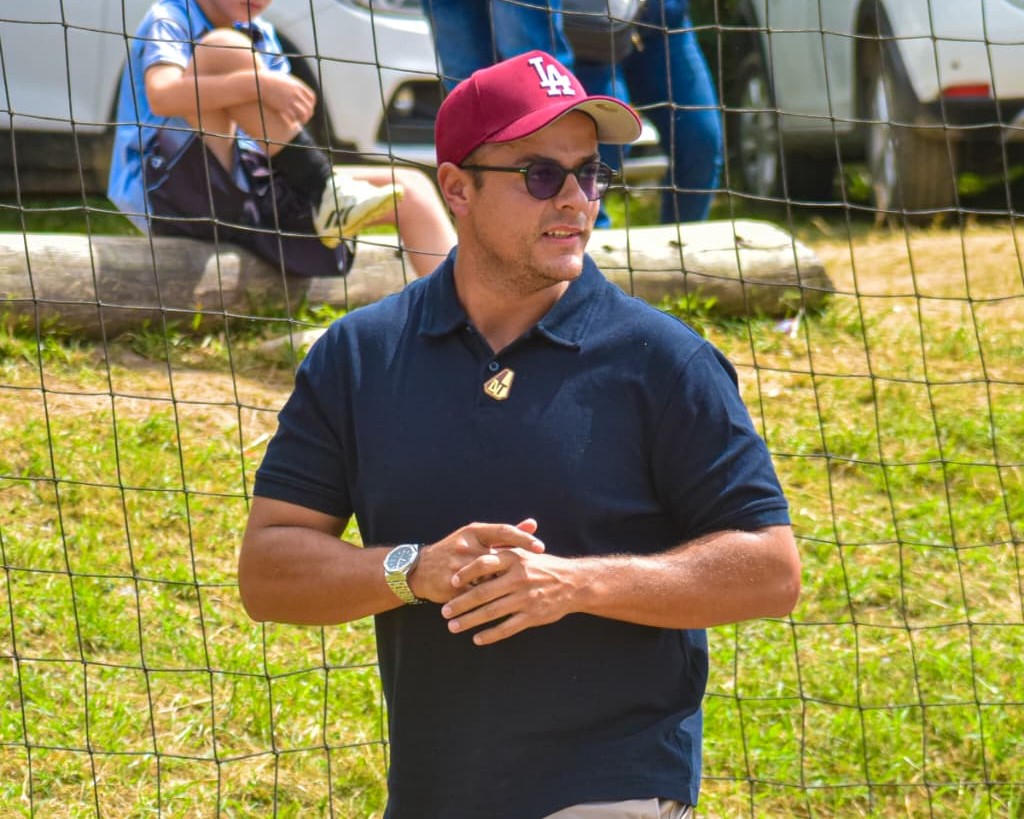
Profile
Role: Sporting Coordinator at Deportes Tolima
Specialisation: strategic planning, talent development, sporting leadership, and organizational management
Experience: Fortaleza CEIF, Colombian Football Federation, Sportainment, GD Sports, Hub del Fútbol, Deportes Tolima
Focus Areas: talent development, recruitment strategy, performance evaluation, and long-term sporting planning
Introduction
Daniel Arango Zuluaga represents a new generation of football executives who combine strategic planning, talent development, sporting leadership, and organizational management to build sustainable football projects. With a background in Business Administration, Football Management, Scouting, and Sporting Direction, he has developed a profile that bridges the gap between long-term vision and day-to-day football operations.
Throughout his career, Arango has worked across multiple areas of the football industry, including sporting management, talent identification, recruitment processes, player development, education, and consultancy. His experience reflects a strong belief that successful football organizations are built through structure, planning, and the alignment of sporting and institutional objectives.
His experience reflects a strong belief that successful football organizations are built through structure, planning, and the alignment of sporting and institutional objectives.
One of the defining chapters of his career came at Fortaleza CEIF in Colombia, where he served as Technical Secretary and played an important role in the club’s sporting development during a period that culminated in promotion to Colombia’s First Division. Beyond recruitment and talent management, his responsibilities included designing sporting policies, development processes, strategic partnerships, and infrastructure improvement initiatives that supported the club’s long-term growth.
His professional journey also includes roles with the Colombian Football Federation as Pre-Olympic Attaché, Sporting Director at Sportainment, CEO and Co-Founder of GD Sports, Co-Founder of Hub del Fútbol, and currently Sporting Coordinator at Deportes Tolima, where he continues to contribute to the development of football structures and sporting projects.
Academically, Arango has invested heavily in his development, holding qualifications in International Business Administration, Football Management, Sports Law, Scouting, Sporting Direction, Recruitment Processes, and Youth Development Strategies. This educational foundation complements his practical experience and reinforces his holistic understanding of modern football organizations.
Known for his focus on talent development, recruitment strategy, performance evaluation, and long-term sporting planning, Daniel Arango represents an ambitious football executive whose goal is to help clubs build competitive, sustainable, and future-oriented sporting structures capable of creating both sporting and institutional success.
Key Insights
- Daniel Arango Zuluaga represents a new generation of football executives who combine strategic planning, talent development, sporting leadership, and organizational management to build sustainable football projects.
- His experience reflects a strong belief that successful football organizations are built through structure, planning, and the alignment of sporting and institutional objectives.
- Known for his focus on talent development, recruitment strategy, performance evaluation, and long-term sporting planning, Daniel Arango represents an ambitious football executive.
Our Exclusive Interview with Daniel Arango Zuluaga
During your time as Technical Secretary at Fortaleza CEIF, the club achieved promotion to Colombia’s First Division. What were the key sporting and organizational decisions that helped make that success possible, and what did you learn from the experience?
One of the key factors behind Fortaleza CEIF’s promotion was the club’s deep understanding of the player market and its ability to identify players with strong performance potential. Recruitment was based on a clear sporting vision, with profiles that matched the club’s needs and long-term objectives rather than short-term solutions.
Equally important was the trust and alignment between the sporting department and the board of directors. Having the support of the board for the players and decisions proposed by the technical area created stability, consistency, and confidence throughout the process. Success in football is rarely the result of one decision; it is usually the consequence of many aligned decisions made over time.
Success in football is rarely the result of one decision; it is usually the consequence of many aligned decisions made over time.
The experience reinforced my belief that sustainable success comes from conviction, patience, and alignment. When ownership, management, and the sporting department work toward the same objective, clubs can create environments where both players and staff can perform at their highest level.
Your career has combined sporting management, scouting, player development, and strategic planning. How do you define the role of a modern Sporting Director in today’s football industry?
I believe the modern Sporting Director is the person responsible for transforming the club’s vision into a structured sporting plan. Their role is to ensure that every sporting decision aligns with the objectives established by ownership and senior leadership, while also protecting the club’s long-term identity and sustainability.
In many football cultures, particularly in Colombia, the Sporting Director is still a relatively new role. Historically, clubs have been highly presidential, with many sporting decisions concentrated in a single figure. However, modern football requires specialized leadership capable of connecting recruitment, player development, performance, methodology, and long-term planning.
For me, a Sporting Director is not simply a decision-maker in the transfer market. It is a leadership position responsible for building processes, aligning departments, creating succession plans, and ensuring that the club can remain competitive beyond individual coaches, players, or sporting cycles.
For me, a Sporting Director is not simply a decision-maker in the transfer market.
Throughout your work, you have placed a strong emphasis on talent development and recruitment processes. What do you believe clubs often get wrong when trying to build sustainable player pathways?
The most common mistake is impatience. Many clubs begin development projects with enthusiasm, but abandon them after the first difficult moments or negative results. Player development is a long-term investment, and sustainable pathways require consistency, trust, and time.
Too often, clubs evaluate youth development solely through short-term competitive outcomes instead of measuring individual growth, progression, and readiness for higher levels. When immediate results become the only priority, development processes are frequently interrupted before they have the opportunity to mature.
Building a sustainable pathway requires a clear methodology, alignment between all age groups, and the discipline to maintain the process even during challenging periods. The clubs that consistently produce talent are usually those that remain committed to their development philosophy over many years.
You have spoken about the importance of aligning sporting strategy with institutional objectives. If you were joining a new club tomorrow, what would be the first three areas you would evaluate before building a long-term sporting plan?
The first thing I would evaluate is the club’s context and identity. Every club has its own history, culture, ambitions, and realities. Before making any decisions, it is essential to understand where the club is today, where it wants to go, and what makes it unique within its environment.
The second area would be the strategic vision of the institution. A sporting plan cannot exist independently from the club’s broader objectives. Understanding the expectations of ownership and leadership allows the sporting department to build a roadmap that is realistic, measurable, and aligned with the organization’s long-term goals.
The third area would be the people. Football remains a people-driven industry, and the quality of the human resources within a club often determines the success of any strategy. I would evaluate the leadership structure, technical staff, recruitment department, academy personnel, and support teams to understand their capabilities, strengths, and areas for improvement.
Only after understanding the club’s identity, strategic direction, and human capital can a Sporting Director build a sustainable sporting plan capable of creating long-term value both on and off the pitch.
Looking ahead, what type of opportunity are you seeking in the football industry, and where do you believe you can create the greatest impact as a football executive over the next stage of your career?
Like any professional, I am motivated by opportunities that allow me to continue growing, learning, and creating meaningful impact. Looking ahead, I am particularly interested in projects that combine strategic leadership, talent development, and long-term football planning.
I believe I can create the greatest impact in environments where there is a genuine commitment to building sustainable football structures. Whether at club level, within a federation, or as part of a multi-club ownership model, I am passionate about designing systems that connect recruitment, player development, performance, and organizational growth.
In the future, I would be honored to contribute to the development of football in Colombia through a role within the Federation, helping to strengthen pathways for players, coaches, and clubs across the country. At the same time, I am fascinated by multi-club ownership structures because they offer unique opportunities to create integrated development strategies, share knowledge, and maximize talent potential across different markets.
Ultimately, my ambition is not simply to work at a higher level, but to help build organizations that leave a lasting legacy through strong processes, sustainable development, and a clear football identity.
Ultimately, my ambition is not simply to work at a higher level, but to help build organizations that leave a lasting legacy through strong processes, sustainable development, and a clear football identity.
FAQ
Who is Daniel Arango Zuluaga?
Daniel Arango Zuluaga represents a new generation of football executives who combine strategic planning, talent development, sporting leadership, and organizational management to build sustainable football projects.
What was one of the defining chapters of Daniel Arango Zuluaga’s career?
One of the defining chapters of his career came at Fortaleza CEIF in Colombia, where he served as Technical Secretary and played an important role in the club’s sporting development during a period that culminated in promotion to Colombia’s First Division.
What is Daniel Arango Zuluaga known for?
Known for his focus on talent development, recruitment strategy, performance evaluation, and long-term sporting planning, Daniel Arango represents an ambitious football executive whose goal is to help clubs build competitive, sustainable, and future-oriented sporting structures capable of creating both sporting and institutional success.