

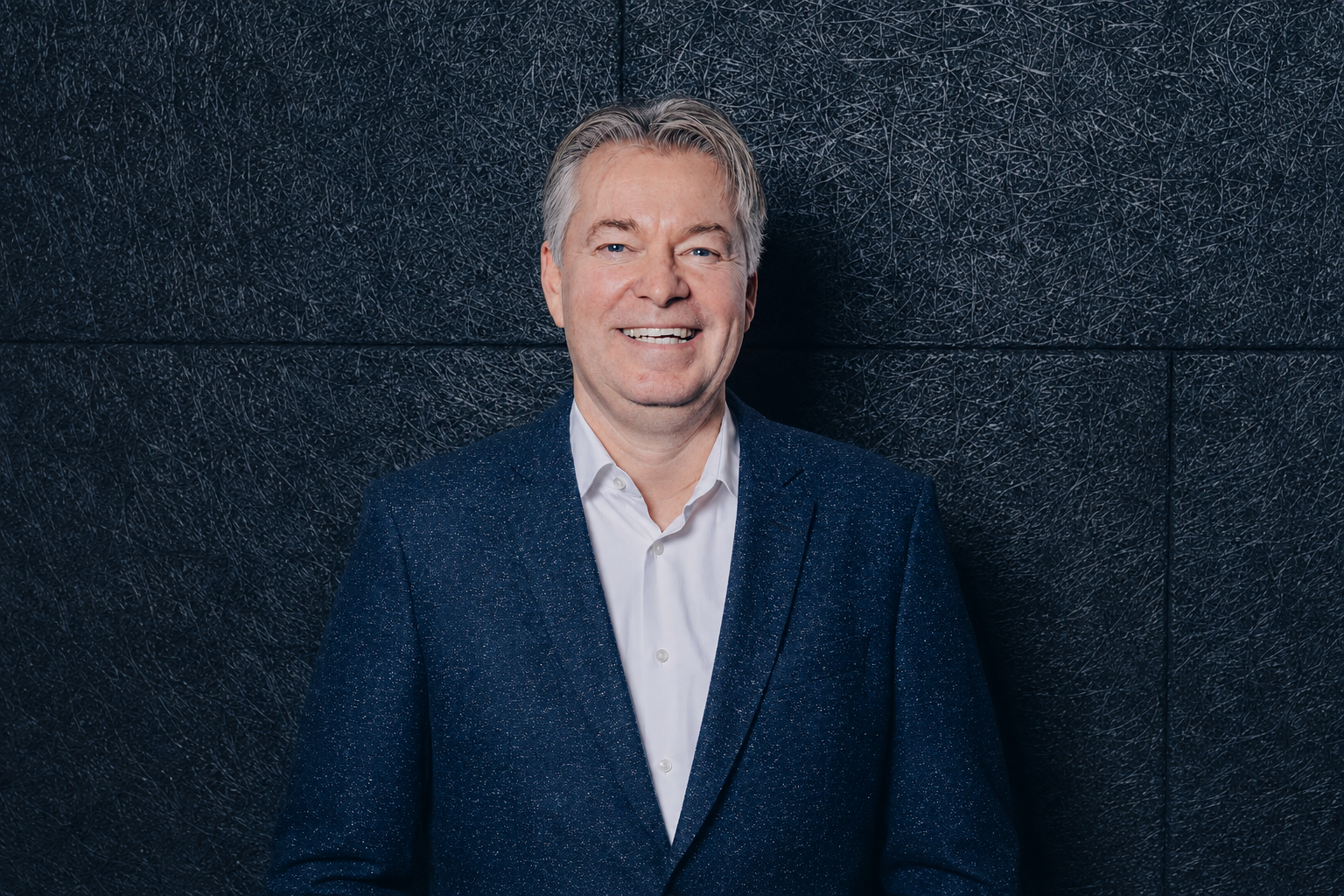
Profile
Role: member of the executive management board at SV Waldhof Mannheim
Specialisation: marketing, media rights, sponsorship, and commercial strategy within professional sport
Experience: former youth international and Bundesliga professional to executive leadership roles within top-level German football
Focus Areas: structural, economic, and organizational development
Introduction
Denni Strich represents a leadership profile in modern professional football that combines sporting experience, entrepreneurial thinking, and strategic organizational expertise at the highest level. From former youth international and Bundesliga professional to executive leadership roles within top-level German football, he embodies a rare combination of operational depth and structural leadership.
His journey began on the pitch, where he played professionally for clubs including 1. FC Kaiserslautern and developed an early understanding of the demands of elite football. Alongside his playing career, he built a strong academic foundation by studying Business Administration, a background that would later shape his management career significantly.
Strich entered the business side of sport through roles at Henkel and SportA, where he quickly assumed responsibility in marketing and sports commercialization. This period laid the foundation for his extensive expertise in marketing, media rights, sponsorship, and commercial strategy within professional sport.
His most influential chapter followed at the German Football Association (DFB), where he held several senior leadership positions over many years, including Managing Director for Marketing, Sales and Events. In this role, he oversaw key areas such as media rights, sponsorship, event management, and digital commercialization, while also playing an important role in the creation and development of the DFB GmbH. Under his leadership, revenues from sponsorship and media rights grew significantly, while sustainable commercial structures for German football were established.
With his move to TSG Hoffenheim, Strich expanded his profile further by taking on operational executive responsibility at Bundesliga level. As Managing Director, he was responsible not only for marketing and sales, but also for communications, finance, controlling, and overall matchday operations. During this period, he initiated major digitalization projects in cooperation with SAP and oversaw the publication of the club’s first sustainability report, underlining his strategic mindset and future-oriented leadership approach.
The latest step in his career is his position as a member of the executive management board at SV Waldhof Mannheim, where he now contributes his broad experience toward the structural, economic, and organizational development of one of Germany’s traditional football clubs.
What particularly distinguishes Denni Strich is not only his professional expertise, but also his leadership philosophy. An external assessment by Egon Zehnder described him as a loyal, structured, and highly professional leader with clear communication skills and strong team orientation. He is regarded as a stabilizing figure within complex organizations who knows how to connect people, provide direction, and create sustainable results.
Across every stage of his career, a clear pattern emerges: Denni Strich is not a short-term manager, but a builder of structures and a bridge between football and business. His ability to align economic objectives with sporting demands makes him one of the most underestimated, yet highly effective leadership figures in German football.
Denni Strich is not a short-term manager, but a builder of structures and a bridge between football and business.
At a time when football organizations are becoming increasingly complex and economically demanding, Denni Strich represents exactly what modern clubs require: clear structures, sustainable development, and leadership built on integrity.
Key Insights
- Denni Strich represents a leadership profile in modern professional football that combines sporting experience, entrepreneurial thinking, and strategic organizational expertise at the highest level.
- Denni Strich is not a short-term manager, but a builder of structures and a bridge between football and business.
- At a time when football organizations are becoming increasingly complex and economically demanding, Denni Strich represents exactly what modern clubs require: clear structures, sustainable development, and leadership built on integrity.
Our Exclusive Interview with Denni Strich
Interview – Denni Strich
Leadership, Commercial Strategy and Structural Development in Modern Professional Football
You have worked both as a professional player and in executive management positions within football. How has this combination of sporting and business perspectives shaped your view of leadership in modern football organizations?
The experience from both worlds has sharpened my perspective. Success in football is always the result of sporting performance combined with strong structures behind the scenes. As a player, you learn how important clarity, trust, and reliability are in everyday work. As an executive, the challenge is to create exactly these conditions in a structured and sustainable way.
For me, leadership in modern football means understanding the sporting side without unnecessarily interfering in operational processes, while at the same time building organizations that enable performance. Ultimately, it is always about reducing complexity and allowing people to focus on what matters most: performance on the pitch.
For me, leadership in modern football means understanding the sporting side without unnecessarily interfering in operational processes, while at the same time building organizations that enable performance.
During your time at the DFB and in the Bundesliga, you were heavily involved in marketing, media rights, and commercial strategy. In your opinion, what are the key success factors for building a football club that is both financially sustainable and sportingly competitive?
The key factor is balance. Clubs must remain financially stable without losing their sporting ambition. From my perspective, there are three decisive elements.
First, a clear strategic positioning and a strong understanding of what the club wants to represent both sportingly and commercially.
Second, the development of active and independently controllable revenue streams, particularly in sponsorship, digital commercialization, and fan engagement. Clubs need to become less dependent on centrally distributed rights and instead build their own commercial strengths.
Third, there must be strong alignment between sport and business. These departments cannot operate separately. They must strengthen each other.
Sustainable success is never created through short-term measures, but through consistently developed structures.
Sustainable success is never created through short-term measures, but through consistently developed structures.
You have supported organizations through different stages of development, from helping build the DFB GmbH to advancing Bundesliga club structures. Which structural elements do you believe are essential for ensuring long-term stability and growth within a football club?
Long-term stability in football is never accidental. It is the result of clear structures and the right organizational culture.
Structurally, clubs need clean governance, clearly defined responsibilities, transparent decision-making processes, and a strategic vision that provides direction beyond short-term cycles.
Equally important, however, is the internal culture of the organization. Employees are not a secondary factor. They are a central part of a club’s overall performance capability. It is about creating an environment shaped by trust, clarity, and accountability.
Sustainably successful clubs are those that manage to connect structure and culture effectively.
Football commercialization has fundamentally changed in recent years, moving away from pure visibility toward relevance, interaction, and authentic partnerships. Which developments do you believe will shape the commercial future of football?
Traditional sponsorship alone is no longer enough.
Successful clubs think in terms of partnerships where both sides pursue clear objectives and create value together. The decisive factor is activation, meaning how rights are brought to life and how a credible story is created between the club, its partners, and the fans.
This requires individual concepts instead of standard packages, data-driven communication instead of broad targeting, and formats that work both digitally and on-site.
At the same time, clubs must increasingly operate like media platforms, with their own content, direct communication with fans, and a clear brand identity across all channels.
In the end, the size of a deal is less important than the ability to make partnerships tangible and create sustainable impact.
As Managing Director, you were responsible not only for strategy, but also for operational execution and organizational structures. How do you manage complex organizations efficiently while ensuring a clear and unified direction?
For me, efficient leadership is based on a combination of trust and accountability.
It is important to work with people who are genuine team players and who trust each other.
At the same time, organizations need clear goals, defined responsibilities, and a strong performance-oriented mindset. Ultimately, success depends on everyone within the club pulling in the same direction and working together toward the best possible result.
You are known as a highly team-oriented leader with clear communication skills. Which leadership principles are most important to you when motivating employees in high-performance environments while still achieving sustainable results?
My leadership principles are based primarily on trust. For me, trust is the foundation of every successful collaboration.
On top of that, reliability and transparency are essential in order to create clarity and provide orientation.
At the same time, I place great importance on genuine teamwork. Another key principle for me is tolerance for mistakes. Employees must have the freedom to act independently and continue developing. That also includes the security of knowing that mistakes are allowed, as long as we learn from them and continuously improve.
For me, trust is the foundation of every successful collaboration.
In your current role within the executive management of SV Waldhof Mannheim, you are once again supporting a club during an important phase of development. Which strategic priorities are you focusing on in order to balance sporting success, financial stability, and structural growth?
The focus is clearly on structural development and financial stabilization. The objective is to create the foundation for sustainable sporting success.
Concretely, this means working on the further development of our revenue structures, improving organizational efficiency, and strengthening the club’s long-term strategic direction.
At the same time, it is important to preserve and further develop the club’s identity and tradition. Sustainable success can only emerge when structure, financial stability, and sporting ambition are fully aligned.
FAQ
Who is Denni Strich?
Denni Strich represents a leadership profile in modern professional football that combines sporting experience, entrepreneurial thinking, and strategic organizational expertise at the highest level.
What particularly distinguishes Denni Strich?
What particularly distinguishes Denni Strich is not only his professional expertise, but also his leadership philosophy.
What does Denni Strich represent for modern clubs?
At a time when football organizations are becoming increasingly complex and economically demanding, Denni Strich represents exactly what modern clubs require: clear structures, sustainable development, and leadership built on integrity.