

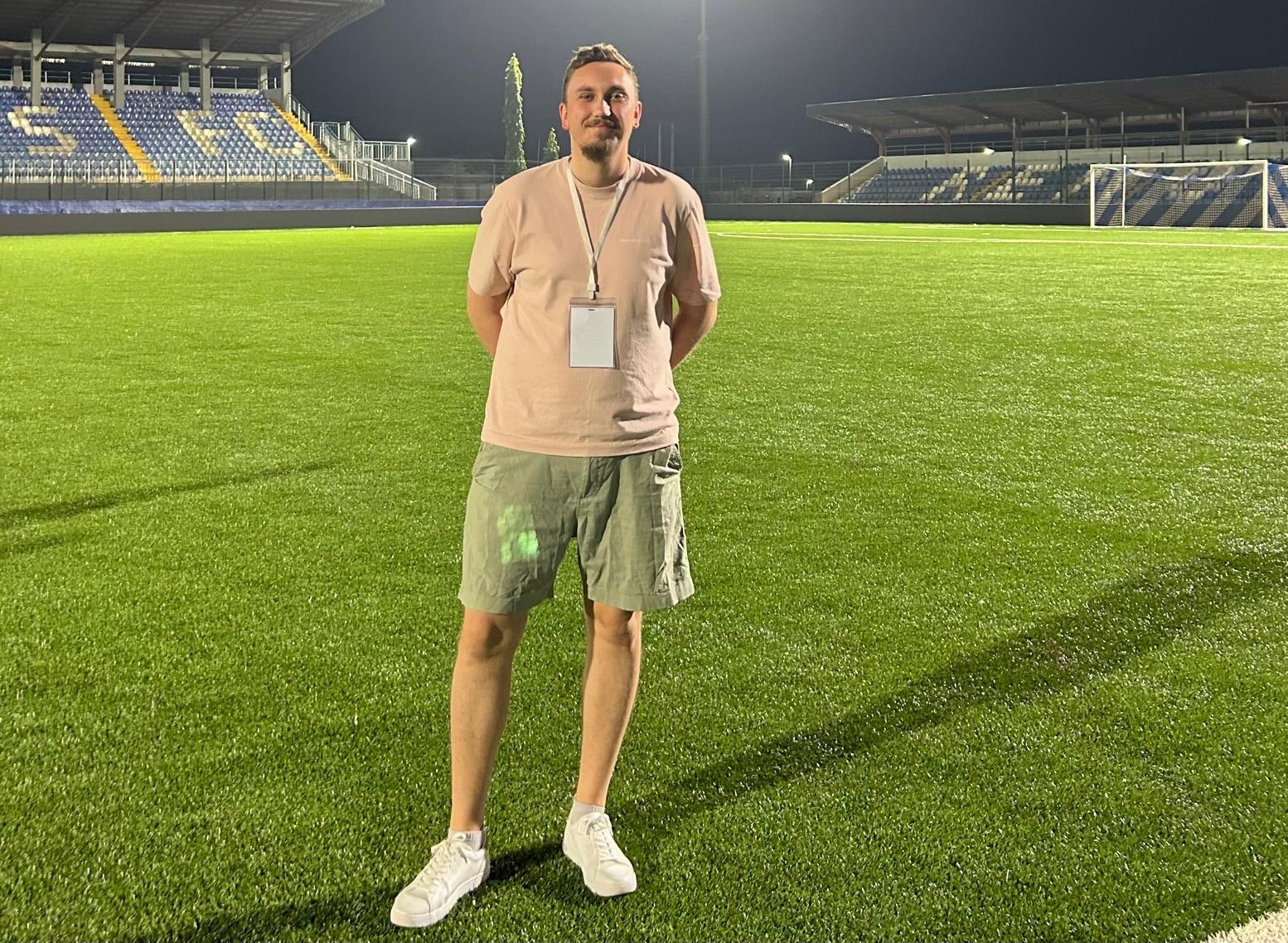
Profile
Role: International Scouting Consultant for FC Dallas
Specialisation: Academy talent identification, international scouting, and deep expertise in Scandinavian football markets
Experience: Norway, Sweden, Major League Soccer recruitment structures, AIK, Vålerenga, Benelux region, and Molde FK’s academy environment
Focus Areas: Player identification, market intelligence, recruitment analysis, Scandinavian football markets, and talent pathways from academy football to the professional game
Introduction
Kristian Malcolm Verkoijen represents a new generation of football recruitment professionals whose profile combines academy talent identification, international scouting, and deep expertise in Scandinavian football markets. Having worked across Norway, Sweden, and Major League Soccer recruitment structures, he has developed a strong reputation for identifying emerging talent and understanding the pathways that allow players to progress from academy football to the professional game.
Currently working as an International Scouting Consultant for FC Dallas, Verkoijen is responsible for covering Scandinavia, the Netherlands, and Germany while also supporting the identification of African talent for North Texas SC. His work focuses on player identification, market intelligence, recruitment analysis, and maintaining extensive databases of potential targets for one of MLS’s most respected player development organizations.
His work focuses on player identification, market intelligence, recruitment analysis, and maintaining extensive databases of potential targets for one of MLS’s most respected player development organizations.
Prior to joining FC Dallas, Verkoijen worked with AIK, one of Sweden’s most historic clubs, where he operated across both academy and first-team recruitment. His responsibilities included identifying elite youth talent throughout Scandinavia with a specialized focus on Sweden, scouting major national and international tournaments, and supporting first-team recruitment processes through live scouting, video analysis, and data-informed reporting. Several players identified during his time at AIK later progressed to Swedish youth national teams.
His experience also includes scouting roles with Vålerenga in Norway, as well as extensive live scouting across the Benelux region while studying in Amsterdam, focusing on both Scandinavian and Benelux markets. He also gained valuable experience within Molde FK’s academy environment. These experiences provided him with a comprehensive understanding of player development structures, recruitment planning, and academy operations across some of Northern Europe’s strongest football ecosystems.
Fluent in Norwegian, Swedish, and English, and educated in Sports Management, Marketing, and Sport Commerce, Verkoijen combines modern recruitment methodologies with a strong understanding of football culture throughout the Nordic region. His profile reflects a recruitment specialist who not only understands talent identification but also the broader football environments that consistently produce players capable of succeeding in top European leagues and international football.
Key Insights
- Kristian Malcolm Verkoijen combines academy talent identification, international scouting, and expertise in Scandinavian football markets.
- His work with FC Dallas covers Scandinavia, the Netherlands, Germany, and African talent identification for North Texas SC.
- His experience includes AIK, Vålerenga, Molde FK’s academy environment, and live scouting across the Benelux region.
Our Exclusive Interview with Kristian Malcolm Verkoijen
Having worked extensively across Norway, Sweden, and the wider Scandinavian region, what makes the Nordic player development model so successful, and what lessons can other football markets learn from it?
One of the biggest strengths in the Scandinavian player development model has been that the development of the player is the main focus, rather than results at the academy level. Across Norway and Sweden, the clubs create an environment where young players are given responsibility and trust to solve problems independently. They are also often exposed to a first team environment early to gain experience of senior football, giving them a clearer standard of what is expected.
Another important factor is that the player can actually see a clear pathway from academy to first team football. In contrast to some of the top European clubs where the threshold is much higher to break through, creating motivation within the player and often accelerating development.
I also think that Scandinavian clubs emphasize professionalism and education alongside the technical and physical development of the player. Where the clubs are developing the person as much as the player. And so, the lesson for other markets might be that infrastructure and resources matter a lot. But creating clear pathways and giving young players meaningful opportunities also can have a big effect.
But creating clear pathways and giving young players meaningful opportunities also can have a big effect.
Scandinavian clubs have become increasingly effective at developing and exporting talent to Europe’s top leagues. Which factors do you believe are driving this success, and where do you currently see the strongest talent pools emerging?
In my opinion one factor contributing to the most recent success has come from a combination of improved coaching and player development standards in youth football through the academy classification model. Alongside the increased standard setting of the clubs in terms of professionalization in the day to day operations, through greater use of performance and data analysis, better recruitment processes and trust in young players in competitive environments.
A lot of Scandinavian clubs are also strategic in how they position themselves within the global transfer market. They understand that developing and selling players is a part of their club’s ecosystem, which means resources are consistently being invested back into departments such as the academy and recruitment.
In terms of talent pools, Sweden continues to produce a high volume of technically gifted players, particularly in the Stockholm region. Norway has developed exceptional talents over the last decade and continues to produce players with a strong physical profile combined with technical and tactical education.
But throughout the region you also see strong development structures occurring outside the usual suspects, like for instance with Mjallby and Viking to name a couple. Better coaching education, improved academy structures and scouting and recruitment departments means talent is emerging from a wider range of environments, which I think is positive for the overall ecosystem within Scandinavia.
Through your work with AIK and FC Dallas, you have evaluated players across both academy and professional levels. What qualities separate young Scandinavian talents who successfully make the transition to senior football from those who do not?
The players who successfully transition tend to have a strong learning mindset. They respond well to mistakes or setbacks, they seek feedback, and consistently look for ways to improve. Senior football introduces a completely different level of physicality and intensity, so resilience becomes very important.
Another key factor is their decision making. The players who progress are often those who process information quickly and can uphold a consistency in their performances. Physical tools can help open doors, but game intelligence and the ability to impact matches consistently is something that will maintain the players career.
I also believe that many of the players who successfully make the jump possess a clear standout quality or X-factor that separates them. This could be an exceptional physical attribute, a technical strength, a tactical understanding, or a mental characteristic that consistently influences the team. Sometimes these qualities are visible at a very early age, while in other cases it emerges and develops over time. The important thing is that the player continues to refine that unique strength while simultaneously building the fundamental aspects of their game. Having a standout attribute gives players a clear identity on the pitch and often provides the competitive advantage needed to progress through increasingly demanding levels of football.
Having a standout attribute gives players a clear identity on the pitch and often provides the competitive advantage needed to progress through increasingly demanding levels of football.
Perhaps most importantly, the successful players embrace competition. They understand that development is rarely linear and are prepared to keep improving regardless of their current status in the squad.
You have experience scouting across Scandinavia, and many different countries. How do the Scandinavian markets differ from other European recruitment markets in terms of player profiles, development pathways, and transfer opportunities?
Compared to some of the larger European markets, Scandinavian players often arrive with significant first team experience at a younger age. Clubs are often generally willing to give opportunities to young players, which means that scouts and decision makers from bigger clubs are able to come and evaluate the player in a senior environment earlier.
From a player profile perspective, Scandinavia has often been associated with physicality and work ethic. Today’s generation combines that with technical and tactical abilities that makes them interesting prospects for bigger leagues with high demands for these traits.
From a recruitment standpoint, the region offers an increasing diversity in profiles. Currently the competition for the top prospects is fierce and some of the transfer fees out of Scandinavia certainly reflects that. But in my opinion there still remains a large group of talented players in both the first and second division who can develop into high level professionals, while being more financially reachable compared to larger European markets.
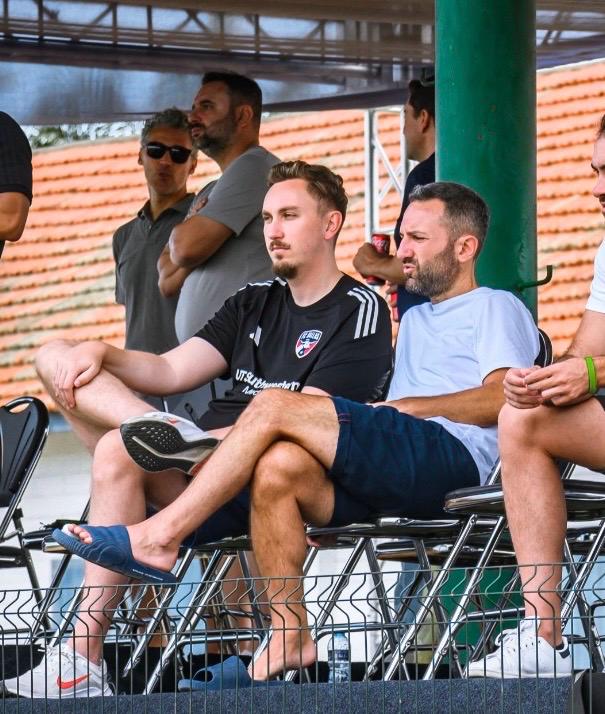
As someone who follows the Scandinavian market closely while working within an MLS recruitment structure, where do you see the biggest opportunities for clubs around the world when scouting the Nordic region over the next years?
From my perspective as a scout, the biggest opportunity is still being able to identify players before the rest. The top talents in Scandinavia are becoming more visible internationally, and clubs are monitoring them earlier than ever. That means the real value often lies in finding players a little earlier in their development curve.
I also think there is a growing opportunity for clubs that understand development pathways rather than focusing solely on individual players. Watching a player, you’re not only evaluating his current level. You are also looking at the environment and support system around him, the coaching he is receiving, the opportunities he is likely to get, and how realistic his pathway is to becoming a senior player. Understanding those factors often provides a significant advantage in recruitment because the development is rarely linear.
One thing I have always liked about scouting is that there are still a lot of different pathways for players. Not every top prospect comes through the biggest academies or plays for the most known clubs. Some of the most interesting players have developed in smaller environments where they were given responsibility, regular minutes, and the opportunity to make mistakes and learn from them.
Looking ahead, I think the clubs that will have the most success recruiting in the Nordic region are those that combine data, video, and traditional scouting effectively. Data can help narrow the search and identify trends, but building real conviction on a player still requires live observation. The clubs that can connect all of those pieces together will continue to find value in the market.
The clubs that can connect all of those pieces together will continue to find value in the market.
The market itself is also evolving. Scandinavian clubs have become increasingly sophisticated in both player development and recruitment, which means the standard of talent production continues to rise. At the same time, transfer fees are increasing and competition for the best prospects is becoming more intense. That makes timing, market knowledge, and strong local networks more important than ever.
The combination of professional development environments, early exposure to senior football, and players with the mentality to continuously improve means Scandinavia will continue to produce talent capable of succeeding in different leagues, different cultures, and at increasingly higher levels.
FAQ
Who is Kristian Malcolm Verkoijen?
Kristian Malcolm Verkoijen represents a new generation of football recruitment professionals whose profile combines academy talent identification, international scouting, and deep expertise in Scandinavian football markets.
What is Kristian Malcolm Verkoijen’s current role?
Currently working as an International Scouting Consultant for FC Dallas, Verkoijen is responsible for covering Scandinavia, the Netherlands, and Germany while also supporting the identification of African talent for North Texas SC.
What markets does Kristian Malcolm Verkoijen specialise in?
Having worked across Norway, Sweden, and Major League Soccer recruitment structures, he has developed a strong reputation for identifying emerging talent and understanding the pathways that allow players to progress from academy football to the professional game.