

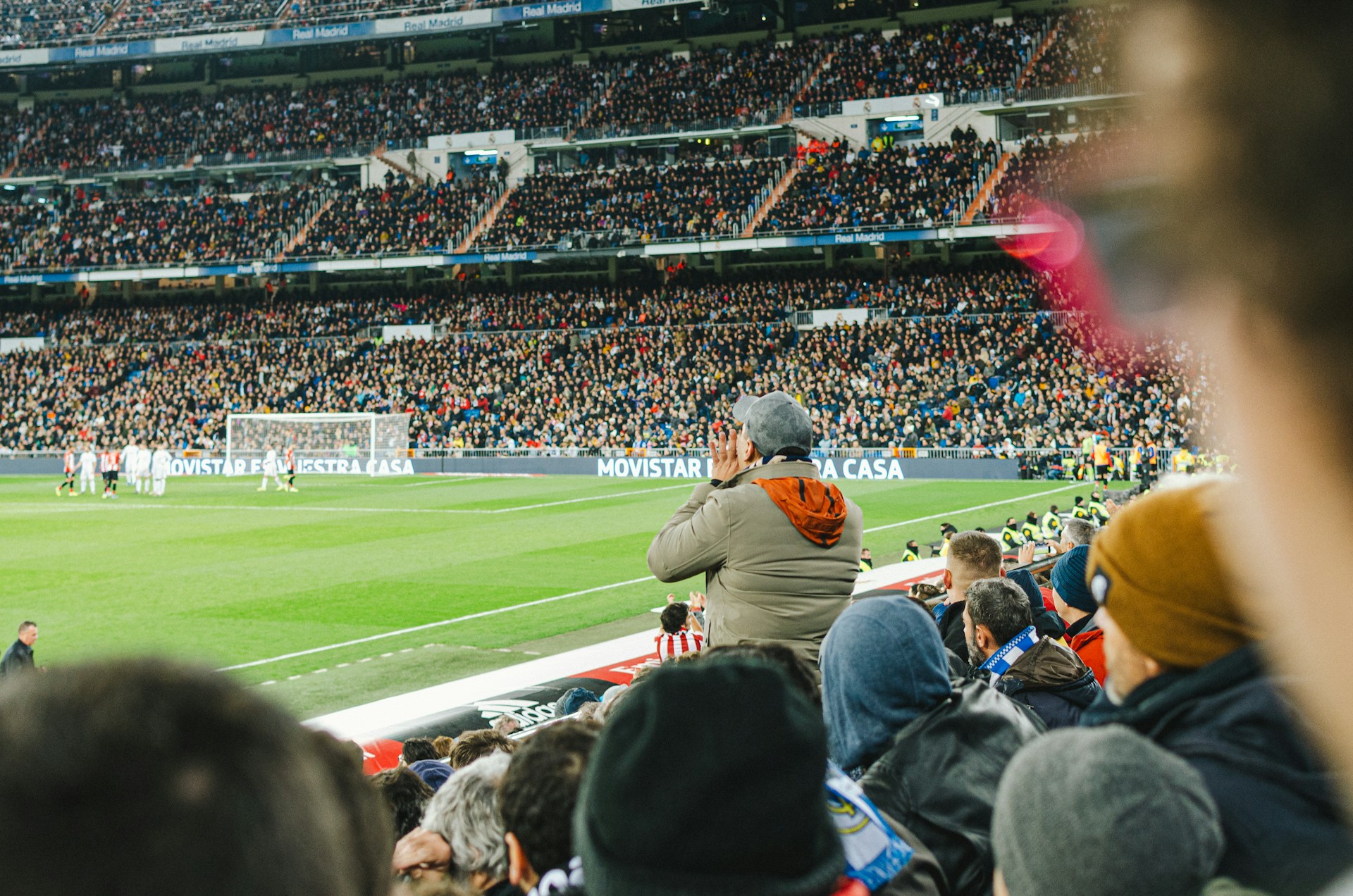
In life, we can sometimes be stubborn about certain things. This might be a goal we strongly desire, a hobby we want to master, or an idea we passionately believe in. We become so convinced that it will benefit us and turn us into a better version of ourselves that we refuse to entertain negative thoughts, even for a moment. Yet sometimes, no matter what we do, we fail to make any real progress. Repeated negative outcomes eventually lead us to think, “Maybe this isn’t something that truly suits me.” And at that point, we feel as if we have no choice but to give up. So, we do.
But in football, things work differently.
When their team wins, fans become even more attached. They celebrate for days, and the city becomes both joyful and tense—because the existence of a winning team inevitably means there is also a losing one. For the losing side, the experience is almost the opposite. It begins with an overwhelming wave of anger; in that moment, everything and everyone is blamed—from the coach to the goalkeeper’s gloves. But reality is harsh, and soon that anger gives way to deep sadness. In the end, a loss is a loss, and searching for someone to blame is often meaningless.
Yet there is one crucial aspect in which both winning and losing teams are the same—arguably the most important aspect of all.
Yet there is one crucial aspect in which both winning and losing teams are the same—arguably the most important aspect of all.
We agree that winning strengthens a fan’s attachment to their team. But what happens to the fans of a losing team?
Surprisingly, after that seemingly endless storm of anger, we expect something to break. But it doesn’t. Instead, the fans of the losing team become just as attached—if not more. In other words, when faced with the universe’s subtle message of “Maybe you shouldn’t support this team,” fans respond by simply blocking it out. So why does this happen? Why do people continue to support a team, even when it performs poorly? Let’s explore the scientific explanations behind this behavior.
Social Identity Theory
One of the most influential studies in this field is the Social Identity Theory, introduced in 1979. According to this theory, an individual’s self-esteem is closely tied to the success and prestige of the groups they belong to. Simply put, people divide the world into “us” and “them.” Supporting a team automatically provides a person with a vast social network and a strong sense of belonging. Therefore, abandoning a team is not just about changing preferences—it is equivalent to leaving behind one’s community, friendships, and cherished memories.
Team Identification and Dominant Identity
Another key contribution comes from Daniel Wann’s research on Team Identification and Dominant Identity. According to his work, when individuals strongly identify with a team, they begin to see themselves as part of a large social network. This sense of belonging reduces feelings of loneliness and alienation while increasing self-esteem and overall life satisfaction. Because fans can form immediate and deep connections with others through their team, this collective identity provides psychological resilience—even when they face failures in other areas of life such as work or personal relationships.
The Sunk Cost Fallacy
Human psychology tends to continue investing in something, even when it is clearly leading to loss. In behavioral economics, this is known as the “sunk cost fallacy.” In life, when we invest months into a job, hobby, or relationship that turns out poorly, we often say, “It’s better to cut your losses.” However, in football, this remedy rarely applies. A fan has invested their childhood, youth, money, sleepless nights, and purest emotions into their team. To abandon it would mean declaring all those years and emotional investments wasted. The mind resists such a loss and instead binds the individual even more tightly to the team.
The mind resists such a loss and instead binds the individual even more tightly to the team.
The Catharsis Cycle
Research in sports sociology suggests that it is not constant success, but shared suffering, that truly binds people together. Studies conducted by the University of Sussex on fan communities show that the collective anger and sorrow experienced in stadiums create a psychological release—known as catharsis. The deep disappointment following a loss can actually make fans more resilient in life. Because fandom is not a shallow emotion sustained only by trophies; it is the hope that emerges after the storm—the belief that “maybe next week we’ll win.” And what keeps people going is not the victory itself, but the hope for it.
And what keeps people going is not the victory itself, but the hope for it.
Psychological Defense Mechanisms
One of the most striking findings in social psychology comes from Robert Cialdini and his colleagues, who introduced the concepts of “Basking in Reflected Glory” and “Cutting Off Reflected Failure.” Under normal circumstances, people distance themselves from failure to protect their ego—just as they might abandon an unsuccessful hobby. However, in highly devoted football fans, this mechanism behaves differently. No matter how poorly the team performs, fans do not detach themselves. Instead, they develop psychological defenses: they attribute losses to refereeing errors, bad luck, or conspiracies against their team. This externalization prevents damage to their self-esteem. Even amid failure, fans create new sources of pride by clinging to the club’s history, legacy, or the strength of its supporter base.
In the end, these are the reasons why fans never truly abandon their teams. These concepts may feel familiar—they echo experiences from our friendships, families, schools, or other areas of life. That is why football can seem strange to some people. To them, it is merely a game. But in reality, it is a powerful metaphor for what it means to belong—to be part of a “we” that endures, no matter what.
References:
- Cialdini, R. B., Borden, R. J., Thorne, A., Walker, M. R., Freeman, S., & Sloan, L. R. (1976). Basking in reflected glory: Three (football) field studies. Journal of Personality and Social Psychology, 34(3), 366–375.
- Drury, J., Brown, R., & González, R. (2016). Collective resilience and the Sussex University fan community studies. European Journal of Social Psychology, 46(6), 711–724.
- Arkes, H. R., & Blumer, C. (1985). The psychology of sunk cost. Organizational Behavior and Human Decision Processes, 35(1), 124–140.
- Tajfel, H., & Turner, J. C. (1979). An integrative theory of intergroup conflict. The Social Psychology of Intergroup Relations, 33(47), 74.
- Wann, D. L. (2006). Understanding the positive social psychological benefits of sport team identification: The Team Identification-Social Psychological Health Model. Group Dynamics: Theory, Research, and Practice, 10(4), 272–296.