
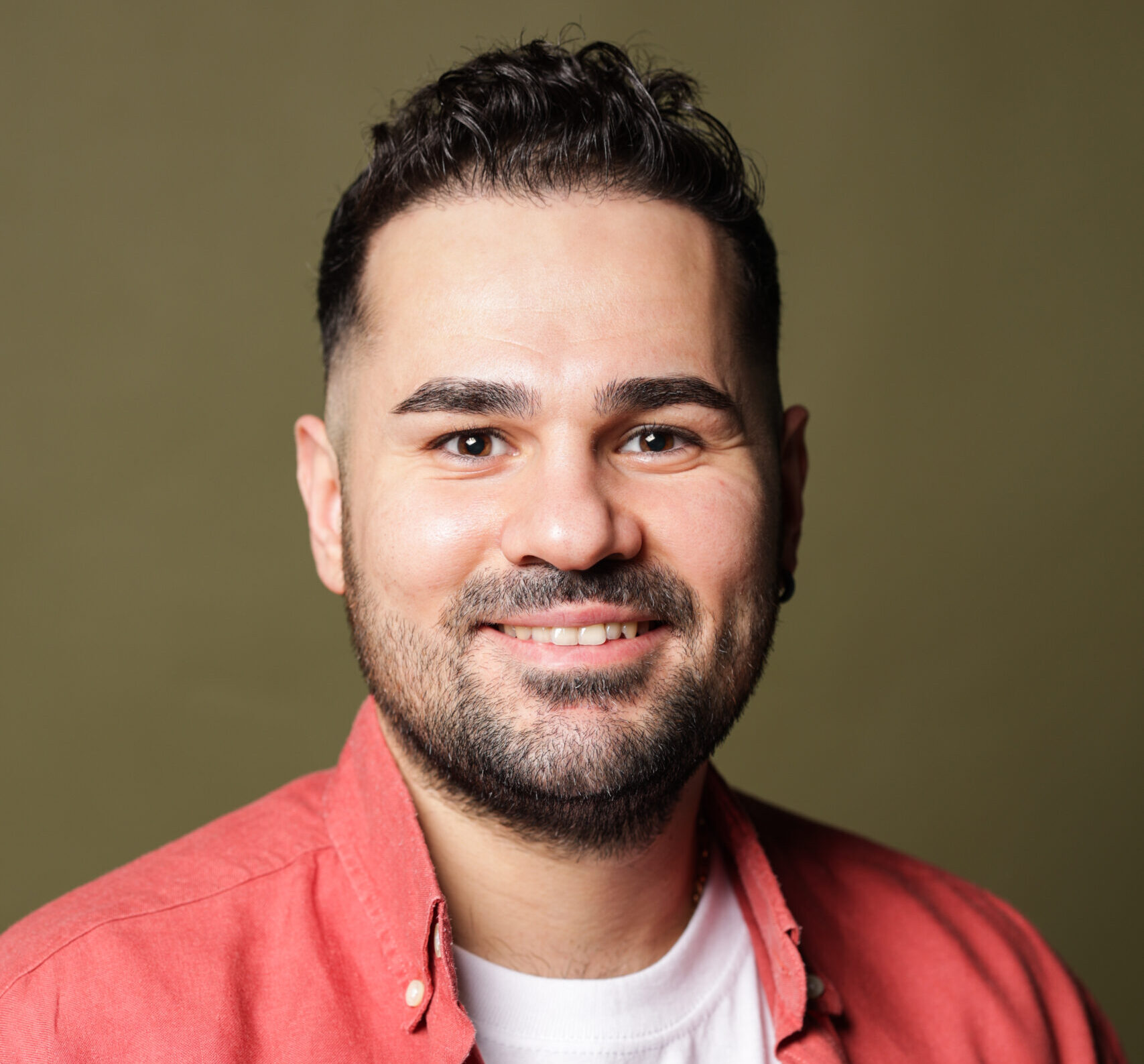
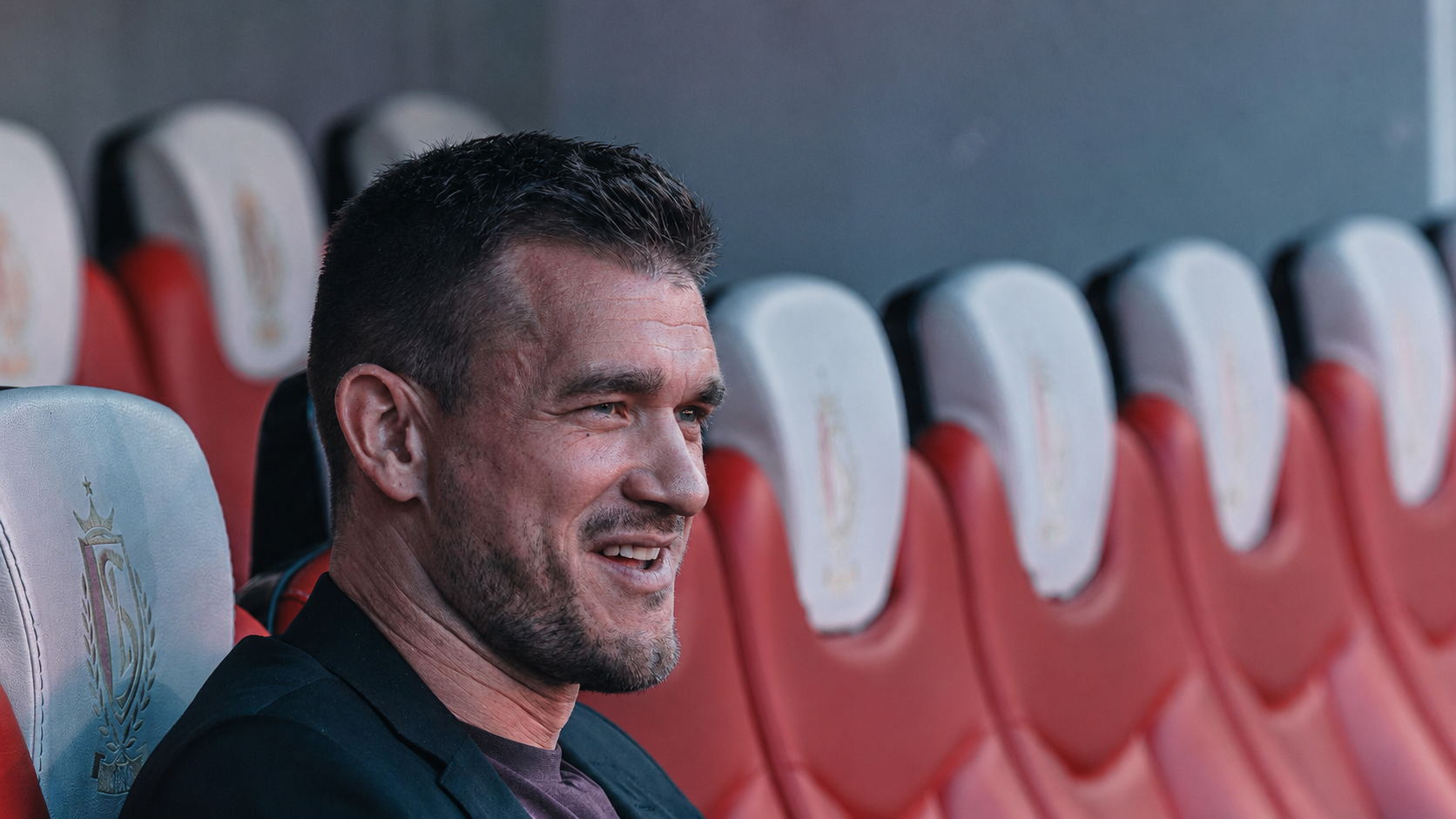
Profile
Role: Modern football executive
Specialisation: Elite level scouting expertise, strategic club development, leadership, and international football operations
Experience: Over the last 15 years across Europe and the United States, with experience across Germany, Austria, Belgium, the Netherlands, and the United States
Focus Areas: Talent identification, football operations, strategic planning, sustainable club growth, scouting philosophy and recruitment
Introduction
Benjamin Ehresmann represents a modern football executive whose profile combines elite level scouting expertise, strategic club development, leadership, and international football operations. Over the last 15 years, he has built an impressive career across some of the most progressive football environments in Europe and the United States, contributing to the sporting and financial growth of clubs through recruitment excellence, sustainable structures, and long-term football strategy.
Born in Germany, Ehresmann developed his reputation within the Red Bull football ecosystem, one of the most influential talent development structures in modern football. During his time with RB Leipzig and Red Bull Salzburg, he played a key role in the rise of the club from the lower divisions of German football to the Bundesliga and eventually into the UEFA Champions League. His work within scouting, recruitment, performance analysis, and player development helped shape one of Europe’s most successful modern football projects.
What particularly distinguishes Ehresmann is his proven eye for talent and long-term player projection. Across his career, he has contributed to the recruitment and development of numerous players who later became international stars and generated enormous sporting and financial value. His track record includes involvement in the recruitment of players such as Sadio Mané, Joshua Kimmich, Dayot Upamecano, Ibrahima Konaté, Dominik Szoboszlai, Naby Keïta, Emil Forsberg, Tyler Adams, Timo Werner, and many others during early stages of their development.
What particularly distinguishes Ehresmann is his proven eye for talent and long-term player projection.
His success is not limited to Europe. In Major League Soccer, Ehresmann held leadership roles with New York Red Bulls and Philadelphia Union, where he managed and developed scouting departments, contributed to roster construction, and helped establish highly competitive squads. During this period, New York Red Bulls won the MLS Supporters Shield with a record points total, while Philadelphia Union experienced one of the most successful sporting periods in club history.
Over the last years, Ehresmann expanded his profile beyond recruitment into broader executive leadership roles. His work with clubs such as KV Oostende, K. Beerschot V.A., FC Den Bosch, and Sheffield United related advisory projects reflects a football executive capable of operating across sporting strategy, governance, football operations, financial planning, stakeholder management, and long-term organisational development.
A major strength of his profile is the ability to build football environments rather than simply manage squads. Throughout his career, he has focused on implementing sustainable club philosophies, developing efficient scouting structures, creating global football networks, and aligning recruitment with long term sporting and financial objectives. His leadership combines strategic thinking with operational execution and strong interpersonal management.
A major strength of his profile is the ability to build football environments rather than simply manage squads.
Beyond recruitment expertise, Ehresmann is recognised for his communication skills, leadership qualities, and ability to operate under pressure within high performance environments. His multilingual and international background allows him to work effectively across different football cultures, while his global network provides direct access to emerging talent markets and decision makers across the industry.
With experience across Germany, Austria, Belgium, the Netherlands, and the United States, Benjamin Ehresmann represents the profile of a modern football executive who understands how to connect talent identification, football operations, strategic planning, and sustainable club growth. His career reflects a rare combination of elite recruitment success, international football expertise, and executive level leadership within modern football organisations.
Key Insights
- Benjamin Ehresmann combines elite level scouting expertise, strategic club development, leadership, and international football operations.
- His career spans Europe and the United States, including work across the Red Bull football ecosystem and Major League Soccer.
- His profile reflects a rare combination of elite recruitment success, international football expertise, and executive level leadership.
Our Exclusive Interview with Benjamin Ehresmann
You have worked within highly successful football structures across Europe and the United States. What are the key elements required to build a sustainable football organisation that can consistently compete both sportingly and financially?
Basically, from my perspective, the first step is to clearly define the club’s structure, identity and overall direction. Almost like an overarching purpose that guides all sporting and non-sporting decisions.
From there, you define a clear playing identity, which then directly influences the transfer strategy; not only from a sporting perspective, but also economically. At the core, it’s about creating value through smart scouting and recruitment, targeted player development, strategic contract management and, ultimately, profit generation.
It’s important that this playing idea is not only defined for the first team, but ideally runs consistently from the academy through the reserve/second team all the way up to the professional squad. That creates real pathway opportunities, a clear development line and a much higher probability that players, coaches and staff members actually fit the club.
Based on that foundation, the club should then recruit its staff. And not only the head coach, but the entire sporting staff. The key is that everyone works in the same direction and consistently represents the club’s sporting identity.
Your recruitment track record includes players such as Sadio Mané, Joshua Kimmich, Dayot Upamecano, Dominik Szoboszlai, and many others at early stages of their careers. What separates elite talent identification from traditional scouting in modern football?
I think the starting point is again to clearly define the right fit and suitability for each specific positional profile and then act accordingly.
Early identification of talent, foundation and potential is directly linked to the requirement profile. But even more important than talent identification itself is decision-making. Today, very few players are truly “unknown” anymore. Even at top youth level, there is already a very reliable data basis available at a very early stage.
So, in reality, the so-called “undiscovered talent” barely exists anymore. The decisive factors are therefore the fit, the ability to recognize potential early, and, above all, the willingness to make decisions quickly enough in order to actually recruit the player and not just know about him.
That, in the end, is what has a major impact on transfer success.
Having worked within the Red Bull football ecosystem during one of its most important growth phases, what lessons did you learn about building clear club identity, recruitment alignment, and player development structures?
All of these points are, in my view, the absolute foundation for building a modern, successful organization. An organization that is capable of achieving medium- and long-term sporting success, but also sustainable economic success as a football club.
This became very clear, especially when comparing the early years at Red Bull with the years that followed. In the first three or four years, there was not yet a clearly defined strategy or DNA. At that stage, Red Bull was more of a moderately successful club/organization, despite already having a clear identity and a significant budget behind it. Of course, the financial power acted as an accelerator but money alone is not enough.
A big budget can help speed up development, but it is not the decisive factor. The strategy is absolutely essential.
You can see the same principle in other football organizations around the world: the most successful ones usually have a clear direction, a defined strategy and strong guiding principles. Of course, that strategy needs to remain adaptable, because football constantly evolves and changes. But the fundamental principles and key guidelines should be clearly in place.
At the same time, even the best structure is only as strong as the people implementing it. You need high-quality personnel with strong football expertise, real conviction in the content, and the necessary human qualities to bring such a strategy to life on a daily basis.
From my perspective, those foundations like a clear strategy, strong structures and the right people are absolutely crucial for long-term success.
Modern football increasingly requires alignment between scouting, data, coaching, and club strategy. How do you approach the integration of these different departments to create efficient decision making processes?
The right organization and internal structure are already essential to ensure that these areas are not viewed separately, but instead interact dynamically and in alignment with each other.
Only then can the different departments and sub-areas function as one coherent whole. The clearer the overall strategy is defined, the greater the overlap and connection points between all areas become, the easier it is to work across departments in a truly integrated way.
So, from my perspective, this is extremely important. A football organization can only be successful in the medium and long term if sporting strategy, recruitment, player development, academy, coaching, performance, data and management are all connected and working in the same direction.
You have held leadership positions ranging from scouting director roles to strategic advisory and executive management positions. How has your leadership philosophy evolved throughout your career?
Leadership is, first and foremost, about understanding people! Understanding their strengths, their potential and how to put them in the best possible position to succeed.
Leadership is, first and foremost, about understanding people!
It is also about respecting people on a personal level, truly seeing them and taking them seriously. At the end of the day, people can only reach their absolute performance level if the team is built with empathy, understanding, clarity, respect and conviction.
That applies both on the pitch and across the entire staff around the team in sporting as well as non-sporting areas.
So for me, leadership is strongly connected to social intelligence, empathy and soft skills, and then integrating those qualities into the daily working environment in the best possible way.
But this only works through a real cultural understanding. A culture that is lived, not just written as slogans on the wall. It has to be implemented and represented every single day through actions, behavior and decision-making.
Your career spans football environments in Germany, Austria, Belgium, the Netherlands, and the United States. How have these international experiences shaped your understanding of football culture, player development, and club management?
I would say that even though football is the number one global sport, every market in Europe (and also beyond Europe) still has its own specific characteristics.
There are markets that are generally more open to player development and to the early integration of young talents into the professional environment. At the same time, there are different views and standards when it comes to tactical and technical education across the various markets.
What shaped me in particular was my experience in the United States. The level of openness towards innovation, the generally positive mindset, and the willingness to think not only day-to-day but also medium- and long-term was very impressive. There was also a clear openness to learning from other sports and integrating external influences into football.
Especially in the area of high performance, the overall mindset and culture in the US felt different and, in many ways, more positive, compared to markets such as Germany, the Netherlands, Belgium or Austria. In those countries, the approach is still often a bit more conservative, although there is also a clear trend towards more openness and innovation.
In today’s football industry, recruitment is often linked directly to financial sustainability. How important is long term squad planning and market value development when building competitive teams?
I would say that one does not exclude the other. In fact, they are directly connected.
Player recruitment, player development and player sales can absolutely develop in parallel with sporting success. Again, it comes down to clear profiling, a clear understanding of what you want to achieve, and a defined strategic target.
Based on that target, you have to plan your squad accordingly. In the end, it is always about finding the right balance within the squad: having a strong and reliable core, while also integrating high-potential players who can develop, increase their market value and, over the medium term, generate economic upside for the club.
Those profits can then be reinvested into infrastructure, the squad and other key areas of the organisation, creating value across the entire club.
So ultimately, it is always a holistic view of sporting and economic sustainability with combining short-, medium- and long-term planning. The clearer these principles are defined, the easier it becomes to align high-potential player development with a stable core and a clear overall strategy.
You have built and managed extensive international scouting networks over many years. What qualities do you look for when building high level scouting departments and football structures?
It is very important to me to implement quality over quantity as a core principle.
A large scouting or recruitment department is not automatically an efficient, high-performing or successful one. For me, it is much more about building a clear, lean and well-connected recruitment framework. Combining video-based scouting, data intelligence and targeted live assessment in a way that is efficient, focused and fully aligned with the specific needs of the organization.
Even more important is the development, education and recruitment of the right personnel. The people within the department need to be equipped for the strategy that has been implemented in terms of transfer and recruitment strategy, playing philosophy and potential analysis. Only then can the department consistently deliver the right outcomes.
Internationality is certainly not a disadvantage. But I am also a strong believer in clearly defining the key markets for each club and then developing real expertise within those markets. Success does not come from covering everything broadly. It comes from specialist knowledge in specific niche markets and areas where the club wants to operate from a sporting, economic and cultural perspective.
That is how you create real value for the respective club.
Looking ahead, what type of football project or leadership role would allow you to maximize your experience, vision, and expertise in modern football development?
It is less about one specific role and more about the overall direction of the organization and the value that both sides can bring to each other.
I don’t necessarily think in terms of one fixed job title. For me, it is more about areas of responsibility, impact and the opportunity to develop and improve together. Of course, I personally strive for the highest possible level of success within the given circumstances and for making the best possible use of the potential within a club or organization.
Based on my experience, this can also apply within multi-club ownership structures, where responsibilities are spread across several clubs under one overarching investor framework. That can be a very interesting model to create the best possible synergies across different markets, squads and organizational structures.
But fundamentally, it is about mutual value creation. And within that, I clearly see myself in a leading role, whether that is as a Technical Director, Sporting Director, or in a broader strategic role around football strategy, playing identity, scouting philosophy and recruitment.
These are all areas where I see my strengths and where I believe I can provide real value to an organization.
If a club were to bring you into a leadership role tomorrow, what would be the first structural and cultural priorities you would focus on during the initial phase of your work?
There is no general answer. I am always a strong believer in first evaluating the current situation and carrying out a clear due diligence process to understand where there is still development potential and need for improvement. But also, where the respective organization may already be operating at a very high level.
Beyond that, it is also about potential analysis, both within the squad, among staff members and the general structure. Not every employee is necessarily being used in the best possible role according to their strengths and potential profile. That means there can also be internal shifts or adjustments that make sense, for the employee as well as for the organization, in order to achieve higher performance, create more value and ultimately increase satisfaction on both sides.
Of course, there are also certain guiding principles I would personally implement as someone responsible for an organization, if they are not already in place. That starts with a clear leadership framework, empathy, and a defined playing philosophy: ideally modern, forward-thinking, aggressive, entertaining and athletic. These are some of the basic parameters I would highlight.
But the key point is that there must be development potential within the organization, and, just as importantly, a willingness from everyone involved to keep developing. That has to be the clear objective.
In terms of markets, there are of course core regions where I bring particular expertise and where I also see myself in the future, whether that is the German-speaking markets, Spain, Italy, England or MLS. Even Saudi Arabia, in my view, is an extremely exciting and developing market. The evolution of the league and of the individual clubs clearly shows that the direction is positive.
So, I would never close the door to any market. But naturally, there are certain priorities that reflect my background, my experience and the value I can bring to the respective organization.
FAQ
Who is Benjamin Ehresmann?
Benjamin Ehresmann is a modern football executive whose profile combines elite level scouting expertise, strategic club development, leadership, and international football operations.
Which football environments has Benjamin Ehresmann worked in?
Benjamin Ehresmann has experience across Germany, Austria, Belgium, the Netherlands, and the United States.
What areas does Benjamin Ehresmann focus on in modern football development?
Benjamin Ehresmann focuses on talent identification, football operations, strategic planning, and sustainable club growth.