


Profile
Role: Recruitment specialist, technical executive, and talent identification expert
Specialisation: Traditional scouting, football operations, and strategic sporting management
Experience: More than two decades across South America and Europe, including Arsenal FC, Boca Juniors, Manchester United, and Club Nacional de Football
Focus Areas: Recruitment, scouting, player evaluation, squad planning, football operations, sporting strategy, and long-term club development
Introduction
Pablo Budna represents a rare profile in modern football: a recruitment specialist, technical executive, and talent identification expert whose career has been built at the intersection of traditional scouting, football operations, and strategic sporting management. With more than two decades of experience across South America and Europe, he has contributed to player recruitment, talent development, and football decision-making within some of the game’s most recognized institutions.
Most recently, Budna served as Technical Secretary at Club Nacional de Football in Uruguay, one of South America’s most prestigious clubs. In this role, he worked across recruitment, scouting, player evaluation, squad planning, and strategic football operations, supporting decision-making at both sporting and organizational levels. Having completed his tenure in December 2025, Budna is now seeking his next challenge, with the ambition of contributing to a club’s long-term sporting vision in a Technical Secretary, Sporting Director, or senior football leadership position.
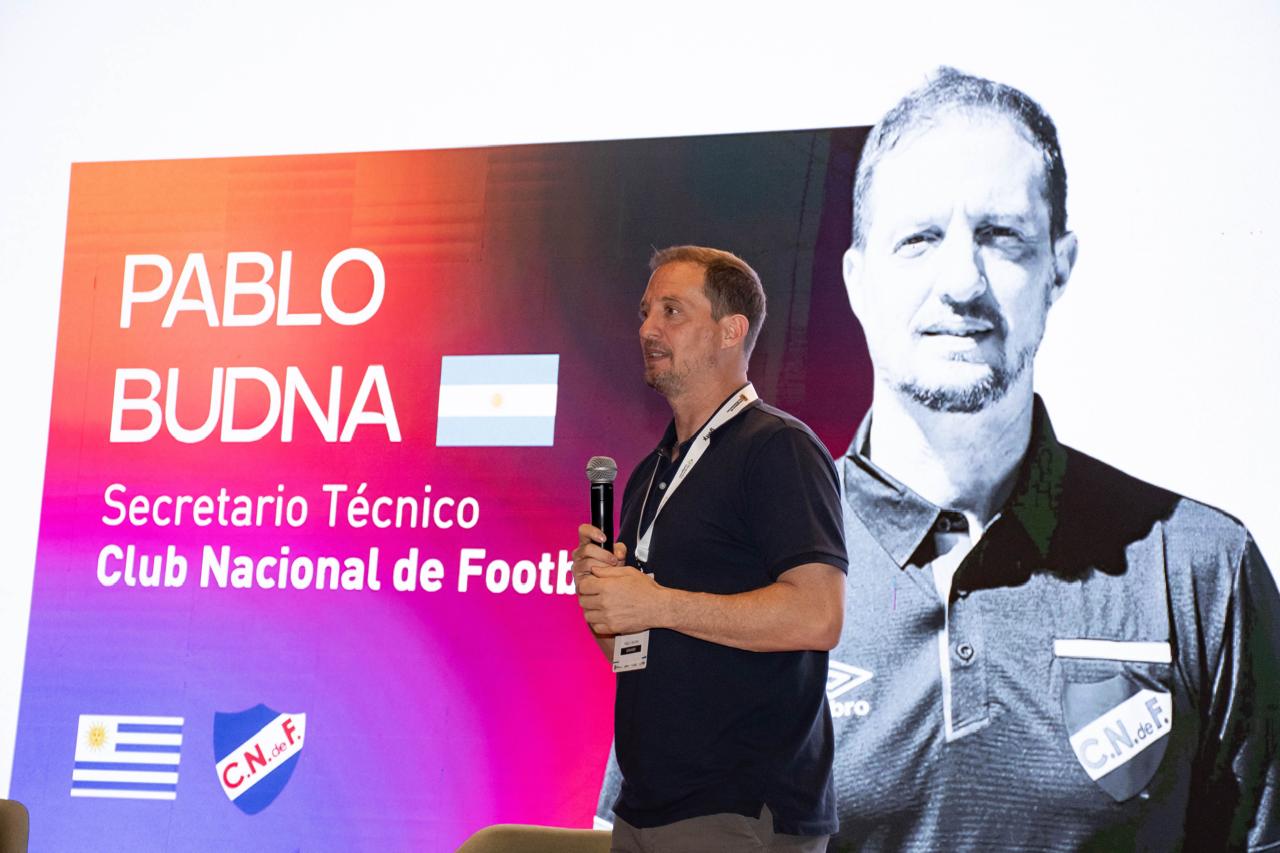
Prior to joining Nacional, Budna spent eight years as International First Team Scout for Manchester United, identifying and evaluating talent throughout South America for one of the world’s most demanding recruitment environments. Before that, he served as Technical Secretary at Boca Juniors, where he led both the professional and youth scouting departments while helping modernize the club’s recruitment and performance analysis structures through the implementation of technologies such as Wyscout and Sportscode long before they became standard tools across the industry.
His career also includes international scouting responsibilities with Arsenal FC and leadership roles in player management and talent development, giving him a unique understanding of football from multiple perspectives, including recruitment, player pathways, negotiations, and long-term sporting strategy.
A graduate of St. John’s University in New York, where he studied on a football scholarship during the formative years of Major League Soccer, Budna has developed a global outlook while maintaining deep expertise in South American football markets. Known as an early pioneer in the adoption of scouting technology and analytical tools within the region, he remains a strong advocate for combining data-driven insights with the human judgement that continues to define successful recruitment.
Today, Pablo Budna represents the profile of a modern football executive capable of contributing across recruitment, sporting strategy, football operations, and long-term club development at the highest levels of the game.
Key Insights
- Pablo Budna has more than two decades of experience across South America and Europe.
- His career includes roles with Arsenal FC, Boca Juniors, Manchester United, and Club Nacional de Football.
- He remains a strong advocate for combining data-driven insights with human judgement in recruitment.
Our Exclusive Interview with Pablo Budna
You have worked for clubs such as Arsenal, Boca Juniors, Manchester United, and Nacional. Across those experiences, how have you seen the role of scouting evolve, and what remains impossible to replace despite the growth of data and technology?
Scouting has changed dramatically over the last two decades. When I started, much of the work was done in person. We relied on travelling, attending matches, watching games on television, or obtaining recordings that were often difficult to access. Today, technology has transformed the profession by providing instant access to players, competitions, and markets from virtually anywhere in the world.
Globalization and technological advances have expanded the reach of recruitment departments, allowing clubs to monitor leagues and players that were previously inaccessible on a regular basis. Information is more available than ever, and decision-making processes have become significantly faster.
However, there are still aspects of scouting that technology cannot replace. Live observation remains essential. Being present at the stadium allows you to understand things that no platform can fully capture: body language, personality, leadership, communication, reactions to adversity, and how a player behaves when the pressure is highest.
Context is equally important. Evaluating a young prospect is very different from evaluating an established player who is expected to perform immediately. Football remains a people business, and understanding the human side of the game continues to be one of the scout’s greatest responsibilities. Technology has improved the process, but judgement, intuition, and direct observation remain irreplaceable.
Technology has improved the process, but judgement, intuition, and direct observation remain irreplaceable.
In a recent reflection, you argued that data can explain what a player has done, but not always what a player can become. How do you balance data analysis with traditional scouting when making recruitment recommendations today?
I firmly believe that nobody can predict with certainty what a player will become. We can identify trends, analyse performance patterns, and project possible outcomes, but there will always be uncertainty, especially when evaluating young players who are still developing.
That is why I strongly believe in the hybrid model. Data helps us understand what a player has done, how he performs, and how he compares statistically to others. Traditional scouting, however, provides insights that numbers alone cannot capture: personality, competitiveness, adaptability, resilience, and the context behind the performances.
It is also important to understand who the scouting process is serving. Every club has different objectives, expectations, and operational realities. Some clubs need immediate impact, while others can invest in longer-term development. Recruitment methodologies should reflect those differences.
I do not see this as a battle between data and traditional scouting. The two should complement one another. Data can help guide the search, while scouting provides the context needed to interpret the information correctly. At the end of the day, we are talking about people, not algorithms, and that is why I believe a balanced approach is not just beneficial, but essential in modern football.
At the end of the day, we are talking about people, not algorithms, and that is why I believe a balanced approach is not just beneficial, but essential in modern football.
Having spent more than two decades identifying talent across South America, what characteristics make the region unique, and where do you currently see the most interesting opportunities for clubs looking for the next generation of elite players?
South America remains one of the world’s greatest producers of football talent. What exists in abundance is talent itself; what is often missing is the finished product. That is why player development and the ability to create the right environment for growth are just as important as talent identification.
Historically, Brazil and Argentina have led the region in terms of both quality and volume of players. However, the landscape has evolved considerably. Today, we see players from countries such as Ecuador, Uruguay, Colombia, and Paraguay making successful moves to some of the biggest clubs in world football. This reflects the continued development of football structures across the continent.
What continues to distinguish South American players is their creativity, personality, and technical quality. While modern football has become increasingly physical and athletic, South America still produces players with a unique relationship with the ball and a natural ability to solve complex situations on the field. Also, the physical and athletic prototype of the south american players continue to be one of the biggest traits clubs are looking after.
At the same time, global demand for South American talent has never been higher. This has accelerated recruitment processes and shortened decision-making timelines. The less time clubs have to evaluate players, the greater the risk of mistakes. That is why maintaining a balance between technology, data, live observation, and local market knowledge is more important than ever.
I have no doubt that South America will continue producing elite players for many years to come. The challenge for clubs is not only identifying talent but also understanding which players possess the personal and professional attributes to maximise their potential in different football cultures and environments.
After successful experiences in scouting leadership and technical management, including roles at Boca Juniors and Club Nacional, what type of challenge would you like to take on next, and how do you see yourself contributing as a Sporting Director or Technical Secretary in the future?
For me, titles are often secondary to responsibilities. Whether the position is called Sporting Director, Technical Secretary, Head of Scouting, or another leadership role, what matters most is the project, the vision behind it, and the opportunity to make a meaningful contribution.
At this stage of my career, I want to be part of an ambitious football project where experience, ideas, and collaboration are valued. Having worked across recruitment, scouting, player development, squad building, and football operations for many years, I believe I can contribute strategically to the construction of competitive and sustainable sporting structures.
I have been fortunate to work within different football cultures and organizations, from elite European clubs to some of South America’s most demanding institutions. Those experiences have given me a broad understanding of how successful football projects are built, whether through recruitment strategy, squad planning, talent development, or organizational alignment.
One of my strengths is that I have spent a large part of my career working directly with players. I understand their challenges, their motivations, and the realities they face throughout their careers. I have always believed that football is ultimately about people. While the game has become increasingly sophisticated and data-driven, I do not believe in the dehumanization of football. Building relationships, earning trust, and understanding individuals remain essential components of long-term success.
I have always believed that football is ultimately about people.
Looking ahead, I would like to contribute to an organization where I can help shape football strategy, build strong squads, support player development, and serve as a trusted voice in sporting decision-making. I believe my experience across scouting, recruitment, technical management, and football operations allows me to add value in multiple areas, always with the objective of helping a club create a sustainable pathway to success.
FAQ
Who is Pablo Budna?
Pablo Budna represents a rare profile in modern football: a recruitment specialist, technical executive, and talent identification expert whose career has been built at the intersection of traditional scouting, football operations, and strategic sporting management.
Which clubs has Pablo Budna worked with?
Budna has worked with clubs such as Arsenal, Boca Juniors, Manchester United, and Nacional.
What is Pablo Budna’s approach to modern scouting?
Budna believes in a hybrid model where data and traditional scouting complement one another.