
What the World Cup Reveals About Football’s Economics
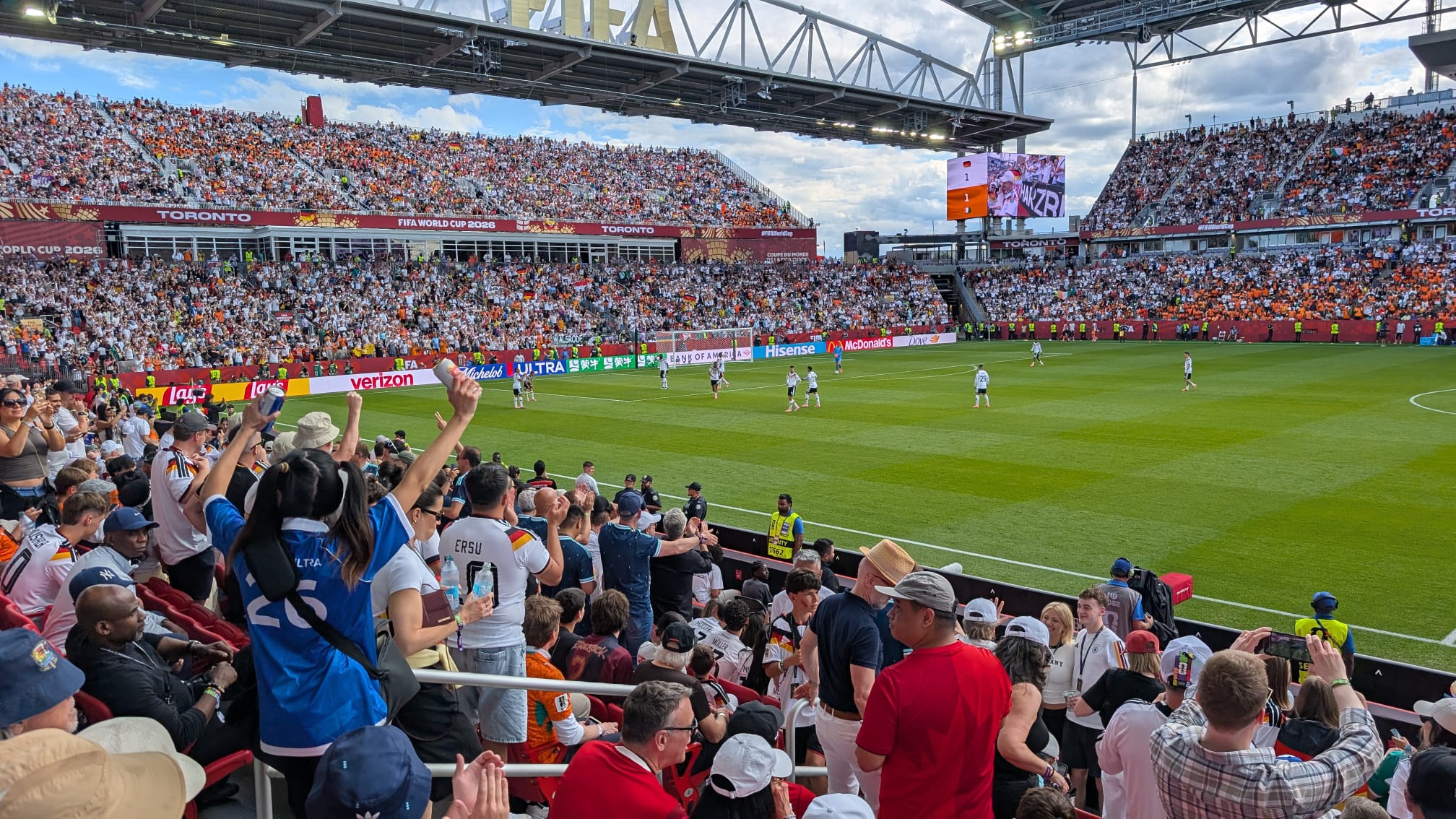
This summer, as the World Cup plays out across North America, a familiar figure is circulating in the headlines: FIFA is paying clubs a record $355 million for releasing their players. The number is real. It is nearly 70% higher than the last edition, it reaches more clubs than ever before, and it has been presented, by FIFA and by the clubs’ own representatives, as a milestone of partnership.
It is also, in a quiet way, the answer to the wrong question.
It is also, in a quiet way, the answer to the wrong question.
The question worth asking about that $355 million is not whether it is large or small. It is what kind of money it is. The 2026 World Cup is projected to generate around $8.9 billion. The fund set aside for the clubs whose players fill every squad, covering both the finals and the two years of qualifiers leading up to them, comes to $355 million: a small fraction of that figure, and smaller still against the wider four-year commercial cycle the tournament anchors. But the size of the fraction is not really the point. The defining feature of this money is that it is fixed. It was agreed in advance, and it bears no relationship to what the tournament actually earns. If the World Cup doubled its revenue tomorrow, the clubs’ share would not move. Call it a benefit, a solidarity payment, or a compensation; in structural terms it is not a share of the tournament’s revenue at all. It is a fixed sum, set beforehand and paid out regardless of how much the event makes.
To see how unusual that is, it helps to look outside football for a moment.
In Formula 1, the teams that build the cars receive roughly 45% of the sport’s revenue, written into a binding agreement. In the NFL, players are guaranteed a minimum of 48% of all league revenue; in the NBA, exactly 50%, audited and enforced every season. When a song is streamed, roughly two-thirds of the platform’s revenue flows back to the people who own the recording. When an app sells, the developer keeps between 70 and 85 percent. These industries have little else in common, but they share one principle: the party that creates and owns the core asset shares in the revenue of its most profitable use, proportionally and as a matter of right.
Football is a rare exception. Clubs develop the players, pay their wages across the calendar, and carry the financial risk when those players are injured. They then release them to the single most profitable event the sport produces, and receive in return a fixed fee that was settled before a ticket was sold: not a proportional share of what the tournament earns, but a sum the clubs are given.
None of this, on its face, is a scandal. The money is real, and for many clubs it is genuinely welcome. But beneath the headline figure sits a question the number itself conceals, and that question, not the amount, is what this piece is about. In football, is the club’s place at the World Cup a matter of right, or a matter of goodwill?
How the Payment Came to Be
It is worth remembering that this money did not always exist, and that it did not begin as a gift freely offered. For most of football’s modern history, clubs released players to national teams and received nothing in return. They paid the wages, absorbed the fixture demands, and carried the cost when a player came back injured.
That arrangement held until clubs began to push against it. In the early 2000s, a group of Europe’s largest clubs, organised as the G-14, pressed FIFA for compensation and injury protection. The pressure found its test case in November 2004, when Abdelmajid Oulmers, a midfielder for the Belgian club Charleroi, was seriously injured on international duty for Morocco and sidelined for eight months. Charleroi, backed by the G-14, took the matter to court, and it was eventually referred to the European Court of Justice, where a ruling against FIFA’s mandatory release rules could have unsettled the entire international calendar.
The dispute was resolved in 2008. FIFA agreed, for the first time, to compensate clubs for releasing players, and to establish injury protection. In return, the clubs withdrew the case and the G-14 dissolved, replaced by the body now known as European Football Clubs. The Club Benefits Programme grew out of that settlement. This history matters for one reason: the payment did not originate as a designed share of the World Cup’s value. It began as the resolution of a dispute, an amount FIFA agreed to pay to keep its system intact. It was, from the start, something granted rather than something owed, and that origin still shapes its nature today.
Who Carries the Risk
The settlement also created a scheme for injuries, and here the structure becomes clearer still. When a player is hurt on international duty, FIFA’s Club Protection Programme reimburses the club, but within strict limits. It pays nothing for the first 28 days. After that, it covers a player’s basic wage up to roughly €20,500 per day, and no more than €7.5 million per player for any single injury. Medical costs, bonuses, and image rights are excluded. The entire global scheme is capped at €80 million a year.
For most clubs, this is adequate. For the clubs that own football’s most valuable assets, it is a fraction of the exposure. When Neymar ruptured his knee on World Cup qualifying duty in 2023, he was on a reported salary in the region of €100 million a year. FIFA’s protection paid its maximum of around €7.5 million, a small fraction of what his club continued to owe him while he was out. The club absorbed the rest, along with the lost value of a player who, the following season, would barely feature.
This is the part the headline figure leaves out. A club that releases a player releases not only his labour but his risk. The tournament earns its billions; the club carries the downside. And the fee it receives in return is calculated as if that risk did not exist.
A club that releases a player releases not only his labour but his risk.
The Case for the Way Things Are
It would be easy to read all of this as an indictment of FIFA. It is not, and a fair analysis has to say so plainly, because FIFA’s position is stronger than its critics often allow.
Football’s wealth concentrates naturally. Left entirely to the market, the money the World Cup generates would flow to the clubs and leagues already richest, and little of it would reach the parts of the game that most need it. Private clubs have no commercial reason to fund grassroots women’s football in Rwanda, build technical centres in developing nations, or subsidise the travel of federations that cannot afford to reach their own qualifiers. FIFA does fund these things. Through its Forward programme, each of its 211 member associations receives up to $8 million per cycle, and FIFA reinvests the large majority of its revenue, by its own accounting more than 90%, back into the game.
Nor is FIFA simply withholding the club game’s value. In 2025 it staged an expanded Club World Cup, generated a billion-dollar prize pool, distributed it entirely to the participating clubs, and kept no profit for itself. And when the $355 million figure was agreed, it was welcomed, publicly and warmly, by the clubs’ own chief representative. When the people who negotiate on behalf of the world’s biggest clubs call the arrangement a strong partnership, the claim that those clubs are being exploited becomes difficult to sustain. All of this is true, and it complicates any simple story of grievance.
The Question Underneath
And yet none of it answers the question we began with. FIFA’s generosity, real as it is, does not change the structure beneath it; it operates within that structure.
Consider what the defence actually establishes. FIFA redistributes wealth wisely; FIFA reinvests the great majority of what it earns; FIFA chose, with the Club World Cup, to pass an entire tournament’s revenue to clubs. Every one of these is an act FIFA decides. The clubs do not hold a contractual share that FIFA must honour; they receive what FIFA, in its judgement, elects to give. The Club World Cup illustrates the point rather than resolving it: a billion dollars reached clubs because FIFA created the tournament, set the terms, and chose to distribute the proceeds. That is goodwill exercised generously. It is not the same as a right.
This is the distinction the headline figure obscures. The argument was never really about whether FIFA gives enough. A sovereign can be generous and remain a sovereign; the gift does not transfer the power to decide. In every other industry we looked at, the producer’s share is written into the structure: it scales, it is owed, it cannot be withdrawn at the giver’s discretion. In football, the producer’s share remains, in the end, a matter of goodwill: welcome, often substantial, and entirely in someone else’s hands.
A sovereign can be generous and remain a sovereign; the gift does not transfer the power to decide.
What Follows From It
If the producer’s share in football is a matter of goodwill rather than right, the strategic conclusion is not that FIFA should be condemned. It is that dependence on goodwill is a position, and positions can be chosen.
The clubs that have grown most resilient in recent years are the ones that understood this early. They did not wait to be given a larger share of money they do not control. They built revenue they do control, through their stadiums, their commercial operations, and their direct relationships with supporters, until the question of what FIFA distributes became, for them, a smaller one. How they did it, including in markets far from football’s traditional centres, is a subject worth examining on its own.
But the principle sits beneath all of it. This World Cup will run its course over the coming weeks, the clubs will receive their record figure, and that figure will be welcomed. The more useful question, for anyone thinking about the future of a club, is not whether that sum is large enough. It is whether a club wants its place in football’s most valuable moment to rest on goodwill at all.