

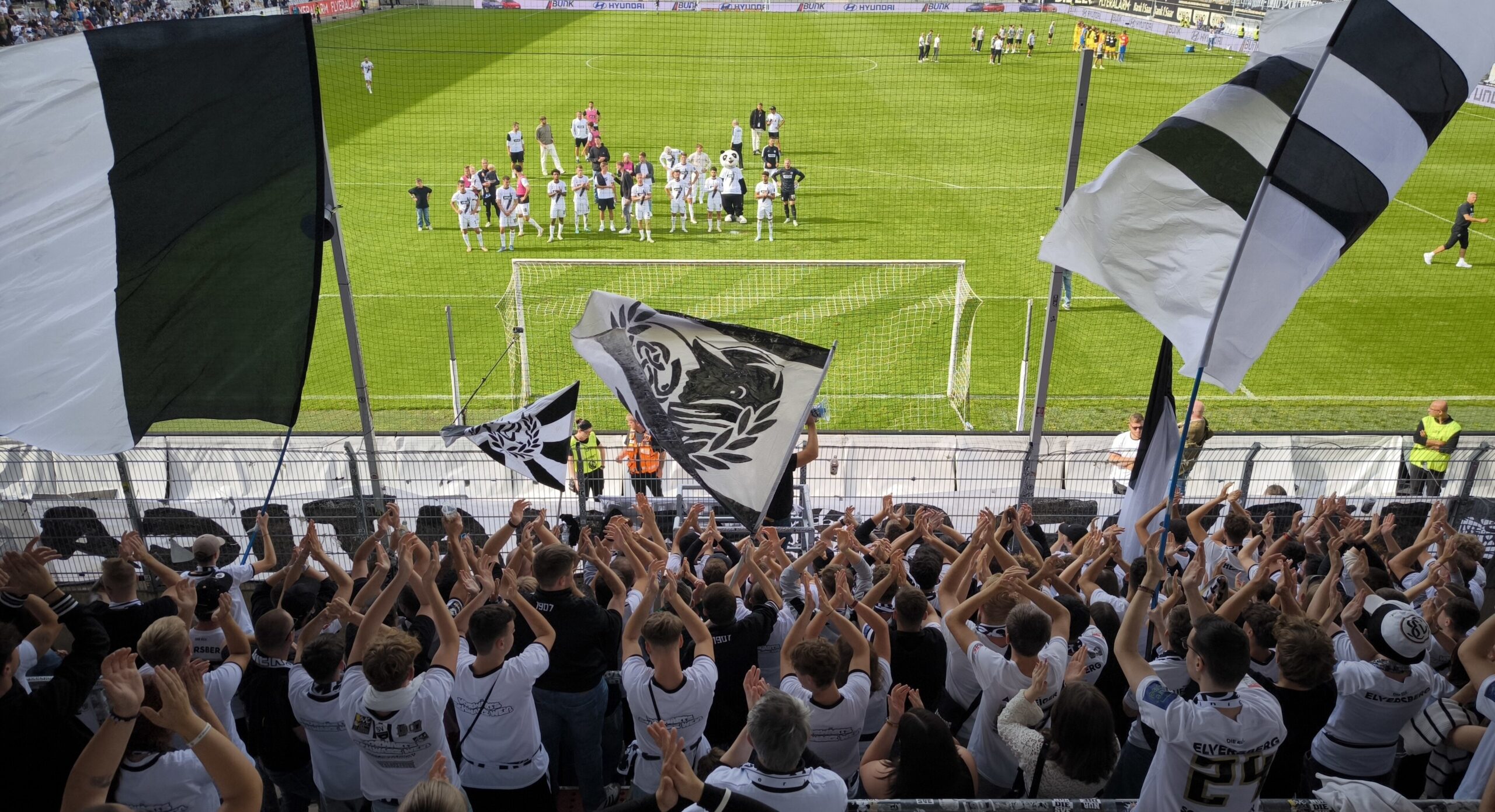
German football does not only produce champions. Sometimes, it reminds people why they fell in love with the game in the first place.
In the 2026 season, that team was neither Bayern Munich, Borussia Dortmund, nor any other giant backed by multi-million-euro squads.
The hero of this story came from the small Saarland town of Elversberg. A football town with only a few thousand residents. Yet now, it belongs in the Bundesliga.
SV Elversberg’s rise is far from an ordinary promotion story. It is a football revolution that challenges many of modern football’s economic assumptions. A club that climbed from the regional leagues to Germany’s top flight within just a few years. And they achieved it not through enormous spending, but through intelligence, stability, identity, and character.
May 17, 2026, will be remembered not only in Saarland but also in German football history. Following a 3–0 victory over Münster, the scenes that unfolded were a reminder that football is still driven by emotion. Players in tears, supporters embracing one another, coaching staff unable to hide their feelings.
Following a 3–0 victory over Münster, the scenes that unfolded were a reminder that football is still driven by emotion.
Because this was more than just a match. It was an answer to those who claim that smaller clubs can no longer dream. SV Elversberg became the 59th club in Bundesliga history.
After years of waiting, Saarland once again has a representative among Germany’s elite. But the real story is not simply about promotion it is about how that promotion was achieved.
On one side, Düsseldorf, a city of hundreds of thousands, suffers relegation. On the other, tiny Elversberg reaches the Bundesliga.
In the context of modern football economics, it seemed almost impossible. Bigger city, bigger stadium, bigger sponsors, bigger budget on paper, everything pointed toward Fortuna Düsseldorf.
But football is not always played on spreadsheets.
But football is not always played on spreadsheets.
Success is not determined by money alone. Money can secure signatures. But championships are won by teams that truly become a collective.
That is exactly what Elversberg achieved.
Under head coach Vincent Wagner, the club built a structure that many of Germany’s biggest teams could learn from. Players covering for one another, individuals committed to their roles, and a dressing room free from ego-driven conflicts.
They may not have had superstars. But they had a system.
They may not have had one of the largest fan bases in the world. But they had people who believed.
And the story extends far beyond what happened on the pitch.
One of the key figures behind the club’s transformation is undoubtedly Horst Holzer. A former footballer who later became a successful businessman, Holzer studied pharmacy after his playing career and expanded Ursapharm into a globally recognised company. Operating in around 80 countries and generating hundreds of millions of euros in revenue, the company became a cornerstone of the Elversberg project.
When he took over a debt-ridden club in 1989, few could have imagined that Bundesliga football would one day become a reality. But Holzer contributed more than financial support he brought vision. He stabilised the club, invested in youth development, strengthened its organisational structure, and helped turn Elversberg into a sustainable long-term project.
If the club is now preparing to compete alongside Germany’s football giants, it is because of long-term planning rather than short-term populism.
SV Elversberg’s success sends an important message to European football: Football is still about more than money.
Football is still about more than money.
Smart planning, strong character, club culture, and a genuine sense of belonging can still overcome budgets worth millions.
Perhaps that is why Elversberg’s story belongs not only to Saarland, but to everyone who truly loves the game.
Because some teams win trophies. Others restore people’s faith in football. SV Elversberg has done exactly that.