

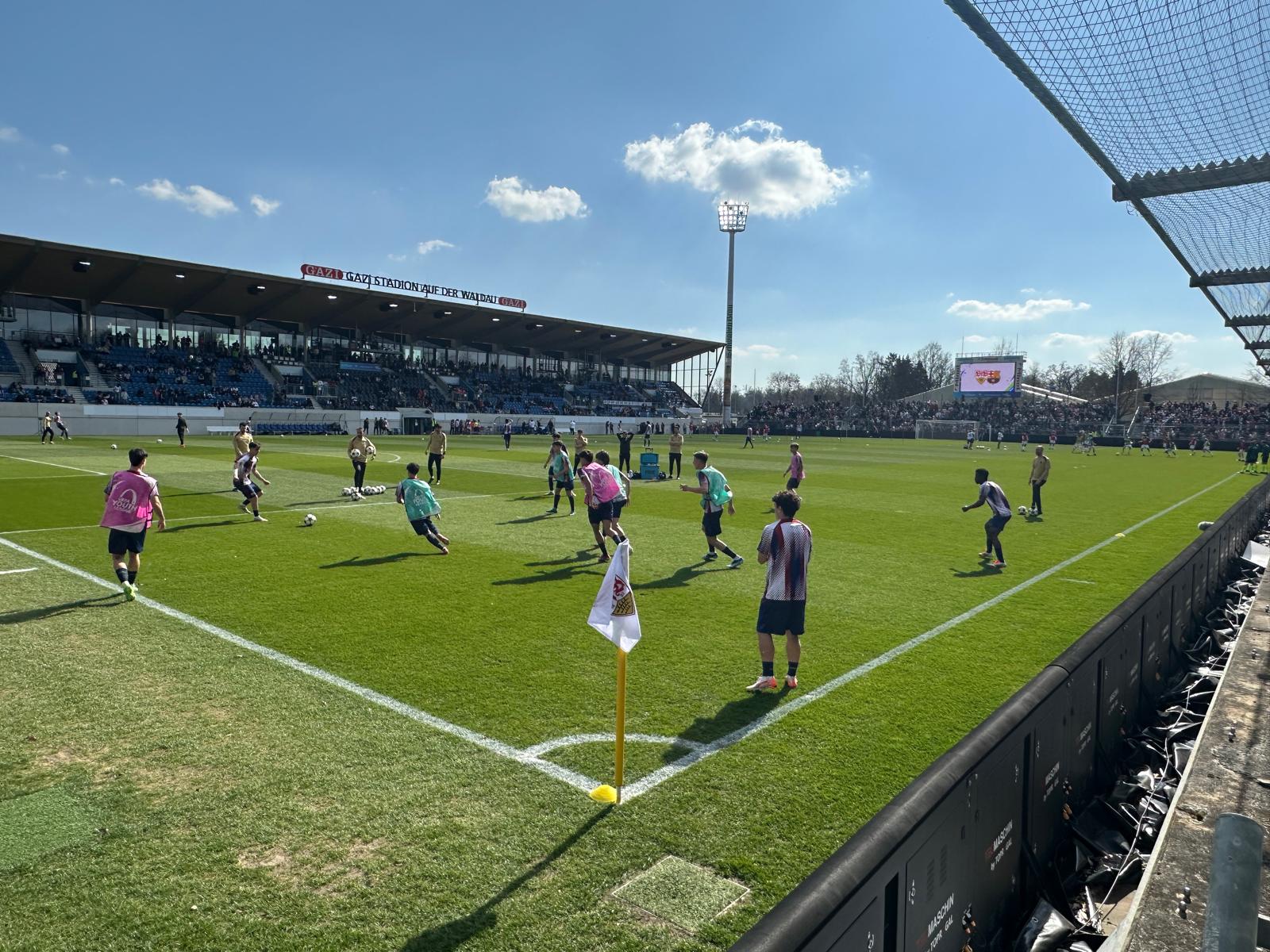
For decades, football clubs measured ambition through transfers. The biggest clubs competed by signing the biggest names, spending the largest fees, and assembling teams designed to deliver immediate success. Youth development existed, but it was often viewed as secondary to the first team. Academy football operated in the background, disconnected from the commercial and sporting pressure surrounding elite football.
That reality has changed dramatically. This week’s FA Youth Cup final once again demonstrated why youth development has become one of the defining pillars of the modern game. Across Europe, clubs are investing more heavily than ever into academies, coaching infrastructure, sports science, data analysis, and long-term player development strategies. Youth football is no longer simply a pathway to the senior team. It has become one of football’s most valuable competitive and financial assets.
Modern football increasingly rewards sustainability, identity, and continuity. Academies help clubs achieve all three.
The Evolution of Modern Youth Development
The strongest youth systems today are designed with long-term integration in mind. Young players are no longer trained separately from senior football philosophies. Instead, many elite clubs now mirror tactical systems throughout every age group, creating consistency from academy level all the way to the first team.
This approach has become especially visible at clubs such as Manchester City, Barcelona, Ajax, and Benfica. Their academy structures are not built solely around producing talented footballers. They are designed to produce players capable of fitting seamlessly into a specific football identity.
Their academy structures are not built solely around producing talented footballers. They are designed to produce players capable of fitting seamlessly into a specific football identity.
That distinction matters. In previous generations, academies often prioritised technical ability above all else. Young players were encouraged to improve passing, dribbling, shooting, and athleticism. While those qualities remain essential, modern football requires far more complete development. Today’s young players must understand tactical positioning, pressing structures, transitional play, recovery patterns, and game management from an early age. Football has become faster both physically and mentally. Decision-making speed now separates elite players from average ones just as much as technical quality.
As a result, youth coaching has evolved significantly. Academies increasingly focus on helping players understand the game rather than simply react within it. Video analysis sessions, tactical walkthroughs, psychological coaching, and performance tracking have become standard across elite development environments. Young footballers are taught how to interpret space, recognise patterns, and adapt to different tactical systems long before they make senior appearances.
Education Beyond the Pitch
This educational side of football development is becoming just as important as physical training itself. The rise of sports science has accelerated this transformation further. Modern academies carefully manage physical workloads, recovery schedules, nutrition plans, and injury prevention strategies. Clubs understand that protecting young athletes physically is essential for long-term progression. Overtraining and burnout, once common concerns in youth football, are now monitored more carefully through data and performance analysis.
Many clubs also integrate academic education directly into academy life. Young players are encouraged to continue studying alongside football training, recognising that discipline, communication, and learning habits remain valuable both within and beyond sport.
This reflects a broader shift in how football organisations now view player development. The goal is no longer simply to produce talented athletes. It is to develop adaptable professionals capable of handling the physical, tactical, emotional, and commercial demands of elite football.
The Importance of Emotional Development
That emotional preparation is often overlooked. Youth competitions such as the FA Youth Cup expose players to pressure environments before senior football arrives. Large crowds, television audiences, social media attention, and knockout football all create emotional challenges that cannot be replicated in ordinary training sessions.
Learning to manage expectation has become an important part of development.
Learning to manage expectation has become an important part of development. Modern footballers operate under constant visibility. Performances are analysed instantly across digital platforms, and young players often attract significant public attention before fully establishing themselves professionally. Academies therefore increasingly focus on emotional resilience, media awareness, and professionalism as part of their broader education structures.
This is one reason academy football now carries such strategic importance. The transition from youth football to senior football has historically been one of the most difficult stages in a player’s career. Technical ability alone rarely guarantees success. Mental adaptation, tactical flexibility, and emotional maturity often determine whether a player can sustain a long-term professional career.
Clubs that develop strong support structures during this transition frequently achieve better long-term outcomes.
The Financial Value of Academies
Financially, the importance of academies has also grown enormously. Football’s transfer market continues to inflate rapidly, with clubs spending extraordinary sums to compete at elite level. Developing players internally therefore offers both sporting and economic advantages. Homegrown players reduce transfer dependence while creating assets that can either strengthen the first team or generate substantial transfer revenue.
Benfica and Ajax provide particularly strong examples of this model. Both clubs consistently develop academy players who later become major transfer assets across European football. Their development systems allow them to remain competitive despite operating outside the financial power of Europe’s wealthiest leagues. Youth development, in this sense, becomes not only a football strategy but a sustainable business model.
Youth development, in this sense, becomes not only a football strategy but a sustainable business model.
At the same time, academy graduates often strengthen a club’s identity more deeply than expensive signings. Supporters naturally build stronger emotional connections with players who rise through local systems. Academy players frequently represent continuity between generations of supporters and the club itself. They embody culture, tradition, and long-term connection in ways that external transfers sometimes cannot replicate.
Historical Lessons and Modern Innovation
Historically, many of football’s most admired teams were built around strong academy foundations. Barcelona’s dominance under Pep Guardiola relied heavily on players developed through La Masia. Manchester United’s success under Sir Alex Ferguson included the famous Class of ’92 generation. Ajax’s historic philosophy remains deeply connected to youth development principles established decades ago.
These examples continue influencing modern football structures today. Importantly, youth football also contributes to tactical innovation. Young players are often more adaptable to modern systems because they develop within contemporary coaching methods from an early age. Tactical concepts such as positional play, structured pressing, and fluid attacking movement are now introduced during academy years rather than after promotion to senior football.
This creates players who are increasingly comfortable operating within sophisticated tactical frameworks. Technology is accelerating this process further. Data analysis tools, GPS tracking systems, and video software now allow coaches to evaluate development with extraordinary precision. Performance metrics can identify physical trends, tactical weaknesses, and technical progression in ways unavailable to previous generations.
The Future Is Already Being Built
However, despite all these technological advances, one aspect of academy football remains unchanged: development still requires patience. Not every talented teenager becomes an elite professional, and progression is rarely linear. Injuries, confidence, opportunity, and adaptation all influence career trajectories. The strongest academies therefore focus on long-term development rather than immediate results.
That patience can often be difficult within modern football culture, where pressure for instant success dominates discussion. Yet this week’s FA Youth Cup final served as another reminder that football’s future is constantly being built away from the spotlight. Behind every established first-team player are years of coaching, setbacks, education, tactical learning, and emotional growth.
Academy football may not generate the same headlines as transfer windows or title races, but its influence on the modern game has never been greater. In many ways, youth development is no longer simply part of football’s future. It is football’s future.