

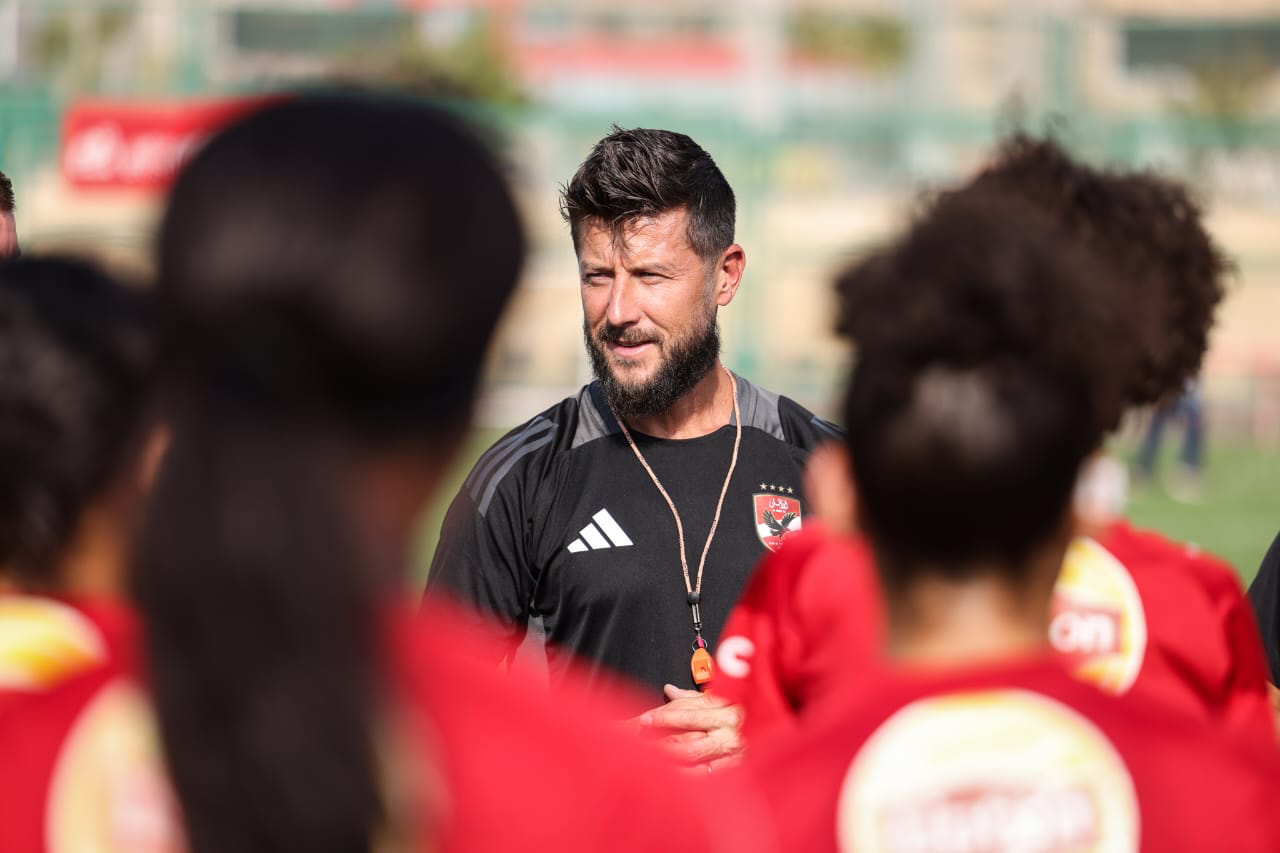
Profile
Role: Football coach
Specialisation: Women’s football
Experience: Three continents and six countries
Focus Areas: Leadership, resilience, trust, culture, and the often-invisible forces that separate potential from achievement
Biography
Football has a habit of reducing careers to numbers. Titles won. Finals reached. Matches coached. Yet numbers rarely tell the full story.
Few coaches have witnessed women’s football from as many angles as Dimitri Lipoff. Over the past sixteen years, his journey has taken him from some of the most successful environments in the game to places where women’s football is still fighting for recognition, investment, and cultural acceptance. From the dominance of Lyon and the rise of Paris Saint-Germain to championship-winning projects in China, Morocco, Italy, and Egypt, he has experienced the game at both its most established and its most fragile.
Along the way, he has won titles, reached major continental finals, worked with world-class players, and built a career across three continents and six countries. He has stood in dressing rooms celebrating championships and in others processing the heartbreak of defeat. He has witnessed what success looks like when everything aligns and what happens when talent alone is not enough.
Yet what makes Lipoff’s story compelling is not the silverware he has collected, but the perspective he has gained. Behind every trophy, promotion, and final lies a deeper understanding of leadership, resilience, trust, culture, and the often-invisible forces that separate potential from achievement.
Key Insights
- Few coaches have witnessed women’s football from as many angles as Dimitri Lipoff.
- Along the way, he has won titles, reached major continental finals, worked with world-class players, and built a career across three continents and six countries.
- Behind every trophy, promotion, and final lies a deeper understanding of leadership, resilience, trust, culture, and the often-invisible forces that separate potential from achievement.
Our Exclusive Interview with Dimitri Lipoff
Success leaves clues. Winning five consecutive league titles across three different clubs is extraordinary. Looking back, what was the one thing you consistently brought into each environment that transformed your teams into champions?
Winning teams are built through the often-overlooked ability to read a room, understand a squad, shape a culture, and adapt before imposing ideas. At Dalian, Jiangsu, and Wuhan, I stepped into three very different environments within five years. Each had different ownership philosophies, squads, and expectations.
The one constant was my approach. I never arrived with a finished picture. I arrived with clear principles and a genuine curiosity about what was already there. The players who win titles are rarely those you rebuild from scratch. More often, they are players whose existing strengths are given the right framework to thrive.
Winning championships in China with three different clubs taught me that systems alone do not create champions. People do. Trust is the foundation of success, and trust is built the same way everywhere: through honesty, consistency, and knowing when to push people forward and when to protect them.
Trust is the foundation of success, and trust is built the same way everywhere: through honesty, consistency, and knowing when to push people forward and when to protect them.
You’ve coached across six very different football cultures. How do you earn trust and establish leadership when your approach is unfamiliar?
You do not establish leadership first. You earn trust first, and leadership follows.
When I arrived in Russia, I was young and still learning. I quickly realised that people would not follow me because of my title or UEFA qualifications. They followed because I listened. I understood what mattered to them before asking anything in return.
In Russia, that meant understanding the challenges of everyday life. In Egypt, it meant respecting the importance of institutions and authority. Across every environment, I learned the same lesson: leadership is not something you impose; it is something you earn.
I was not interested in changing everything overnight. I wanted to understand the culture, the people, and what was already working. Only then could I add value.
Every culture has its own language, values, and way of building trust. Your job is to understand them before you walk through the door. Only then can you lead effectively.
What many coaches spend a lifetime chasing, what does ambition mean to you now, is it about achieving more or developing something deeper?
Early in my career, ambition was simple: win trophies. Every new opportunity felt like another chance to prove myself.
I was fortunate to achieve success at clubs such as Lyon, Jiangsu, and Wuhan, but over time my understanding of ambition changed. Success became less about collecting titles and more about the impact I could have.
The moments I value most are not the trophies on a shelf. They are the occasions when a player, a staff member, or a club is stronger because of the work we did together. Those are the achievements that last.
Today, ambition means building something meaningful. It means taking on projects with purpose, creating a lasting legacy, and leaving an environment better than I found it. That is the challenge that drives me now.
From Morocco to Eygypt, and across a continent where women’s football is still finding its place, what has your journey shown you about what the game truly needs right now, and at what point do you believe this shift will become inevitable?
What the game needs in Africa right now is not inspiration. Inspiration is everywhere. What it needs is infrastructure, proper training facilities, competitive tournaments, professional networks, and clear pathways that allow talent to grow and develop. Too often, enough is built around the dream rather than the process required to achieve it.
Morocco’s U23 and U20 selections, along with continued investment, prove what is possible when ambition is supported by a complete system. What we sometimes mistake for progress is often just participation or celebration of development. The gap is not a lack of talent. It is structural.
As one football executive put it, “The game is not growing. It is dying.” This is not a criticism of women football. It is an investment warning from organizations like CAF, clubs such as Al Ahly, and anyone serious about the future of the sport. These are not gestures. They are foundations.
The question is no longer whether to invest. The question is how quickly it can be done.
With Jiangsu Suning reaching the AFC Women’s Champions League final in 2019, what did that experience reveal about the gap between Asian and European women’s football, and do you feel that gap has closed since?
The AFC title in 2019 was one of the most revealing experiences of my career. We were a developed football nation. China, by comparison, had significant resources and support, but there was a clear difference in how the game was built.
China had money. We had systems.
The gap I observed wasn’t primarily technical. It was organizational. European women’s clubs play in leagues where week after week, the margin for error is small. That pressure sharpens environments, creates a higher standard, and teaches players how to perform under stress. Those lessons are difficult to replicate without regular competition at that level.
Looking back, the same pattern is visible today. The Chinese league was expanding rapidly in 2018 and 2019, but then investment declined. As a result, much of the progress slowed.
That experience reinforced a simple lesson: money alone does not close the gap. Sustainable, consistent investment does.
That experience reinforced a simple lesson: money alone does not close the gap. Sustainable, consistent investment does.
Based on your experience in China, having seen both the rapid rise and subsequent decline of the women’s football project, what do you believe this trajectory reveals about the deeper conditions needed to build something lasting and sustainable in the women’s game?
China is one of the most instructive case studies in women’s football over the past decade, not because of what it achieved, but because of what it revealed.
The foundation was there. Strong players, established clubs, financial backing, and genuine ambition. At first glance, it looked like everything needed for success. Yet the critical piece was missing.
A coach can develop players, but a coach cannot create the infrastructure required to sustain long-term growth. Without that structure, even the most talented players eventually hit a ceiling.
What struck me most was how quickly women’s football can become vulnerable when progress depends too heavily on momentum rather than systems. In football, as in business, a project is not measured by what happens during a growth phase. It is measured by how it performs when conditions become difficult.
The clubs that endure are the ones with strong foundations and a clear identity. That was the culture I found at Al Ahly.
Women’s football wasn’t a side project. It was a pillar.
Through your fitness coaching diploma, you gained exposure to elite football environments in Italy, including experiences with European giants Inter Milan and Juventus. You went there to study the body, but what did you take away about the mind, and what elite culture looks and feels like up close?
When you walk into a club like Inter or Juventus, it’s easy to be overwhelmed by the scale of everything, the training facilities, the equipment, and the names on the shirts. All of that is impressive.
But what stayed with me most wasn’t any of those things. It was the quality of the silence.
I don’t mean the absence of noise. I mean the focused, purposeful quiet that exists in environments where everyone knows exactly why they’re there. There’s no wasted movement, no unnecessary distractions, and no performance for the sake of being noticed. Every action serves a purpose.
What stood out was the economy of effort, an approach where energy is directed entirely toward precision and execution. Elite players aren’t necessarily working harder than everyone else in the obvious sense. What separates them is their discipline, their clarity of intention, and their ability to focus on what matters most.
That lesson became something I carried back to every woman’s squad I’ve coached since. I realized that culture isn’t created by budget, status, or geography. It’s created by standards, habits, and shared purpose.
The belief I took from those experiences is simple: elite performance begins as a mindset long before it becomes a title.
The belief I took from those experiences is simple: elite performance begins as a mindset long before it becomes a title.
You spent years as an assistant with the Russian national team and Rossiyanka, watching, learning and absorbing the game before leading it. What did that time in the assistant role teach you about power, ego, and patience that you could only learn from that position?
The assistant role is the most honest position in football. You see everything, the head coach’s decisions, the moments of doubt he doesn’t show the players, the gap between the plan and the reality, and your job is to serve the vision, not promote your own.
I was fortunate to work alongside some of the game’s most respected coaches. Time spent with figures such as Fabio Capello, Carlo Ancelotti, and Roy Hodgson, as well as within organizations like Paris Saint-Germain, gave me access to different ways of thinking about leadership, preparation, and performance.
Yet the most important lessons rarely came from meetings, presentations, or tactical discussions. They came from observation.
Coaching at the highest level teaches you to pay attention to details that others might overlook. You begin to notice how players behave when training ends, how they react to setbacks, how they communicate with teammates, and how they carry themselves when nobody is watching. These small moments often reveal more than any formal conversation.
Over time, patterns begin to emerge. You learn which habits support growth, which attitudes build resilience, and which behaviours consistently separate top performers from the rest. The best coaches develop an ability to see these patterns early and understand what they mean.
Those observations shaped my own philosophy. Coaching is not simply about delivering instructions; it is about understanding people. The more closely you observe, the more clearly you understand what drives performance, development, and success.
In the end, the assistant coach’s role is an education in human behaviour. It teaches you how to read people, identify patterns, and build an environment where individuals and teams can reach their potential. Those lessons stay with you long after the session is over.
PSG’s defeat to Frankfurt in the 2015 UEFA Women’s Champions League final brought an end to a long European campaign, one you were closely involved in building. Take us inside the dressing room afterwards: what do you remember most from those first moments of silence, how did the days that followed unfold, and how did that defeat resonate with you personally?
What I remember most from that day was not the result. It’s the silence that came before it. Not the stunned silence that follows disappointment, but the silence that exists when you know you are standing on the edge of something extraordinary. A Champions League final carries a weight that is difficult to explain. Years of work, sacrifice, ambition, and expectation are compressed into a single evening. The air feels different. Every moment feels significant.
What remains with me is not a specific event or conversation. It is a feeling.
In that stadium, surrounded by football’s biggest stage, I felt something I had never experienced before. It was not confidence. It was not fear. It was an awareness of how much was at stake and how much had already been invested to reach that point.
The first hour after the defeat is hard to describe. Shock has a way of numbing everything around you. Yet even in that moment, I found myself thinking less about the result and more about the journey that had led us there. The years of preparation. The sacrifices made by players and staff. The relentless commitment required to compete at that level.
Then, in the days that followed, my perspective began to change.
I realised that what separates professional footballers from most people is not simply talent. It is their willingness to care deeply about something despite the possibility of failure. They commit themselves completely to a goal without any guarantee that their efforts will be rewarded.
For many people, disappointment is something to avoid. In elite sport, it is something you must learn to carry. Defeat hurts because the investment is real. The pain reflects the amount of yourself you were willing to give.
That experience taught me an important lesson. You can only feel that kind of pain when you have committed everything you have. And while that vulnerability comes with a cost, it is also what makes excellence possible.
To care that much is painful when things go wrong. But it is also the reason extraordinary achievements can happen at all.
From countries where women’s football barely registers in public life to those where it sells out stadiums, you’ve seen the full spectrum of the game, from underdeveloped systems to highly professional ones. What injustice from that journey still lingers with you today?
The frustration begins with the invisible.
That is precisely why it persists. It is not caused by a player who misses training, a coach who ignores advice, or an injury that forces difficult decisions. Those problems are visible. They can be identified, discussed, and addressed.
The real challenge lies in the things you cannot see.
Throughout my career, I have coached players in China, Morocco, Europe, and across the Middle East. Different countries, cultures, and environments have exposed me to different obstacles, but one pattern has remained constant. The difference between potential and performance is often shaped by factors that are hidden from view.
It can be confidence. It can be timing. It can be circumstances, opportunity, or simple bad luck. More often than not, it is a combination of all of them.
What makes this gap so difficult is that it is rarely obvious. We tend to focus on what is visible and measurable. We evaluate performances, statistics, and results. Yet beneath the surface are countless influences that determine whether a player progresses or stagnates.
That invisible space between ability and achievement has become a central focus of my work.
Every time I take on a coaching role, I am trying to understand it a little better. Why do some players fulfil their potential while others do not? What holds talented individuals back? What allows another player, with similar ability, to succeed?
There is no simple answer. The gap is complex and often impossible to eliminate entirely.
But if my career has taught me anything, it is that meaningful coaching happens in that space. My role is not to remove every obstacle. It is to recognise the ones that cannot be seen and, where possible, make the distance between potential and performance slightly smaller than I found it.
FAQ
Who is Dimitri Lipoff?
Dimitri Lipoff is a football coach who has worked across three continents and six countries.
What areas of football does Dimitri Lipoff discuss in the interview?
He discusses leadership, trust, culture, women’s football, elite performance, infrastructure, and the gap between potential and achievement.
What experience does Dimitri Lipoff have in women’s football?
His journey has included Lyon, Paris Saint-Germain, China, Morocco, Italy, and Egypt, as well as major continental finals and championship-winning projects.