

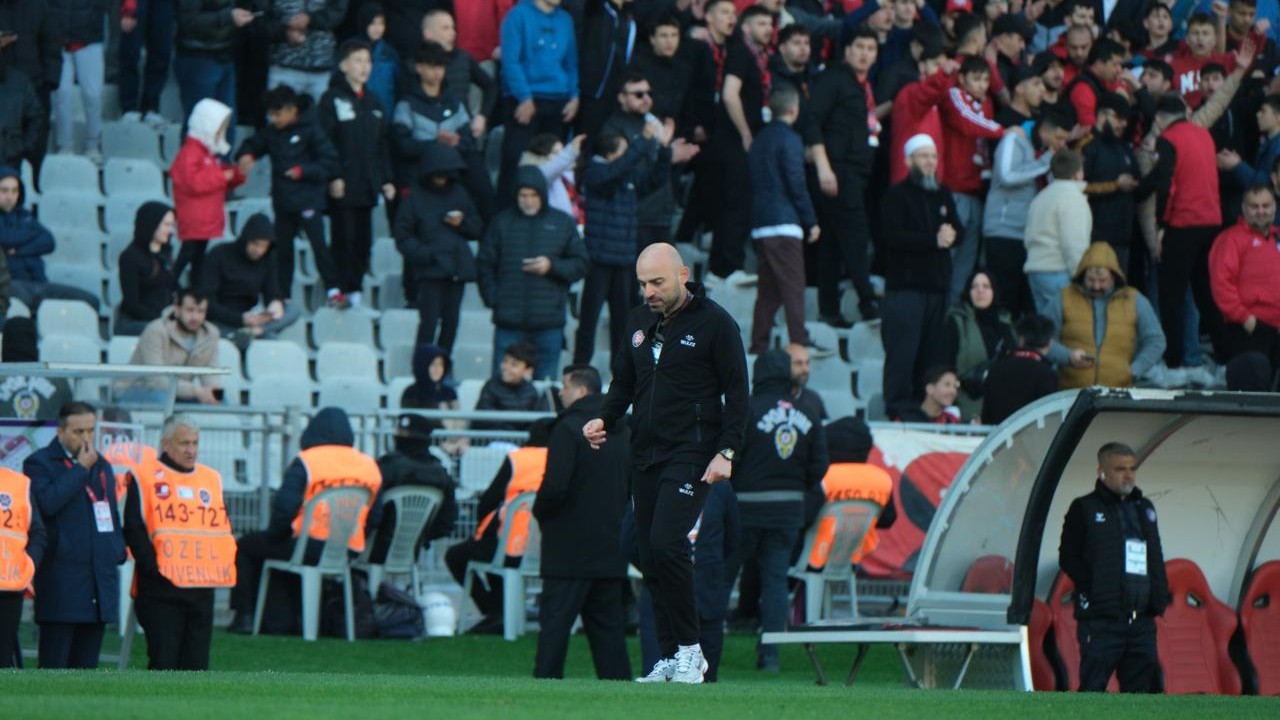
Profile
Role: Football Coach and Former Head Coach at Fatih Karagümrük
Specialisation: Player development, tactical analysis, training science integration
Experience: Galatasaray Academy, Fatih Karagümrük Academy and First Team, Süper Lig and 1. Lig
Focus Areas: Performance environments, data-driven coaching, long-term player development
Biography
Onur Can Korkmaz represents a new generation of Turkish football coaches defined by analytical thinking, leadership under pressure, and a strong commitment to player development. Based in Istanbul, he has built a profile that combines elite academy experience, professional first-team exposure alongside international coaching staff, and a solid academic foundation in sports science.
His coaching journey began at Galatasaray Academy between 2013 and 2017, where he worked across multiple age groups and contributed to national and international successes. Several players he worked with have since continued their careers at professional level and within national team structures.
From 2019 onward, Korkmaz continued his development at Fatih Karagümrük, playing an active role in the restructuring of the academy. He took responsibility for various youth age groups and focused on building a clear game philosophy, implementing modern training methodologies, and developing long-term talent pathways. His work during this period helped produce players who progressed to the first team and national teams, integrating technical, tactical, and physical aspects of the game in a coherent way.
A decisive turning point in his career came during the 2024 to 2025 season, when he joined the first-team technical staff at Fatih Karagümrük as assistant coach to David Sassarini. Following Sassarini’s departure, Korkmaz was appointed head coach. Competing in the Trendyol 1. Lig, he led the team to promotion to the Süper Lig via the play-offs and achieved the highest points-per-game average in the league. At 34 years old, he became the youngest head coach in Turkish football history to promote a team to the Süper Lig, drawing significant attention within the football community.
At 34 years old, he became the youngest head coach in Turkish football history to promote a team to the Süper Lig.
After promotion, he continued working at Süper Lig level, initially serving as assistant coach to Marcel Licka. This period gave him deeper insight into tactical preparation, match planning, and daily management at top-flight level. Following Licka’s departure, Korkmaz once again took charge of the team and became the youngest head coach in the 2025 to 2026 Süper Lig season. During that period, he managed to collect more points than the previous experienced technical staff.
Alongside his coaching career, Korkmaz has consistently invested in his education. He holds a UEFA A Licence and is currently pursuing a PhD in Movement and Training Sciences at Istanbul University. He also holds multiple master’s degrees in sports science and sports informatics. This academic background allows him to integrate data analysis, training science, and modern technology directly into his coaching methodology.
Throughout his career, Onur Can Korkmaz has demonstrated the ability to combine theory and practice effectively. His profile reflects continuous learning, adaptability, and a clear determination to build performance environments that support both team success and individual player development.
Key Insights
- Korkmaz combines academic research with practical coaching to enhance performance.
- He became the youngest coach to achieve promotion to the Süper Lig.
- His leadership approach is based on trust, clarity, and adaptability under pressure.
Our Exclusive Interview with Onur Can Korkmaz
You have experienced a journey from academy coaching to becoming the youngest head coach to achieve promotion to the Süper Lig. How has this process shaped your identity and confidence as a modern head coach?
This process actually covers a long period of time. I did not have a successful playing career. Due to a knee injury at a young age, I had to undergo several surgeries and my playing career ended early. However, I always had the idea of becoming a head coach. The misfortune I experienced perhaps turned into my opportunity, because I was able to start coaching at an early age. I have been coaching for 15 years, which has given me the chance to gain significant experience compared to my age.
In Turkey, transitioning from academy coaching to professional team coaching is very difficult. Generally, clubs prefer to work with coaches who have a popular playing background. Therefore, you have to climb step by step from the bottom to the top. To achieve that, you must be well equipped and open to constant development. In order to exist within competition and move upward, you must acquire versatile skills. From the very first day, I have been aware of this reality, so I have tried to gain knowledge in every area of football. I continuously work on improving myself in physical performance, team and individual analysis, in-game coaching, communication, and leadership.
Winning promotion from the 1. Lig to the Süper Lig and becoming the youngest coach in Turkish football history to achieve this is first and foremost a source of pride for me. However, you can only achieve such success together with all stakeholders within the organization. As a head coach, your influence on the team is significant, but the main share of success belongs to the players and the entire staff. For success, all stakeholders must work in harmony and with high efficiency. In football, one individual being successful alone means nothing.
Reaching one of the goals you set years ago motivates you to strive for more. It makes you feel that you can achieve the other goals you have set for yourself.
For success, all stakeholders must work in harmony and with high efficiency.
You combine academic research in training science with daily on-field coaching. How do you translate scientific concepts into practical and understandable solutions for players and technical staff?
The staff I work with are experts in their respective fields. Being able to speak the same language with the team while preparing training plans becomes a great advantage for a head coach. Knowing what we are doing and why we are doing it, understanding which objective it serves, and being able to measure performance and track development allows you to clearly see your strengths and weaknesses. Winning a single match does not mean everything is going well. It may only create a temporary illusion, but it does not change the fact that long-term issues will eventually appear.
Let me briefly explain how we use scientific data. There are many parameters under many topics, but I will give one example. Imagine that in an upcoming match you aim to press and win the ball in the final third against your opponent. If the press is broken, you want to stay compact defensively and launch fast attacks through your wingers with the balls you recover. This game plan requires your wingers to perform a high number of high-intensity sprints both defensively and offensively. If your physical measurements show that your wingers do not have sufficient sprint performance for this plan, it is highly unlikely that your intended game model will work effectively. For me, scientific knowledge helps ensure that you play the right game with the right player profile at the right time.
You achieved promotion to the Süper Lig as a young head coach. Then you worked as an assistant at Süper Lig level before returning as head coach. How did this multi-level experience influence your dressing room management and relationships with players?
At the beginning of the season, I started as assistant coach alongside David Sassarini, who had previously worked at Karagümrük together with Francesco Farioli. During my time at Galatasaray, I had the opportunity to observe many high-level head coaches. Working with Sassarini allowed me to learn about the Italian defensive tactical approach and Farioli’s possession-based concepts.
After his departure, I was appointed head coach. It is not easy to be an assistant one day and stand in front of the players as head coach the next day while the league is ongoing. At that moment, the most important thing for me was to ensure that although my role changed, my attitude and communication style did not. I believe that trust between players and coach is built not through titles, but through consistency and fairness.
Instead of creating additional distance from the players, I chose to communicate more clearly and transparently. We clearly explained both responsibilities and expectations. Since I had already been assistant coach, I knew the player group, their dynamics, and the delicate balances within the squad. This made the transition natural and healthy. As a result, we achieved great success and were promoted to the Süper Lig.
At the start of the Süper Lig season, my decision to continue as assistant coach was related to both the club’s needs and the healthy management of the transition process, as well as my own development as a head coach. We believed that working with an internationally experienced coach could benefit the team and the process. I did not see this as a step back, but as an important development phase to better understand the Süper Lig level.
I began the season as assistant to Marcel Licka, who had twice achieved promotion in the Russian Premier League and was named coach of the year. Working with him helped me improve particularly in high-intensity training models and team discipline.
After ten league matches, Licka left the club and I once again took charge of the team, completing the first half of the Süper Lig season as head coach. At that point, the team had four points in ten matches and was bottom of the table. In seven matches, we collected five points. Ultimately, I concluded that the situation was not sufficient for both myself and the club, and I decided to resign.
Within a short period, I experienced managing a team celebrating promotion in the 1. Lig and managing a team fighting relegation in the Süper Lig. Experiencing these two completely different psychological environments back to back gave me a deeper and more balanced perspective on dressing room management.
Going through different roles helped me better understand player psychology, expectations, and reactions under pressure. Today, I build leadership in the dressing room not by creating distance, but through clarity, consistency, and trust. These experiences taught me that maintaining the same values under different circumstances and building healthy relationships with players are the most critical factors for sustainable success.
I build leadership in the dressing room not by creating distance, but through clarity, consistency, and trust.
Final matches often come with intense pressure and expectations. What leadership and tactical principles guided you successfully through the play-off process?
Since we finished the league in third place, it was clear that we would play a single-match play-off final to determine promotion. Naturally, this creates serious pressure, and as head coach, you are one of the people who feel it most. One of the most important parts of this profession is being able to work under pressure and not allowing that pressure to negatively affect your decisions. Once you achieve that, you take a step forward on the pitch.
We had nineteen days to prepare for the final. While waiting for our opponent to be determined, we took the team into a training camp. From the first day, we began analyzing potential opponents and preparing our training plans and match scenarios. Our aim was to ensure that when our players stepped onto the pitch, they felt prepared for every possible situation.
To prepare them mentally for the atmosphere of a final, we placed large speakers around the training pitch to simulate crowd pressure. We also considered the possibility of a penalty shootout. During the camp, each player took seventy-five penalties, and we recorded all statistics to determine potential penalty takers.
The match went into extra time but did not reach penalties. However, I knew that we were fully prepared both psychologically and technically. In my opinion, the most important task of a coach is to ensure that when a player steps onto the field, he feels ready and confident. Football is constantly evolving, and there is no perfect or unchanging game plan. You can prepare the team as best as possible in defense, attack, and transitions, but ultimately it is the players who must make correct decisions and produce solutions on the pitch. Therefore, a player’s belief and self-confidence directly influence both individual performance and team success.
You achieved significant success in a short time, raising expectations around your career. How are you shaping your long-term career planning now?
This period without working at a club offers an important opportunity to further develop my game plans and analyze world football in greater detail. When you are actively working, your focus is naturally on your own team and opponent analysis, which can limit the time needed for deeper long-term development.
I am consciously using this time to analyze different leagues and the game models of various head coaches. I am clarifying my own game principles and strengthening my portfolio. Both tactically and methodologically, this has been a very productive period for me.
I do not want to rush my next step. I am still at the beginning of my career. For that reason, the right project, the right structure, and the right timing are very important to me, including potential international opportunities. Rather than making short-term decisions, I want to make choices that will ensure sustainable development and move me forward in the long term. I believe this approach will allow me to take stronger and more lasting steps in my career.
FAQ
Who is Onur Can Korkmaz?
Onur Can Korkmaz is a Turkish football coach known for his work in player development and achieving promotion to the Süper Lig.
What is his coaching style?
He combines scientific research, data analysis, and practical coaching to build performance environments.
What makes his profile unique?
His combination of academic expertise, early coaching experience, and leadership under pressure distinguishes him.