

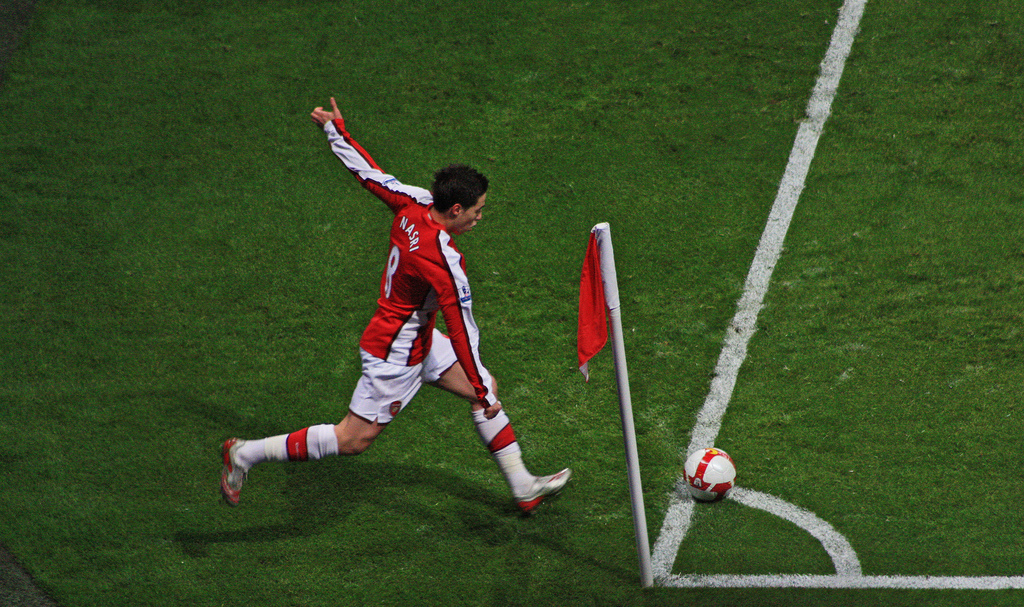

Modern football is constantly evolving, and in recent seasons one tactical trend has become increasingly visible across the top European leagues: the growing importance of set pieces as a decisive attacking weapon.
Clubs across Europe are investing heavily in specialized set-piece coaching, data analysis, and rehearsed routines designed to create advantages inside the penalty area. The results are clearly visible in professional competitions.
A well-known example is Arsenal FC, who have become one of the most dangerous teams in Europe from corners. Since the 2023–24 season they have scored over 30 Premier League goals from corners, often through carefully designed blocking movements and rehearsed delivery patterns.
Across Europe’s top leagues, a growing percentage of goals now originate from corners, free kicks, and long throw-ins.
Across Europe’s top leagues, a growing percentage of goals now originate from corners, free kicks, and long throw-ins. Some analyses even suggest that over one-fifth of goals in certain leagues come from set-piece situations, highlighting their growing tactical importance.
A specific emerging tactical development is the use of heavy crowding inside the six-yard box. Attacking teams intentionally create physical traffic around the goalkeeper to restrict movement and visibility, a strategy sometimes described as the “meat wall.” This tactic has contributed to a noticeable rise in set-piece goals and has forced goalkeepers to adapt their positioning and decision-making.
Because of these developments, defending set pieces is no longer simply about winning the first header. Modern routines are designed to create second-ball opportunities, deflections, and close-range finishing chances inside the most dangerous area of the goal.
For goalkeepers, this shift has major implications. The modern goalkeeper must be prepared not only for the initial delivery but also for the chaotic moments that follow.
The Rise of Zone Defense for Goalkeepers
With attacking routines becoming more organized, defensive structures have also adapted. Many teams now combine zonal and man-marking systems when defending corners and wide free kicks.
Goalkeepers must develop the confidence to dominate their space. The ability to read the cross early and make decisive actions can eliminate danger before it develops.
The ability to read the cross early and make decisive actions can eliminate danger before it develops.
Preparing for the Second Phase
Another major trend in modern football is the focus on the second phase after a set piece. Even when the first ball is cleared or deflected, attacking teams are often positioned around the penalty area ready to attack rebounds or loose balls.
This is where goalkeeper training must evolve. Sessions should simulate:
- Deflections in crowded areas
- Rebounds inside the six-yard box
- Quick reactions to shots from close distance
- Rapid recovery movements after the initial action
These scenarios force goalkeepers to react under pressure, just like they would during a real match.
Close-Range Goal Defense Remains the Core Skill
While modern goalkeepers are often praised for their distribution and ability to play with their feet, the most important and most impactful responsibility remains the same: protecting the goal.
Set pieces frequently lead to close-range shots, chaotic rebounds, and quick finishing attempts. In these moments, a goalkeeper’s fundamentals become critical. To prepare goalkeepers for the modern game, training sessions should include realistic set-piece scenarios. Effective goalkeeper training should integrate:
- Zonal control exercises: Simulating corner kicks with specific target zones.
- Cross decision-making: Working on claiming, punching, or staying based on delivery type.
- Chaos drills: Introducing deflections, blocked shots, and unpredictable rebounds.
- Close-range reaction saves: Simulating the final shot after a second ball.
These exercises help goalkeepers build the instincts needed to deal with real match situations.
Set pieces have become one of the most strategically important moments in football.
Final Thoughts
Set pieces have become one of the most strategically important moments in football. As attacking teams invest more time and creativity into these situations, goalkeepers must evolve alongside the game.
Modern goalkeeper training today must even more emphasize zone control, decision-making under pressure, and elite goal-defense reactions. Because at the end of the day, no matter how the game changes, the goalkeeper’s ultimate task remains the same: Protect the goal. And in the chaos of set pieces, that responsibility is more important than ever.