
Profile
Role: Head Coach of NK Lučko in the Croatian Second League
Specialisation: Player development and playing identity
Experience: Croatia, Russia, Slovenia, Lithuania, Hungary and Cyprus
Focus Areas: Stabilising the first team, integrating young talents from NK Lučko’s academy, and building a recognisable style of play
Biography
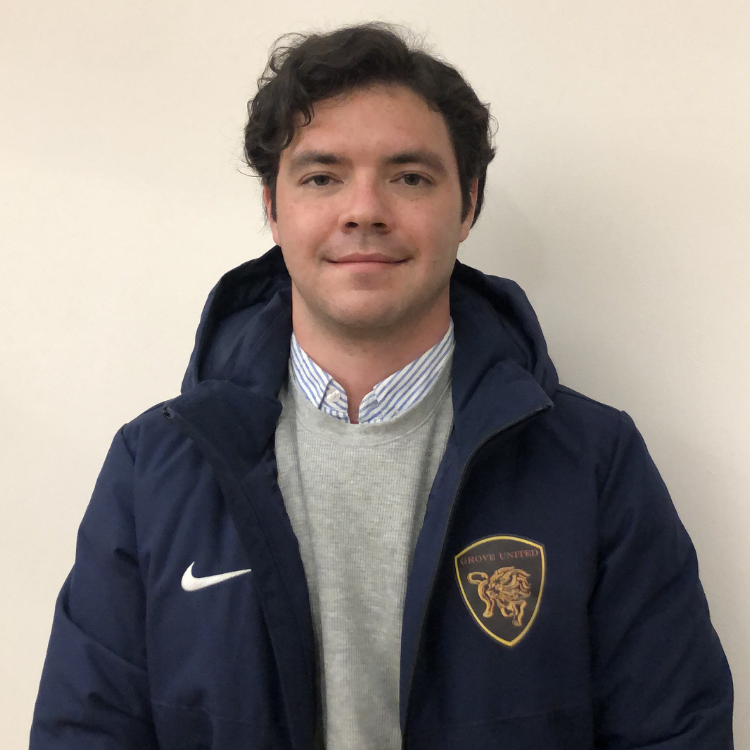
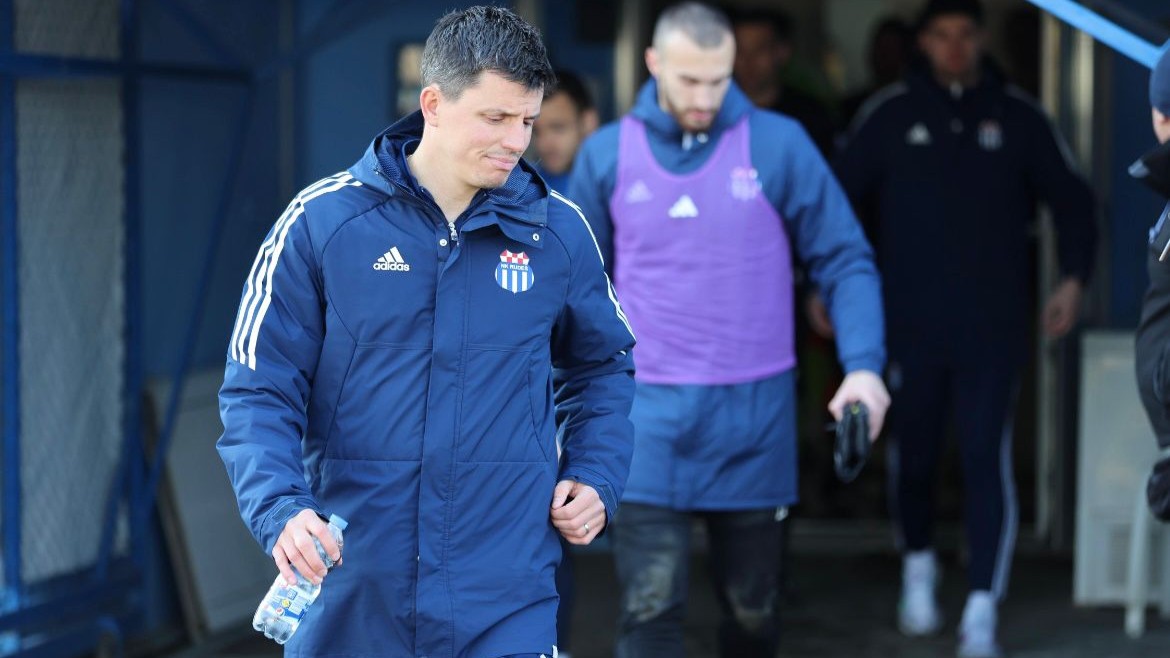
Stjepan Babić, born 1988, is a coach driven by clarity, development, and long-term vision. As head coach of NK Lučko in the Croatian Second League, his objective is to stabilise the first team while building a recognisable playing identity that can become the club’s trademark.
A former professional player developed through the renown GNK Dinamo Zagreb youth system, Babić competed at the highest level of Croatian football with NK Zagreb, NK Inter Zapresic and NK Varaždin, and gained valuable international experience playing in the top divisions of Russia, Slovenia, Lithuania, Hungary and Cyprus. Exposure to different football cultures, playing styles, and professional environments strengthened his adaptability and broadened his understanding of the game. During his playing career, he developed a strong interest in coaching, learning that success is built on relationships, trust, and clear communication.
During his playing career, he developed a strong interest in coaching, learning that success is built on relationships, trust, and clear communication.
His coaching career began in 2021 at NK Ravnice in Zagreb, where he worked as U-12 head coach and assistant coach with the senior team. This marked his transition into senior football and led to his first head coaching role at NK Lučko in the 2022/23 season. He later coached NK Rudeš U-19 before being appointed head coach of the first team in December 2024. Despite not holding a Uefa Pro Licence at the time, he had quickly gained the club’s trust and led the team through a crucial period of stabilisation, setting the groundwork for a promotion push. He returned to NK Lučko this season with a refined coaching vision and renewed drive.
For Babić, success is not measured by results alone. A strong emphasis is placed on player development, particularly the integration of young talents from NK Lučko’s academy, while maintaining a competitive team environment.
In the short term, Babić’s aim is promotion to the Croatian First League. In the long term, he seeks to leave a lasting impact through a proactive, attractive style of play that players and supporters can enjoy.
His guiding principle reflects that ambition:
“Our play shows how we love football.”
For Babić, success is not measured by results alone.
Key Insights
- Stjepan Babić is focused on building a clear and recognisable playing identity at NK Lučko.
- Player development and the integration of young talent are central to his coaching philosophy.
- His long-term ambition combines promotion, proactive football, and lasting impact.
Our Exclusive Interview with Stjepan Babić
You are currently Head Coach for NK Lučko in Croatia, what are your objectives for the club?
As the Head Coach of NK Lučko in Croatia, my main objectives are to stabilise the senior team and to create a clear and recognisable playing identity that is sustainable in the long term and will be a trademark of the club. My focus is on player development, especially on integrating young players from the club’s academy into the first team. Also, many young players from big clubs like Dinamo Zagreb and Lokomotiva Zagreb are now in our team, and they also have ambition like ours.
In the long run, the goal is to return NK Lučko to the level it previously competed at, the second league and within three years the top division of Croatian football. My personal objectives are to help the club in every possible way to achieve these goals and to make progress every day, every week in my work and football knowledge.
As the Head Coach of NK Lučko in Croatia, my main objectives are to stabilise the senior team and to create a clear and recognisable playing identity that is sustainable in the long term and will be a trademark of the club.
Your first role outside of playing was Assistant Coach and U19 at NK Rudeš. How was that experience and how did that prepare you for your current role?
My first role outside of playing started in 2021 at NK Ravnice from Zagreb, a small club near Maksimir Stadium, home of our biggest club in Croatia, GNK Dinamo Zagreb. I was U-12 coach and assistant coach with the first team, which competed in the third division in Croatia. This experience was invaluable to me, as I worked with young players who were just stepping onto a full-size pitch. I was involved in their first steps in 11v11 football, teaching them the basic principles of the game. A strong emphasis was placed on their technical development, understanding of the game, and relationships within team play.
What I enjoyed most was seeing how much children and young players genuinely enjoyed training and playing football, as well as how quickly they absorbed new knowledge and skills. In addition, working with the first team of Ravnice prepared me for my first step into senior football, which came with my initial coaching role at NK Lučko in the 2022/2023 season, where I led the team in the then fourth tier of Croatian football. After those experiences and my work at the two clubs, I took over NK Rudeš U-19, which I coached for one and a half seasons in the highest level of Croatian youth football. In December 2024, at the invitation and recommendation of the club’s leadership, I was appointed head coach of the NK Rudeš first team, despite not yet holding a UEFA PRO licence at that time.
I led the first team of NK Rudeš until August 2025, during a season in which we achieved club stabilisation and prepared and selected the squad for the ongoing season. In the current season, NK Rudeš is in first place and competing for promotion to the first division. In September, I then began my second term as head coach of NK Lučko.
What were the biggest lessons you learned during your playing career that you’ve taken into your coaching role?
I believe that I began thinking seriously about coaching around the age of 27, while playing in the Slovenian First League for NK Olimpija Ljubljana and NK Rudar Velenje. I was deeply interested in training processes, as I was a player who invested a great deal in myself and my preparation. In hindsight, I believe I sometimes trained too much, simply because at that time I did not know any other way. That constant drive pushed me to explore, learn, and experiment extensively on myself.
I have always admired coaches who built strong relationships with their players and who were able to lead a group with a certain ease. On the other hand, I found it difficult to understand coaches who lacked communication with their players. The most important lesson I have learned is that the right relationship is the key to any form of success, and that the only true authority is knowledge which, without a strong relationship, can often lose its value.
The most important lesson I have learned is that the right relationship is the key to any form of success, and that the only true authority is knowledge which, without a strong relationship, can often lose its value.
What are your thoughts on the Croatian football system?
In my opinion, the Croatian football system is unique in the world. It is difficult to find another nation that has achieved such outstanding results at the national team level while operating in conditions and with infrastructure that are nowhere near the level of those results. Football has a huge influence in Croatia, and it is almost impossible to explain how so many top-quality players are developed in a country with fewer than four million inhabitants.
The character of Croatian players and athletes is something I would especially highlight, as they have learned to develop in far more challenging conditions than their counterparts in larger countries. Club football in Croatia is not at the level of Europe’s top leagues, but each season produces a number of transfers of high-quality players to major clubs in the strongest leagues. If conditions and infrastructure in Croatia, particularly at small and medium-sized clubs, begin to develop more rapidly, it is possible that within the next ten years the league could reach a level that would be highly competitive with the strongest and wealthiest leagues.
What are your short and long-term objectives?
My short-term personal goal is to achieve promotion with NK Lučko to the second tier of Croatian football. I also aim to enrol in the UEFA PRO Licence course in order to be able to work at the highest level of competition. My long-term goal is to create a lasting impact through the quality of my work on the players and clubs I have worked with and will work with in the future.
I strive to build a clear identity and a style of play that is highly proactive, one that I, my staff, and my players can truly enjoy. Supporters are the ones who follow and encourage us, and I believe that people, in addition to results, want to watch good football. When I succeed in combining both, I am confident that I will achieve the true goal that inspired me to start playing football as a child.
I want to enjoy football through my coaching work, because my personal motto, one that I share with my team, is:
“OUR PLAY SHOWS HOW WE LOVE FOOTBALL.”
FAQ
Who is Stjepan Babić?
Stjepan Babić is the head coach of NK Lučko in Croatia and a former professional player with international experience.
What is Stjepan Babić’s coaching focus?
His coaching focus is on stabilising the senior team, developing young players, and building a clear and recognisable playing identity.
What are Stjepan Babić’s long-term goals?
His long-term goals are to create a lasting impact through his work and to build a proactive style of play that players and supporters can enjoy.