
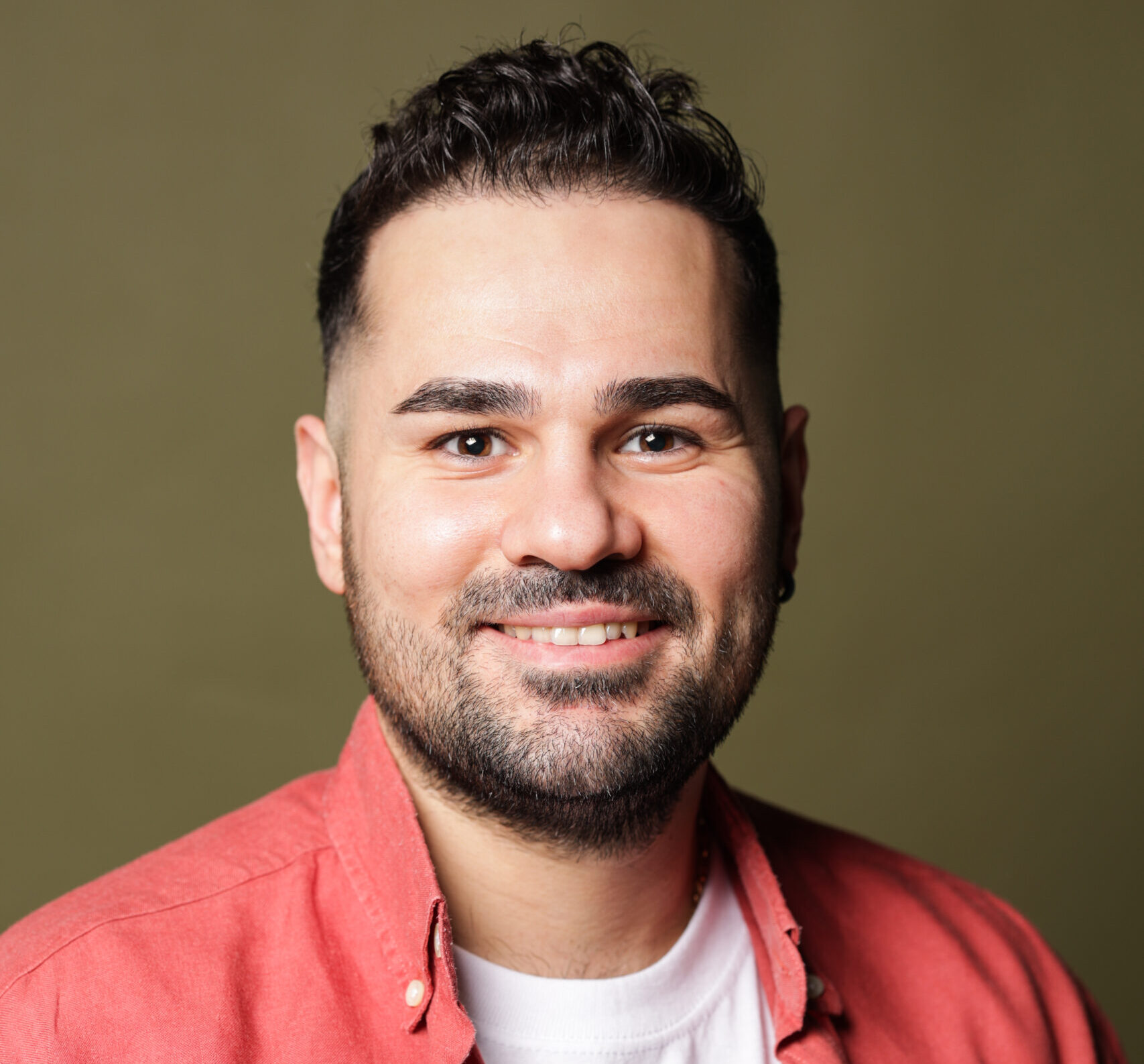
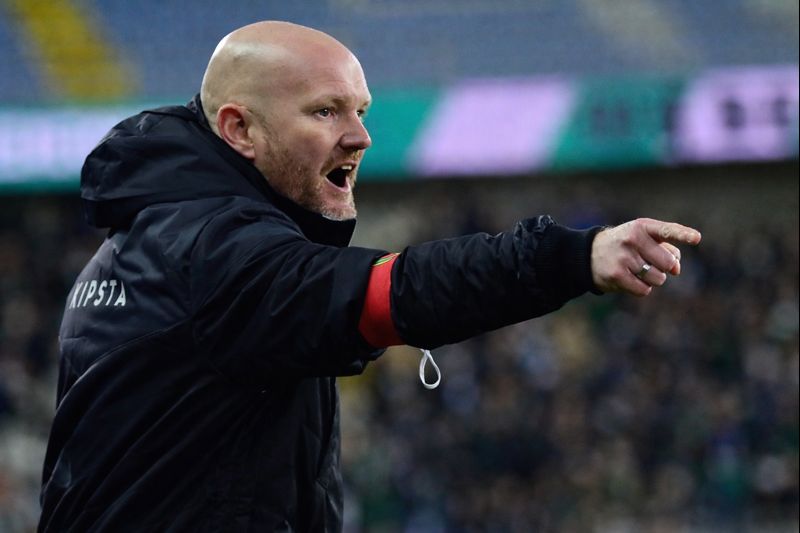
Profile
Role: Former Head Coach, VfR Aalen
Specialisation: Pressing, Counter Pressing, Player Development
Experience: Germany, Belgium, National Associations and Academies
Focus Areas: Tactical Development, Talent Promotion, Coaching Education
Biography
Markus Pflanz is a UEFA Pro Licensed coach whose career reflects a rare combination of elite-level coaching education, international first-team experience, and deep expertise in talent development. Born in 1975 in Soest, Germany, Pflanz has built a professional path that spans senior football, national teams, academies, and coach education, positioning him as a highly versatile and modern football coach.
In June 2024, he achieved the UEFA Pro Licence, the highest coaching qualification in European football. This milestone complements a long list of advanced certifications, including the UEFA A and B Licences, Elite Junior Licence, Game Analysis and Scouting Certificate, and specialist qualifications as a goalkeeper coach and FIFA 11 Plus instructor. His educational background underlines a coach who values structure, detail, and continuous development.
On the pitch, Pflanz is known for an intense and proactive playing style. His teams focus on pressing and counter pressing with clear triggers, defending forward, and immediate vertical play after regaining possession. His football philosophy is built on the principle of never being passive, always applying pressure, forcing mistakes, and exploiting them quickly. This approach is strongly influenced by his close professional relationship with Alexander Blessin, whom he assisted for 18 months at KV Oostende. During that period, the club rose from the bottom of the table to the play offs, and Blessin was later named Coach of the Year in Belgium.
His football philosophy is built on the principle of never being passive, always applying pressure, forcing mistakes, and exploiting them quickly.
Pflanz has held assistant coaching roles in the Belgian Jupiler Pro League with KV Oostende and Sint Truiden VV, where he was responsible for training design, opponent analysis, set pieces, and individual player development, while also stepping in as head coach for multiple matches. In 2024, he took on the role of Head Coach at VfR Aalen in the German Regionalliga, overseeing the full training process, match preparation, and tactical implementation.
His experience also includes long-term work in elite talent promotion with the German Football Association and Mainz 05 Academy, as well as lecturing and examination roles within the Hessian Football Association. Over the years, he has coached and developed numerous players who later progressed to top European leagues and international football.
Beyond coaching, Markus Pflanz is also an author and football educator. His work Rondos from a Defensive Perspective reflects his analytical approach and his ability to translate complex tactical ideas into practical training concepts.
Today, Markus Pflanz stands out as a coach who combines intensity, modern tactical principles, and educational depth.
Today, Markus Pflanz stands out as a coach who combines intensity, modern tactical principles, and educational depth. His profile suits ambitious clubs and federations seeking a proactive football identity, strong training methodology, and a leader who connects player development with high-performance demands.
Key Insights
- A UEFA Pro Licensed coach with extensive experience across academies, professional clubs, and associations.
- Strong emphasis on pressing, counter pressing, and proactive football principles.
- Combines player development, tactical clarity, and leadership within modern coaching environments.
Our Exclusive Interview with Markus Pflanz
Your coaching career spans elite youth development, professional club football, and association environments. How have these different levels shaped your identity as a modern head coach?
Every stage and every role has shaped me. From each phase, you take both positive and negative experiences, and that is exactly how your toolbox as a coach keeps growing. Over time, you realise that decisions are no longer made purely by intuition. Instead, intuition is built on experience. You subconsciously refer back to situations you have already lived through, which allows you to react faster and with more clarity.
Working with very different people and personalities has influenced me greatly. You learn that there is no universal solution. From positive experiences, you take elements you want to develop further, and from negative ones, you often learn even more. This combination of success, mistakes, and reflection is what defines, for me, the identity of a modern coach.
You are known for an intense, proactive playing style based on pressing, counter pressing, and vertical football. What are the core principles behind this philosophy, and why do you believe it is effective in today’s game?
My playing idea is based on intensity, activity, and courage. I like to call it heavy metal football. Just like music, it has to transport energy, emotion, and dynamism. Data and analysis confirm this approach. Most goals today are scored after transition moments, regardless of the zone in which the ball is won. Around 55 percent of goals come from pressing and counter pressing situations.
At the same time, football is also about entertainment. Spectators want to see a team that plays bravely, stays active, and thinks forward. For me, this does not contradict controlled possession football. Purposeful possession combined with a dynamic rest defence is crucial. Win the ball, transition immediately, and create goal scoring opportunities. This clarity makes the game both effective and attractive.
Working closely with Alexander Blessin had a strong influence on your development. What were the most important lessons you took from that collaboration, and how have they shaped your own leadership style?
Working with Alexander Blessin was my first role in professional football and therefore a defining moment. It was there that I first worked intensively with the concept of pressing, strongly influenced by ideas such as those of Ralf Rangnick. I was immediately convinced by this playing style because it fits me and my character very well.
At the same time, I learned a lot about leadership. For me, leadership means creating an environment where everyone enjoys coming to work and is willing to give their best. Not every day is the same, but the willingness to give one hundred percent must always be there. It is important that everyone feels like part of the bigger picture.
I also learned that you do not have to be perfect at everything yourself. What matters is recognising your own weaknesses and compensating for them by surrounding yourself with experienced and complementary people. Good leadership, for me, is productive leadership. Hard leadership for the sake of hardness achieves nothing. Creating problem cases instead of solving them harms the team. Motivation, trust, and clarity are far more effective in the long term.
You have coached and developed many players who later reached top global clubs. What do you focus on most when developing players to prepare them for the highest level?
For me, it is about preparing players realistically for what awaits them at the highest level. Players need certain skills, but the environment is just as important. The team must be built in a way that allows the best players to show their strengths in their best positions. That requires experience and a strong sense from the coach.
I place great value on supporting players’ development in a holistic way. Every day, I try to give my best myself and set an example. When players see that the coach works with full conviction, their own willingness to improve increases.
Communication is also crucial. Players must understand why they are doing something. If they are convinced that we will be more successful together, they will follow you. In that case, not only individual players improve, but the entire team does as well.
Having recently worked as a head coach and previously as an assistant at top professional clubs, what type of project or environment do you feel best suits your strengths at this stage of your career?
I am very open in that regard and not fixed on one specific path. In the end, I simply want to be on the pitch and work. Despite all the negative aspects of the job, such as limited free time and time away from family, it is still the best profession for me.
Whether as a head coach or an assistant coach, I enjoy both roles. Each has its own appeal and challenges. I also feel very comfortable in youth football, because developing players closely is incredibly rewarding. There are very few things more fulfilling.
A coach must also be willing to embrace major changes, including regional ones. I see enormous potential and many opportunities in the United States, for example. For me, the title of the position is not what matters most, but the opportunity to work, to develop, and to live football.
FAQ
Who is Markus Pflanz?
Markus Pflanz is a UEFA Pro Licensed football coach with experience across professional clubs, academies, and national associations.
What is Markus Pflanz’s coaching style?
He is known for an intense, proactive style based on pressing, counter pressing, and vertical play.
What makes Markus Pflanz a modern coach?
His combination of tactical expertise, player development focus, and leadership approach defines his modern coaching identity.