

Background and Career
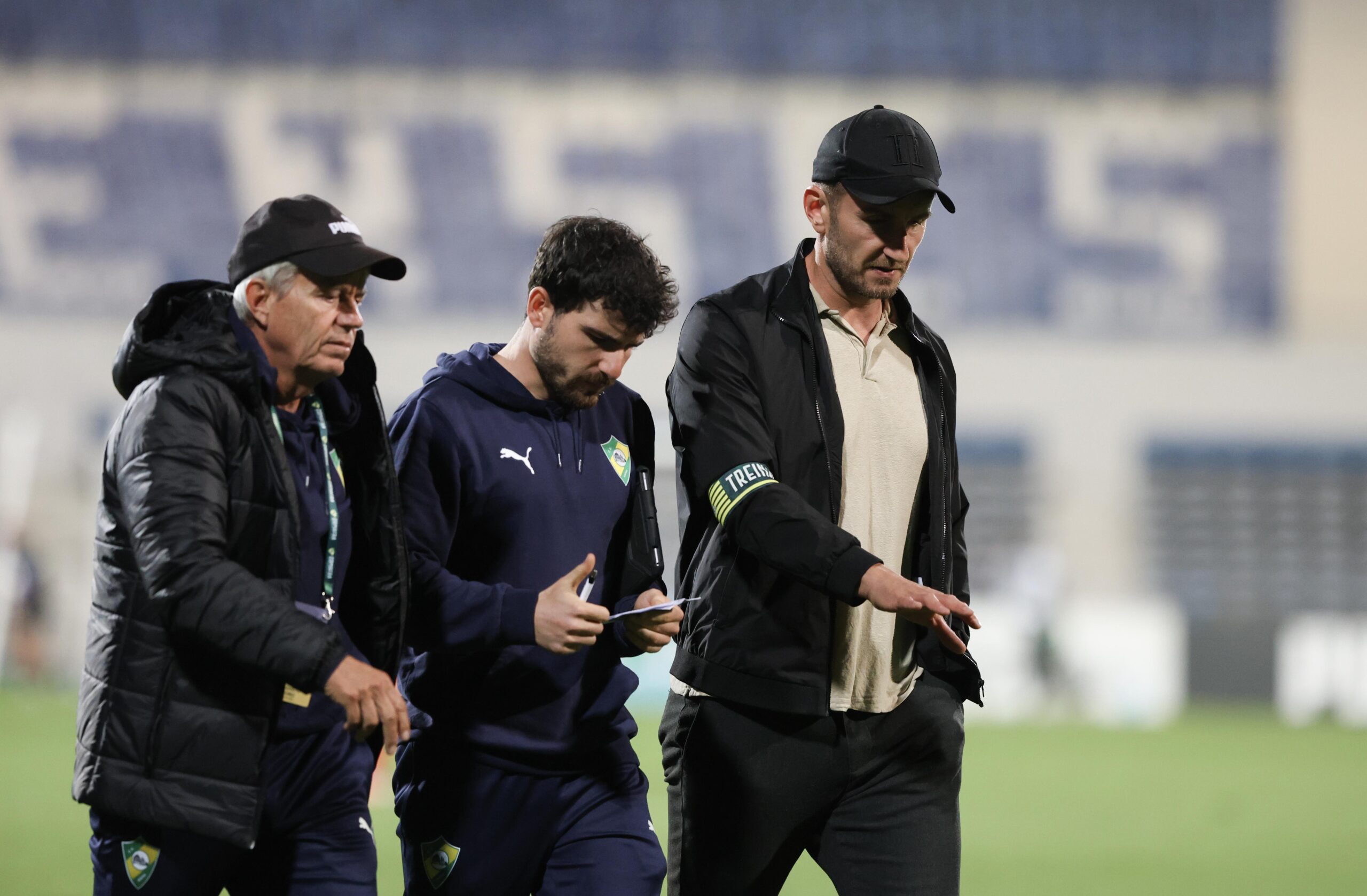
Can Lukas Bilge is a modern football coach and analyst whose career reflects an international and multidisciplinary pathway through elite academies and professional environments. Currently working as Assistant Coach at CD Mafra in Portugal, he combines training methodology, match analysis and set-piece development at senior level. His background includes roles within the DFB analysis structure, FC St. Gallen’s U21 setup and several top academies in Germany, most notably 1. FC Köln. Bilge also gained international experience through coaching internships at Cerezo Osaka and Melbourne City FC. His profile represents a new generation of coaches shaped by tactical detail, analytical depth and hands-on work across youth and professional football.
A modern coach bridging analysis and on-pitch execution
Part of a new generation of football coaches, Can Lukas Bilge connects analytical preparation with daily coaching practice on the training ground. His work centers on translating match analysis and tactical principles into clear and applicable solutions for players.
Rather than viewing analysis as a separate discipline, he integrates it directly into training design, match preparation and decision making. Shaped by experiences across different football cultures, his approach is defined by clarity, adaptability and practical impact in both youth and senior football.
I never saw coaching and analysis as separate disciplines, but as complementary tools that support player development and team performance.
Our Exclusive Interview with Can Lukas Bilge
How did your pathway into professional football develop, and which early experiences shaped your transition into coaching and analysis?
My pathway into professional football was driven by curiosity. I always wanted to understand why things happen, not just what happens. That mindset naturally led me into analysis at an early stage. Alongside that curiosity, I developed a strong interest in performance and how small details influence outcomes. Moving into the senior professional level felt like a natural progression.
Towards the end of my time as an opponent analyst for the German National Team, where I built a strong methodological foundation, I quickly realised that daily work on the pitch shaped me the most. Analysis only has value if it helps players perform better in real situations. I understood that quite early on.
This realisation formed my identity as a coach. I never saw coaching and analysis as separate disciplines, but as complementary tools that support player development and team performance.
You have worked across youth academies, national team analysis and senior football environments. How did these different levels influence your understanding of the game?
Each level sharpened a different aspect of my understanding of football. Youth football taught me patience and the importance of teaching rather than simply instructing. Development takes time and it is rarely linear.
Working in opponent analysis for the German National Team demanded efficiency and precision. During major tournaments the time windows are limited, so preparation, clarity and relevance become crucial. Every message has to be precise. You quickly learn to focus only on what truly impacts performance, especially when long working days are the norm. Leading a team of ten analysts also gave me valuable insight into leadership and organisation.
Senior football in a professional league environment brought everything together and added another layer of competitive pressure. Results matter, but so do sustainability, development and a style of football that fans connect with. In the end, it is about balance. Respecting development processes while fully understanding the reality and demands of elite competition.
In your current role, how do you balance hands-on coaching on the pitch with analytical preparation and match analysis?
In my current role at CD Mafra, analysis is not something that happens separately behind a laptop. It is part of the daily coaching process. It directly shapes how we design training sessions, prepare matches and communicate with players.
As the coach responsible for set pieces, my analytical focus is very specific. We start by looking at ourselves through post game set piece analysis. This happens in the group and also in individual meetings. Based on our principles, we assess whether we executed the type of set piece play we aimed for and where we need to improve. After that, I analyse the upcoming opponent and look for recurring patterns. How do they behave in set piece situations, which principles guide their actions, and where are their strengths and vulnerabilities. From this information, always aligned with our own ideas and principles, we develop concrete solutions and translate them into training behaviour.
On the pitch, my responsibility is to coach these ideas with clarity and consistency. The focus is always on execution and decision making rather than on overloading players with information. They should clearly understand their roles and reference points without feeling overwhelmed. Analysis only matters if it helps players make better decisions in decisive moments and feel prepared when it counts.
What role do set pieces and detailed match preparation play in your overall coaching philosophy?
My idea of football is that it should be entertaining and proactive. Defensively, that means applying high pressure and reacting immediately after losing the ball in order to regain control quickly. This approach naturally leads to more actions inside the penalty area, more touches in dangerous zones and a higher number of goal attempts. Playing forward with intent, especially in transition moments, and actively looking for crosses and finishes also increases the number of corners, free kicks and throw ins.
For that reason, set pieces play a central role in our game model. They are not just another way to bring the ball into the penalty area and the so called golden zone, they are also one of the few situations in football where the starting position is fixed and the game becomes slightly more predictable. That makes preparation particularly valuable.
Our approach begins with our own playing principles. We work with a clear structure that provides orientation while still allowing players the freedom to interpret situations. On that basis, opponent analysis becomes part of the preparation. We study how the opponent attacks and defends set pieces, where their strengths and weaknesses lie, and how we can apply our ideas in the most effective way.
In the end, it all starts with a shared culture, including a set piece culture. It has to be lived throughout the club. That is why we invest training time in these situations and look for creative ways to integrate them in a competitive and realistic environment.
Effective coaching begins with understanding people first.
You have gained international experience in Europe, Japan and Australia. What key differences have you observed in football culture, methodology and player development across these regions?
The biggest differences I have observed are not only related to football culture, but to culture and communication in general. Every country has its own values and social norms, and these strongly influence how players train, learn and interact.
In countries such as Germany, Switzerland and Japan, punctuality and reliability play a central role. In parts of southern Europe, for example Turkey or Portugal, daily processes are often approached in a more relaxed manner. Another key difference lies in feedback culture and hierarchy. In Germany, Switzerland or Australia, structures tend to be relatively flat and open dialogue between staff and players is common. In Portugal, Turkey or Japan, coaching staff and senior figures are often treated with greater formality and authority.
These cultural differences directly shape how feedback is delivered and received, how daily routines are structured and ultimately how football culture develops.
One interesting insight from Australia is how young many first teams are. Teenagers regularly accumulate professional minutes. There is a clear intention to develop talents early, either to build long term around academy products or to create opportunities for transfers abroad, as the domestic market offers limited potential for large transfer fees. The geographical distance to other major football nations also means that players who move abroad usually need to stand out clearly in order to justify that step.
In Japan, the passion for football is remarkable. Hundreds of fans attend training sessions. Even after emotionally intense matches or derbies, the atmosphere remains respectful and peaceful. Players show a strong willingness to learn. Video analysis sessions take place daily and can last more than twenty five minutes, yet the players remain focused and engaged.
On the pitch, basic technical skills are developed at a very high level. At times there is slightly less directness in the final third, which is one reason why many attacking roles are filled by Brazilian players who bring creativity and individual quality in decisive areas.
Within Europe, cultural differences are also visible. In Germany and Switzerland, transition moments and vertical play are often emphasised more strongly. In Portugal, the game tends to be more tactical, with many technically outstanding players. This raises the question whether the methodology itself differs significantly. In my view, the broader cultural environment plays a major role. Portugal is a country deeply connected to football. Many hours are spent outdoors and there is a strong tradition of futsal, street football and beach football. These influences naturally contribute to the development of creative and technically gifted players.
Overall, these experiences have reinforced my belief that methodology must always be adapted to the cultural context. There is no universal model. Effective coaching begins with understanding people first.
Looking ahead, what kind of football projects or environments do you see yourself working in, and what motivates you in the next phase of your career?
At the moment, I am working in a very positive environment at CD Mafra. It is a club with strong colleagues, a great atmosphere and an ambitious sporting project. I carry real responsibility, I am able to contribute actively to processes and I have the chance to learn every day. The trusting relationship with my head coach, Orest Shala, with whom I arrived here, is especially important to me. It allows open dialogue and constant development.
I feel strongly connected to this project and, looking ahead, I see myself in environments built on similar principles. I am driven by curiosity and motivated by ambitious challenges that still provide the space to build and develop something in a sustainable way.
Helping players understand the game on a deeper level and seeing teams grow over time truly excites me. International environments continue to inspire me because they challenge habits, broaden perspectives and push you to evolve.
In the next phase of my career, my aim is clear progression. Completing my Pro Licence is an important step. But more than anything, I want to keep improving in my daily work and create a meaningful and lasting impact on teams and the people within them.