

Elite goalkeeper development rarely happens by coincidence. It requires structure, repetition, patience, and a clear methodological identity across every level of a club. Marc Lamberger operates precisely at that intersection between first team performance and long term goalkeeper architecture.
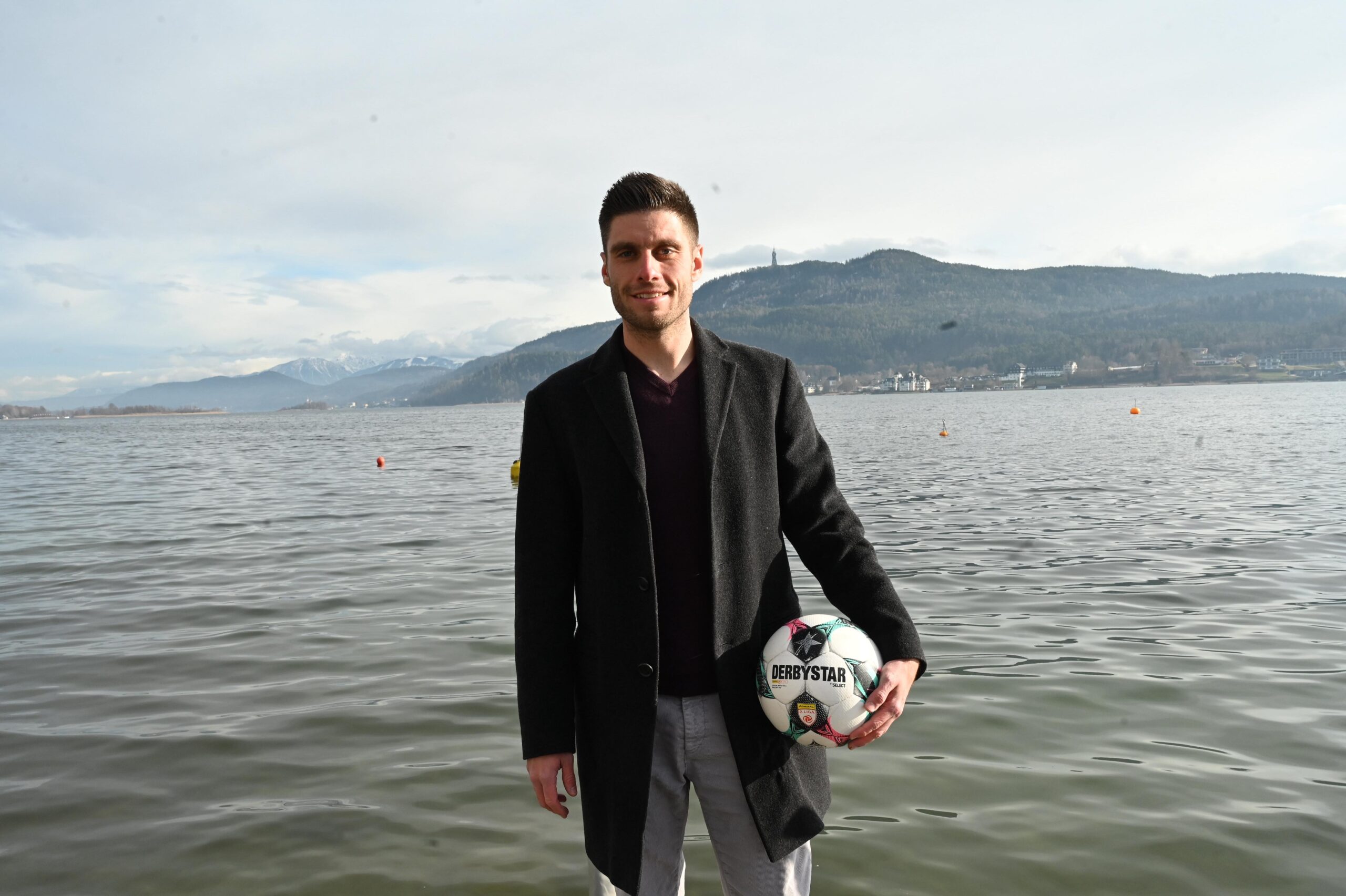
Marc Lamberger is first team goalkeeper coach at SK Austria Klagenfurt, where he also coordinates the academy goalkeeping department and supports the women’s team. With previous leadership responsibility for the entire goalkeeping structure at TSV 1860 München’s academy, national team experience in beach soccer, and active involvement in coach education with the Bavarian Football Association, he combines hands on performance work with long term conceptual development. His approach is defined by structured methodology, trust in process, and a strong belief that sustainable goalkeeper success is built through systems rather than isolated talent.
Elite goalkeeper development rarely happens by coincidence. It requires structure, repetition, patience, and a clear methodological identity across every level of a club.
Our exclusive interview with Marc Lamberger
You are currently working as first team goalkeeper coach at SK Austria Klagenfurt while also coordinating the academy goalkeeping department and supporting the women’s team. How do you structure this multi level responsibility to ensure methodological consistency across performance environments
Creating methodological consistency across several teams and performance levels is demanding, particularly in a smaller club structure. In an ideal scenario, a professional club would employ multiple full time goalkeeper coaches. In clubs operating under tighter financial conditions, however, one full time coach often carries responsibility across multiple environments.
I previously managed a similar structure in Munich as the sole full time academy goalkeeper coach, which prepared me well for this role. In Klagenfurt, my responsibility extends beyond the academy to include both the men’s and women’s first teams. That requires a clear weekly structure and defined training themes to ensure alignment across all levels.
We organise our training week around specific focal points. Every goalkeeper follows a structured mobility and core programme as part of the pre warm up routine. Monday is dedicated to fundamentals and goalkeeper specific athletic work. Tuesday focuses on one versus one situations and short distance actions. Midweek we emphasise space defence. Friday centres on match preparation. Each session begins with a coordinated warm up and short passing sequence, followed by technical work and then a high number of decision making exercises before integration into full team training. This structure ensures clarity for goalkeepers and for the two part time academy coaches working within the same framework.
Having led the entire goalkeeping department at TSV 1860 München’s academy over multiple seasons, what were the key principles behind your long term goalkeeper development model from U9 to professional level
Long term development requires more than one method or one philosophy. It requires a complete toolkit and, above all, patience. Young goalkeepers need time to grow. As coaches, we must trust the development process and provide consistent repetition through structured training. Mistakes are part of learning, both in training and in competition. Children and young players deserve the time and space to develop without premature pressure.
This approach also demands loyalty from the goalkeeper coach. I see development as a long term project. Ideally, you accompany a goalkeeper over many years within one club. When larger academies approach with opportunities, it is important to support the player’s progression while also recognising the club’s role in that development. When structured correctly, this becomes beneficial for both sides.
At 1860, we experienced this with players such as Nahuel Noll, who joined in the U12 and later moved to Hoffenheim before progressing to professional football. Simon Urban transitioned from striker to goalkeeper in U9 and later moved to Mönchengladbach. Others, such as Erion Avdija, developed through the academy pathway into the professional environment. These examples demonstrate that sustainable development structures produce long term outcomes.
Elite development is not accidental. It requires organisational commitment, qualified staff, and structured transition pathways that consistently convert potential into professional performance.
Your career combines academy leadership, professional first team work, and national team experience in beach soccer. How have these different competitive contexts influenced your understanding of goalkeeper performance and adaptability
Working across academy, professional, and national team environments has strengthened both my coaching methodology and my personal leadership capacity. I can operate effectively in professional, youth, women’s, or amateur environments, while adjusting expectations and communication accordingly.
At professional level, speed, precision, and consistency are critical. Exercises are executed at higher tempo and physical demands are significantly greater. Coaching becomes more direct, with strong emphasis on decision making under pressure. In academy environments, while performance is important, the primary focus remains long term development. Winning a youth championship is secondary to preparing players to perform sustainably at the highest possible level.
These experiences reinforced my belief that goalkeeper development must balance immediate performance requirements with long term athletic and psychological growth.
You have consistently combined hands on coaching with conceptual work, including coordination roles and educational responsibilities. How do you approach decision making when balancing individual goalkeeper needs with a club wide or federation wide framework
I believe strongly in avoiding rigid categorisation. Every goalkeeper should be allowed to develop their individual style. Some are naturally aggressive in one versus one situations, others are more positionally oriented. Some defend space higher, others prefer deeper positioning. These differences should not be suppressed.
My responsibility is to provide a clear philosophical framework while allowing individual expression within that structure. Through discussion and scenario analysis, we evaluate different solutions together. The objective is to create an environment that supports personal growth within a shared methodological direction.
As a goalkeeper coach educator for the Bavarian Football Association, what gaps do you currently observe in goalkeeper coach education, and how should licensing structures evolve to meet modern performance demands
The primary structural challenge is the organisation and availability of courses. In entry level licensing courses, participant backgrounds vary widely. Some are former professionals, others are parents with no personal goalkeeping experience who wish to support their children. Addressing this spectrum effectively requires differentiated course design.
In recent years, we have managed this diversity well, but further refinement is possible. One structural improvement could be the introduction of shorter two day courses for grassroots and amateur levels, particularly for parents and lower league coaches. This would allow foundational concepts to be delivered efficiently, while advanced courses could focus more deeply on tactical, technical, and analytical detail.
Modern performance demands require flexible and tiered education structures that address different starting points while maintaining consistent quality standards.
Your academic background includes sport management and applied work on goalkeeping software. How does data, technology, and analytical tooling integrate into your daily coaching and long term planning processes
The primary work remains on the pitch. Technology supports, but does not replace, direct coaching. I document every training session and match through specialised software and provide structured video analysis for goalkeepers after each game.
Pre match preparation includes opponent analysis, particularly set pieces, penalty tendencies, and attacking patterns. Physical performance metrics such as jump height, strength, and speed are monitored and improved progressively. Technology enhances clarity and objectivity, but practical application remains central.
Through numerous national and international coach visitations and congresses, you have been exposed to different goalkeeping philosophies. What criteria do you use to critically assess which concepts are transferable into your own working environment
The most influential factor is the coach’s personality and clarity. I observe how they communicate, how they identify and correct details, and whether they inspire their goalkeepers.
Highly advanced technology or elaborate training setups are impressive, but they must be evaluated against one’s own working environment. I focus on exercises that improve individual technique and decision making, as well as on communication style and integration within the broader coaching staff. It is also important to observe whether the goalkeeper coach contributes to team tactical discussions such as build up play, box defence, or set pieces. Integration within the full coaching ecosystem is essential.
You have also founded and operate an independent goalkeeping school alongside your professional roles. How does this entrepreneurial perspective influence your leadership style and your view on sustainable goalkeeper development pathways
The goalkeeper school was founded in 2019 to support players who lack specialised goalkeeper training in their clubs. In Munich, there is strong motivation among young goalkeepers, yet smaller clubs often lack qualified coaches.
Today, the school is led by one of my former goalkeepers, Maxi Rothdauscher, who remained committed to the project despite personal injury setbacks. I prioritise my professional responsibilities in Austria, but the school continues to support regional amateur structures and provides professional opportunity for its staff.
This entrepreneurial experience reinforces my belief that sustainable development depends on accessible expertise and structured support beyond elite environments.
Looking ahead, your stated objective is to shape goalkeeping concepts and establish goalkeepers for the professional game. From your current vantage point, what structural conditions must clubs create to consistently develop elite goalkeepers rather than individual success stories
Sustainable elite goalkeeper development requires structural investment. A club should ideally employ three to four full time goalkeeper coaches across men’s, women’s, and academy levels, supported by part time staff and dedicated scouting capacity.
Examples such as LASK in Austria demonstrate how coordinated academy development and structured loan pathways can produce professional level goalkeepers. In Germany, clubs such as VfB Stuttgart, Hoffenheim, Freiburg, Mainz, and Nürnberg have implemented comprehensive goalkeeper departments. Young goalkeepers are systematically developed and then placed on loan at nineteen or twenty years old to gain competitive experience in the second or third division before returning to higher level environments.
Elite development is not accidental. It requires organisational commitment, qualified staff, and structured transition pathways that consistently convert potential into professional performance.