
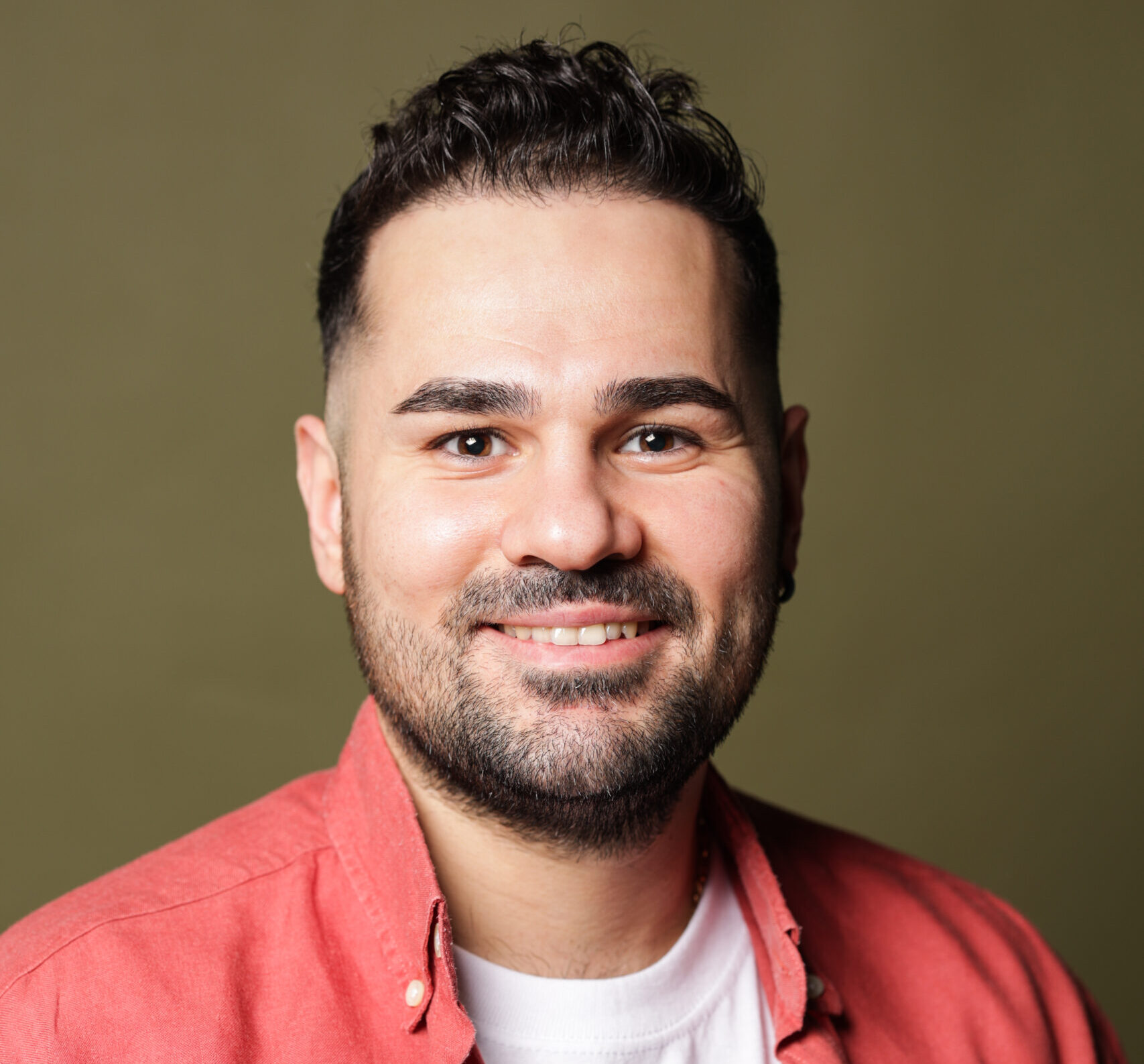
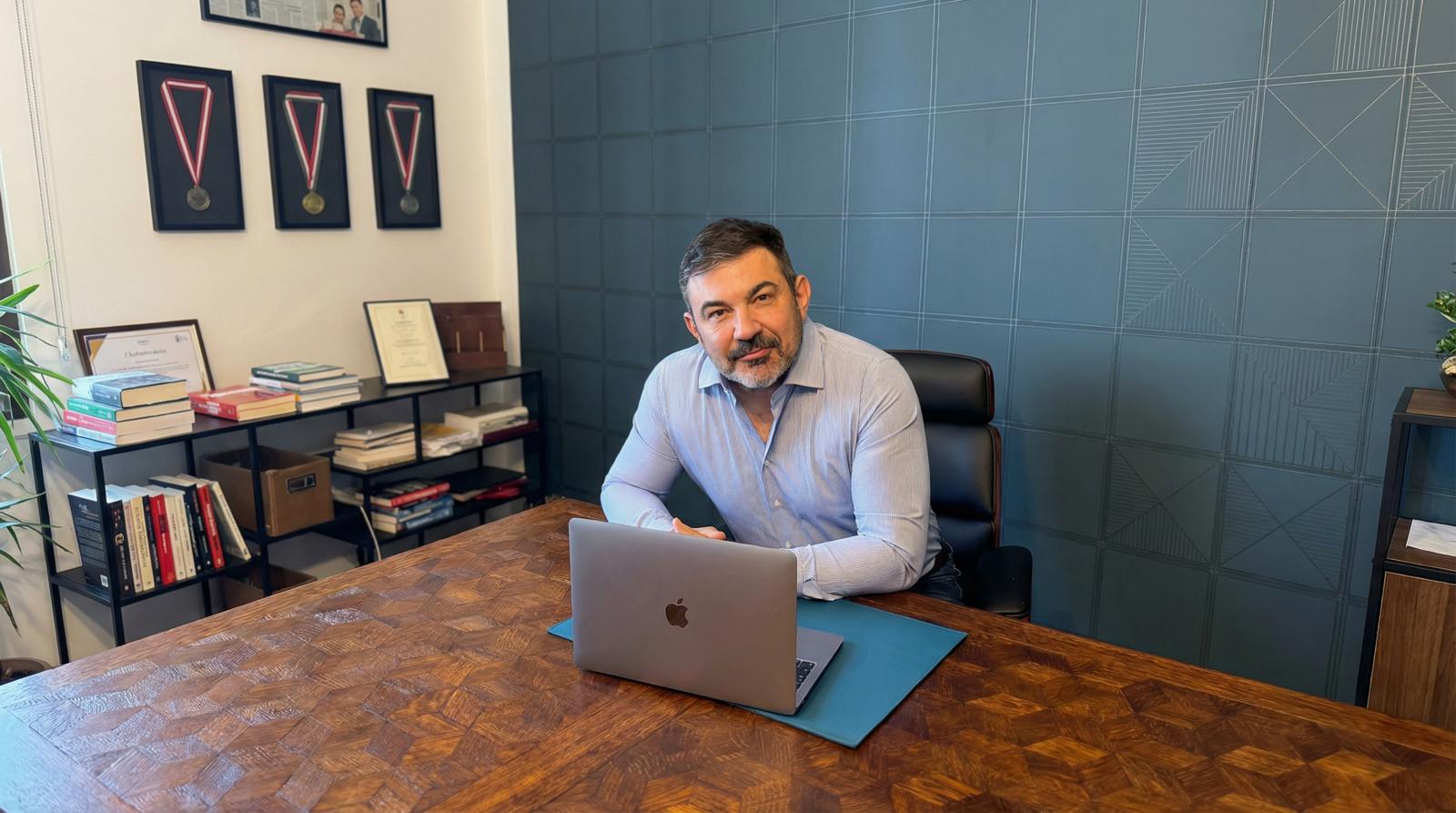
Hunor Dudás is one of Central Europe’s most versatile and forward-thinking football executives, consistently working to connect club leadership, player management, and international football business into a coherent approach. Based in Hungary, Budapest, his career has moved confidently between boardrooms, the dressing-room environment, and international professional forums. His work is guided throughout by a strong people-first philosophy.
His executive profile gained wider recognition during his tenure as Managing Director of Diósgyőri VTK between 2010 and 2014. He joined the club at the beginning of a rebuilding phase and achieved promotion to Hungary’s top division in his first season. During his time in charge, the club won the Hungarian League Cup, reached the Hungarian Cup final, and competed in European competitions.
Alongside sporting success, significant emphasis was placed on stabilising and professionalising the club’s operations. Strengthening internal structures, commercial foundations, and operational processes resulted in a more sustainable long-term model. This period established Dudás as a leader capable of guiding a historic club through complex challenges under sustained pressure.
In 2016, together with Dr. Péter Pákay and Dr. Csaba Bogdán, he co-founded “The Path Sport Management”, deliberately positioning it as an alternative to traditional, transaction-focused player agencies. The Path was created as a long-term career platform, placing equal emphasis on career planning, mental support, education, and ethical representation alongside contract management. Through his agency work, Hunor Dudás has been involved in numerous international transfers of both Hungarian and non-Hungarian players, consistently structured with long-term value in mind. This approach has supported player development while also delivering clear sporting and financial benefits for clubs, including the successful international transfer of several Hungarian players that generated meaningful value and revenue for their organisations.
Beyond club and agency work, Dudás is an active builder of football industry connectivity in the region through Football Forum Hungary. Hosted at landmark venues such as the Puskás Arena and Ferencváros Groupama Stadium, the event has grown into one of the most significant football business gatherings in Central and Eastern Europe. https://footballforumhungary.hu/en/
The forum brings together club executives, sporting directors, scouts, agents, coaches, marketing and media professionals, federation representatives, university and academy experts, investors, and technology leaders, strengthening the connections between the regional and international football markets.
Alongside his football-related activities, Dudás served as President of the Sports Marketing Department of the Hungarian Marketing Association between 2020 and 2023, where he advocated for higher professional standards, modern sponsorship models, and a stronger market-oriented approach within the sports industry.
Today, Hunor Dudás is characterised by his strategic thinking, connecting role, and human-centred leadership style. His work focuses on building sustainable structures, supporting the people working within football, and creating platforms where knowledge, innovation, and ethics can evolve together. His objective is to help shape a smarter, more connected, and more responsible football ecosystem which is measured not only by results, but by long-term impact and values.
His objective is to help shape a smarter, more connected, and more responsible football ecosystem which is measured not only by results, but by long-term impact and values.
Our exclusive interview with Hunor Dudás
Your career spans club leadership, player representation, and international football forums. How do these different roles influence the way you understand modern football leadership and responsibility?
Modern football leadership, for me, is built on four core pillars: trust, credibility, continuous learning, and cooperation.
Credibility is the foundation of everything. A leader must represent the same values in the boardroom, around the dressing room, and in public. Without credibility, trust cannot be built and without trust, neither clubs nor player careers can be developed sustainably.
Football evolves extremely fast, which means leaders must remain open to learning and to the experiences of others. Finally, cooperation is essential. Modern football is an interconnected system, and responsible leadership today means understanding that we achieve more together than in isolation.
Modern football leadership, for me, is built on four core pillars: trust, credibility, continuous learning, and cooperation.
During your time as CEO of Diósgyőri VTK, you led the club through an important phase of transition. What did that experience teach you about managing pressure, expectations, and long-term vision?
Pressure is a constant in football. Supporter expectations, media attention, ownership dynamics, and internal tensions are all present at the same time. If someone cannot live with that, football is probably not the right environment for them.
At Diósgyőri VTK, I learned that pressure should not be avoided. It must be transformed into energy. A clear long-term vision provides stability, even when results fluctuate or external criticism becomes louder.
As a leader, the most important responsibility is to provide direction and calm for the organisation, even when the environment is noisy. This requires determination, resilience, and genuine self-confidence.
Why did you choose a holistic approach at The Path Sport Management, and why is long-term athlete care becoming essential in modern football?
The philosophy of The Path is simple: a player is not a project, but a person’s entire life journey.
Different phases require different types of support. Youth development, peak professional performance, and the transition into life beyond football all demand distinct approaches.
Mental preparation, education, and a stable background are no longer optional extras; they are basic requirements. Football has become too fast and too exposed for players to be measured purely through contracts.
A true winning mentality is not formed only on the pitch. Learnability, adaptability, and self-reflection are the qualities that make the difference between good players and truly successful ones over the long term. That is why holistic care is not a romantic idea, it creates performance and sustainable value.
Football Forum Hungary has become a key football business event in Central Europe. What was the original vision, and how do you see its role today?
Football Forum Hungary was created because we believed Central Europe needed its own international platform. One where world-class knowledge, decision-makers, and relevant connections could be accessed without having to travel to Western Europe.
Today, the forum functions as a modern agora: a meeting point where knowledge exchange, business, and networking come together. Our ambition is for the region to become not just a follower, but an active contributor to the global football industry.
At the same time, Football Forum Hungary is not just an event: it is a community. A continuously growing “family” built on strong personal relationships. This is what truly differentiates us from competitors: we do not create one-off encounters but focus on building long-term professional and human connections.
How do you see Hungary and Central Europe positioning themselves in the global football industry?
One of the greatest strengths of Hungary and Central Europe lies in talent development. We are an exporting market, and this represents significant strategic potential within the global football ecosystem.
Over the past 15 years, Hungarian football has undergone substantial infrastructural development. New pitches, stadiums, and academies have been built, creating the conditions required to develop and nurture high-level players. These foundations now allow us to work more efficiently and with greater long-term focus.
At the same time, we must be honest: we do not have the same financial resources as the biggest leagues. This means we need to work smarter, more efficiently, and harder to close the competitive gap. Cooperation and connectivity are key and our ability to think in networks and connect both within the region and internationally.
Technology is no longer optional. Data-driven decision-making, artificial intelligence, and digital connectivity are essential to remain competitive in scouting, player development, and club operations.
The early signs of progress are already visible. More Hungarian players are appearing in top European leagues, and while this is encouraging, we are still at the beginning of the journey.
In the long term, success is built on ethical leadership. Trust, transparency, and fair partnerships are the values that give a region real credibility and a lasting position on the international football map
What are you most proud of in your career so far?
As a club leader, I’m most proud that we were able to bring joy to so many people.
From an agency perspective, I’m particularly proud that we have completed many successful transfers involving Hungarian and non-Hungarian players, where the outcome proved beneficial for all sides involved. Seeing players take meaningful steps forward in their careers, while clubs gain reliable, well-prepared professionals, confirms that a transparent and value-driven approach to representation creates real, sustainable success.
And as the founder of Football Forum Hungary, I’m proud that we’ve created a platform in Central and Eastern Europe that impacts so many lives and connects East with West.