

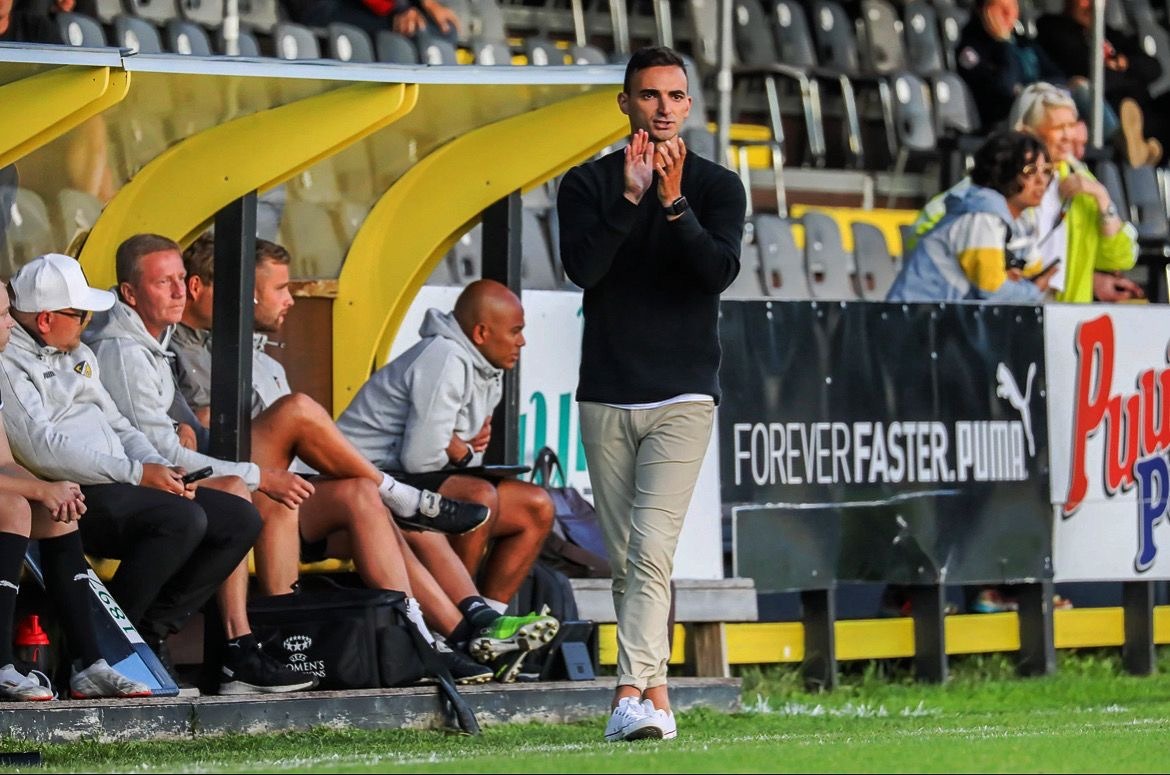
Modern Coaching Leadership and Identity
Modern coaching leadership is no longer defined solely by tactics or matchday decisions. It is shaped by identity, emotional intelligence, and the ability to align people, processes, and performance under constant pressure. Omar Adlani belongs to a generation of head coaches who view clarity, authenticity, and cultural awareness as fundamental leadership tools in elite football.
Omar Adlani is Head Coach at FC Basel, operating within one of Switzerland’s most demanding football environments. His pathway spans club and national team football, talent development, performance analysis, and coaching roles across different countries and cultures. Known for a proactive game model, disciplined daily standards, and a strong emphasis on alignment between people and principles, Adlani represents a modern coaching profile focused on sustainable performance rather than short-term noise.
Modern coaching leadership is no longer defined solely by tactics or matchday decisions. It is shaped by identity, emotional intelligence, and the ability to align people, processes, and performance under constant pressure.
Our exclusive interview with Omar Adlani
You are currently Head Coach at FC Basel. How would you describe your coaching identity, and what principles define your work at this stage of your career?
My coaching identity has evolved significantly through experience, pressure, and exposure to different football cultures. Today, I see myself as a coach who values bravery, intensity, and emotional balance.
I strongly believe in a clear game model based on proactive football, high pressing, and intelligent use of possession. My teams must be brave, disciplined, and emotionally strong. At this stage of my career, my core principles are consistency, accountability, and continuous improvement, both individually and collectively.
I have made many mistakes as a young coach and I will continue to make more. That is part of the process. One of the most important lessons I have learned is to always be myself. Early in my career, there were moments when I tried to copy the style or personality of coaches I admired. I realised this is not sustainable. When you do that, you slowly lose your own identity, and players feel it. Authenticity is essential in leadership.
My work today is defined by clarity in the game model, consistency in daily standards, and strong, honest relationships with players and staff. I believe performance comes from alignment, when everyone understands the idea, feels respected, and is held to the same level of responsibility.
At FC Basel, my principles are simple: train with purpose, compete every day, and never lose our hunger. It is a club with history, ambition, and expectations. My responsibility is to build a team that reflects that identity not only in how we play, but in how we behave, prepare, and respond to challenges.
Authenticity is essential in leadership.
Your pathway includes roles as head coach, assistant coach, talent coach, and staff member across several countries. How have these environments shaped your understanding of modern football leadership?
My pathway through different roles and countries has had a major influence on how I understand modern football leadership.
I began my full-time coaching career as both a talent coach and assistant coach within a women’s first-team environment, while also working as a regional coach in southern Helsinki and as part of the U19 national team staff. This combination immediately exposed me to different layers of the game: elite senior football, youth development, and national team structures.
As a talent coach, my responsibility extended far beyond the pitch. It included individual training plans, video analysis, and supporting players socially and mentally. This role fundamentally shaped my understanding of the individual aspect of coaching, developing players as people and professionals while integrating them into a collective structure.
Alongside this, I had a significant role within the coaching staff, leading training sessions, preparing and delivering video meetings, contributing to match analysis, and working on scouting. This taught me the importance of collaboration, clarity of roles, and preparation in a high-performance environment.
Working within regional programs and national team structures introduced me to a very demanding working culture. National team camps are short but intense. Large amounts of information must be delivered in limited time. This experience taught me how to prioritise what truly matters, simplify messages, and maximise impact quickly.
Moving into head coach roles added another dimension. You learn responsibility and decision-making under constant pressure. Leadership is not only about tactics or selecting a starting eleven, but about creating a culture where people feel challenged, supported, and motivated to improve.
All of these experiences shaped my view that modern football leadership is multidimensional. Tactical competence is essential, but so are emotional intelligence, communication, cultural awareness, and the ability to manage individuals within a collective structure. Whether working with young talents, senior professionals, or staff, the foundation remains the same: clarity, trust, and consistency under pressure.
You have also worked within national team structures. How does international football differ from day-to-day club work?
The biggest difference is time. In club football, you work with players daily, build habits gradually, and correct details over weeks and months. At international level, time is extremely limited. Preparation must be precise and efficient. Every training session, meeting, and video clip must have a clear purpose.
Tactically, this means focusing on a small number of key principles rather than complex structures. Decision-making becomes more selective. You must decide what is essential, what can be simplified, and what can realistically be executed within a few sessions.
Player management is also different. Players arrive from different clubs, game models, and physical and emotional states. Some are fatigued, others full of confidence. You must read the group quickly, manage expectations, and build cohesion in a very short time.
There is also a strong emotional component. Playing for a national team involves identity, pride, and external pressure. The environment must be intense and competitive, but also calm and stable. Creating that balance is part of the role.
These experiences reinforced my belief that modern coaching is about clarity, adaptability, and human management as much as tactical knowledge. The ability to organise efficiently, communicate simply, and unite people around a clear idea is crucial at international level and extremely valuable in club football as well.
You have extensive experience in analysis, scouting, and periodisation. How do you translate complexity into clear guidance?
Analysis only has value if it leads to better decisions and behaviour on the pitch. The challenge is not collecting information, but transforming complexity into clarity.
My first principle is relevance. I filter everything through one simple question: does this help the player perform better in the next match or training session? If not, it does not belong.
Secondly, analysis is always connected to our game model and principles of play. This helps players understand not only what to do, but why they are doing it.
From a practical perspective, I reduce information to a small number of key messages, usually three to five points, supported by short video clips and clear visuals. These messages are then reinforced on the pitch through training exercises that reproduce the situations we analysed.
Periodisation is done in close cooperation with the fitness coach. He defines the physical framework. I translate that into football-specific content. Physical development and tactical learning must always happen together.
With the staff, analysis is more detailed. We challenge interpretations, align on priorities, and ensure everyone delivers the same message. Consistency is essential.
What do you look for when identifying players with long-term potential beyond immediate performance?
The most important factor for me is attitude and mentality. A player’s willingness to learn, accept feedback, and work consistently is often a stronger predictor of long-term success than technical ability alone.
Technical, tactical, and physical qualities can be developed. What matters most is how players process information and make decisions. Those who combine mental agility with commitment to development tend to reach higher levels and sustain performance over time.
How important is interdisciplinary knowledge for head coaches at the highest level?
When leading a team of experts, you must be able to understand and interpret what is presented to you. You are not expected to be the best in every domain, but you need enough knowledge to make informed decisions and ask the right questions.
Interdisciplinary understanding allows physical preparation, tactics, psychology, and analysis to function as one coherent framework. At the highest level, leadership is about connecting expertise, not replacing it.
How do you ensure alignment between youth development and first-team demands?
Alignment starts with clarity of identity. The first team’s game model, principles of play, and behavioural standards must be shared across the club.
Communication is crucial. Regular exchange between academy and first-team staff ensures development priorities are realistic and directly linked to senior demands.
Contextual training environments that reflect first-team intensity and decision-making speed accelerate transitions. Individual development plans then provide clarity for each player’s pathway.
How do you balance transparency in media work with protecting internal processes?
Transparency does not mean sharing everything. My priority is always to protect the team and the internal environment.
I communicate clearly about values and direction, take responsibility publicly when needed, and highlight the collective. Internally, communication is direct and honest. Externally, it must remain calm, consistent, and aligned with the club’s objectives.
How do language skills and multicultural experience support your leadership?
Language is one of the most powerful leadership tools a coach can have. Speaking to players and staff in their own language, even imperfectly, immediately changes the relationship. It builds trust, respect, and connection.
Living and working in different cultures has helped me understand how people think, communicate, and respond to leadership. That awareness is invaluable when managing diverse teams.
The work ethic and resilience I grew up with, shaped by my parents’ immigrant experience, continue to guide how I lead and work. That perspective grounds me and reinforces the values I bring into the dressing room every day.
How do you define long-term success beyond results on the pitch?
Success is building teams and environments that are competitive, sustainable, and respected, not only for results, but for how they work and represent their clubs.
Of course, competing for titles and European success is part of the ambition. But real success is also about identity, culture, and development.
Leaving clubs stronger than I found them, structurally and culturally, matters to me. If players improve, staff grow, and supporters recognise a team that works with courage and integrity, that is real success.
Beyond that, success is also about perspective. Remembering how privileged we are to work at this level keeps me grounded, motivated, and grateful.