

Background and professional focus
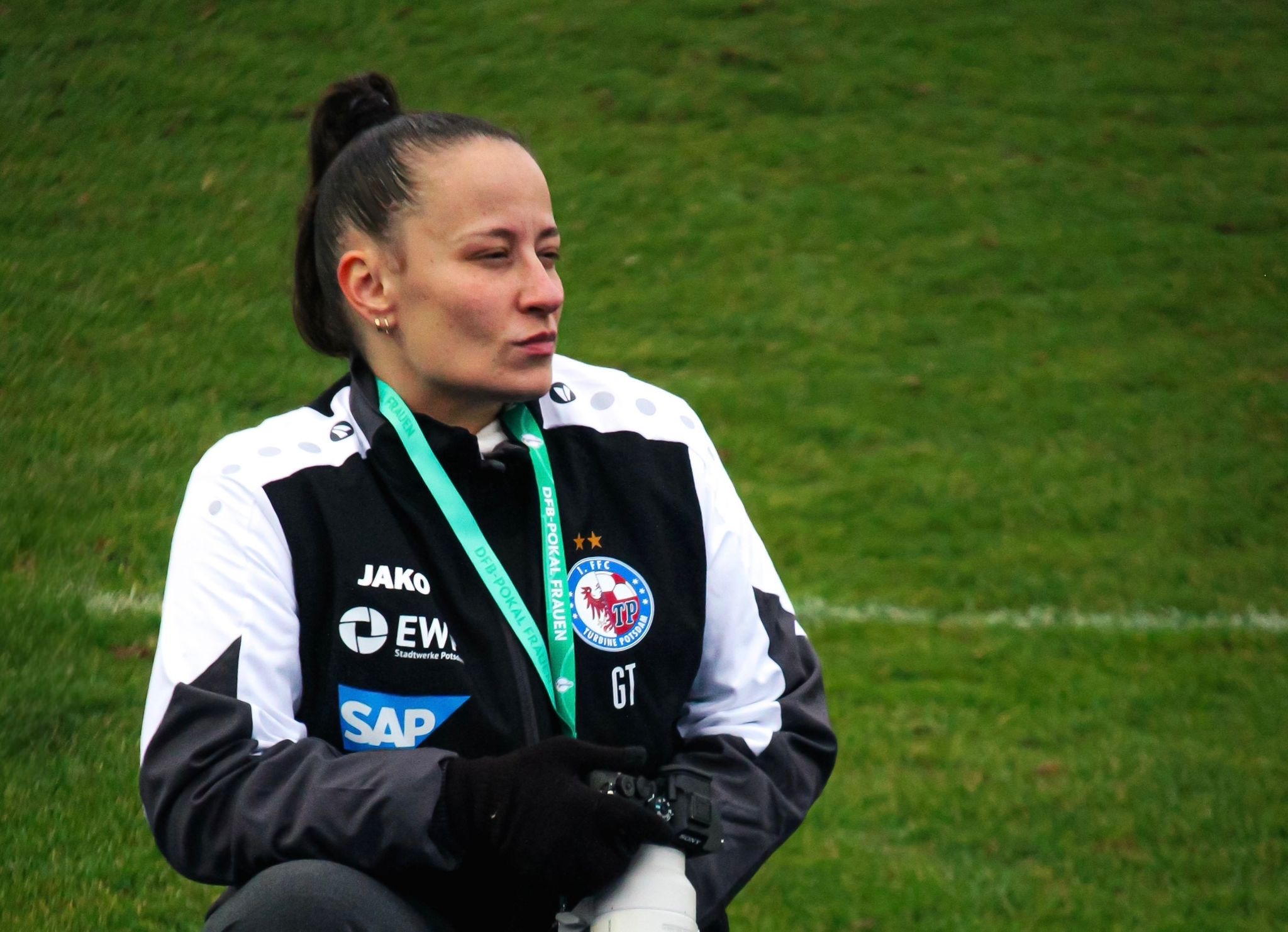
Before the first whistle, before the floodlights switch on, before images reach millions of screens, Gamze Tutaker is already working. Her photography does not chase moments. It waits for them. In women’s football, where visibility, authenticity and trust matter more than ever, her lens captures more than action. It captures presence.
Gamze Tutaker is a team photographer in women’s football. Her work sits between speed and sensitivity, precision and intuition. Operating in high-pressure matchday environments, she documents elite performance while respecting the personal space and emotional rhythms of players and staff. Beyond the ninety minutes, she focuses on routines, emotions and the unseen details that shape professional football. Working confidently in multilingual environments, she brings a calm, human approach to one of the fastest-moving roles in the modern game.
Her photography does not chase moments. It waits for them.
Our exclusive interview with Gamze Tutaker
You are currently working as a team photographer in women’s football. How would you describe your role, and what does a typical matchday or training day look like from your perspective behind the camera?
My role is to visualise what is happening in front of me by closely observing situations and allowing images to develop in my mind. For me, a strong photograph is not about shooting constantly, but about patience and timing. It is about waiting for the exact moment when emotion, movement and atmosphere come together.
A matchday begins the day before. Preparation is essential. I check my equipment, follow the weather forecast and make sure I am technically prepared for every possible condition, whether low light, rain or bright sunshine. On matchday itself, I usually wake up very early. I consciously prepare my mindset and calm my nervous system, because clarity is fundamental. Random or stressful thoughts directly affect creativity.
When I arrive at the stadium, I greet the players, observe their routines and capture these quieter moments before the game. I pay close attention to body language and personal space, because respecting privacy is crucial. The goal is never to distract anyone, but to blend into the environment.
Once warm-up starts, the pace increases. Images are taken, edited and uploaded within minutes for social media. The same applies to goals and halftime or fulltime moments.
After the final whistle, the most demanding part begins. Selecting and editing around 250 to 300 images from approximately 15,000 to 20,000 shots requires focus, discipline and speed. Delivering quality under pressure means working extremely efficiently, often with no more than about one and a half minutes per image. Even then, the full editing process takes around four to five hours.
Your work focuses on action shots and moments behind the scenes. What draws you to documenting everyday life in women’s football beyond the ninety minutes?
I want to give something back to women’s football by sharing my perspective and contributing to how the game is seen and remembered. Photography allows me to tell stories beyond results, stories about preparation, emotion, connection and effort.
It also motivates me to inspire others, especially women, to consider sports photography as a professional path. Making players happy with my images is incredibly fulfilling. When they feel seen and respected, it becomes a true win-win situation. These are not just pictures of them, but pictures created with them.
These are not just pictures of them, but pictures created with them.
Photography in a team environment requires trust and sensitivity. How do you create a comfortable atmosphere for players and staff while still capturing authentic and powerful images?
Trust takes time and consistency. It cannot be rushed. I place a lot of value on respecting boundaries, because without mutual respect, this work simply does not function. As a team photographer, you need to create a sense of reliability and safety.
That also means understanding when someone feels comfortable being photographed and when they do not. Reading these moments and respecting them is essential. There is space for laughter and small talk, but professionalism is always present. This balance allows authentic moments to unfold naturally.
You are responsible not only for photography, but also for editing, retouching, colour correction, and digital delivery. How important is full creative control in your workflow?
Full creative control is very important to me. Photography does not end when the shutter is pressed. Editing, colour correction and final delivery are integral parts of the storytelling process.
Once your eye and mind are trained, decisions become intuitive. The workflow becomes faster, more fluid and more consistent. That flow is essential, especially when working under tight deadlines.
Live content and social media have become central to modern football communication. How do you approach real-time photography and content delivery under pressure?
Once you understand how social media works and what it requires, you develop a clear instinct for which images matter in real time. It is about recognising key moments instantly, goals, celebrations, emotions, and delivering them without delay.
Speed is important, but judgement is equally crucial. Not every image needs to go out immediately. Experience helps you decide what truly represents the moment.
Your background combines creativity, digital competence, and strong organisational skills. Which of these abilities has proven most critical in professional football environments?
The most critical ability is staying present under pressure. Very often, you are selecting images at the exact moment something important happens on the pitch. Managing these parallel demands is challenging.
Preparation is key, and having two cameras ready is often the most practical solution. It reduces the risk of missing decisive moments while still meeting delivery expectations.
Working in women’s football often means limited resources but high expectations. How do you balance creativity and quality within these constraints?
I never let pressure take control. I genuinely enjoy every part of my job, and gratitude helps me navigate stressful situations. Pressure limits creativity, so staying calm and focused is essential.
Enjoying the process allows quality to remain high, even when resources are limited.
You speak multiple languages and come from a multicultural background. How does this influence your communication and your way of working within diverse teams?
It helps me enormously in understanding players from different cultural backgrounds. Communication becomes more personal and more precise.
For example, within our team we have a player from Kazakhstan, and I can choose between speaking Turkish or Russian. That creates trust and makes interactions more natural.
From your experience, how has the visual representation of women’s football evolved in recent years, and where do you still see gaps or missed opportunities?
Women’s football has reached a very high visual and professional level, which I truly love for everyone involved. At the same time, I am convinced this is only the beginning.
There is still room to tell deeper stories and to show more of the everyday reality behind the big moments. The growth is real, and the future holds enormous potential.
Looking ahead, how would you like to develop your career as a photographer within women’s football, and what kind of stories do you want to tell through your work?
I want to improve myself every day by continuing to shoot, learn and refine my craft. Taking small steps while enjoying the process will bring me closer to my long-term goal of becoming a successful sports photographer.
I am excited about the future and motivated to keep telling stories that reflect the depth, emotion and professionalism of women’s football.