

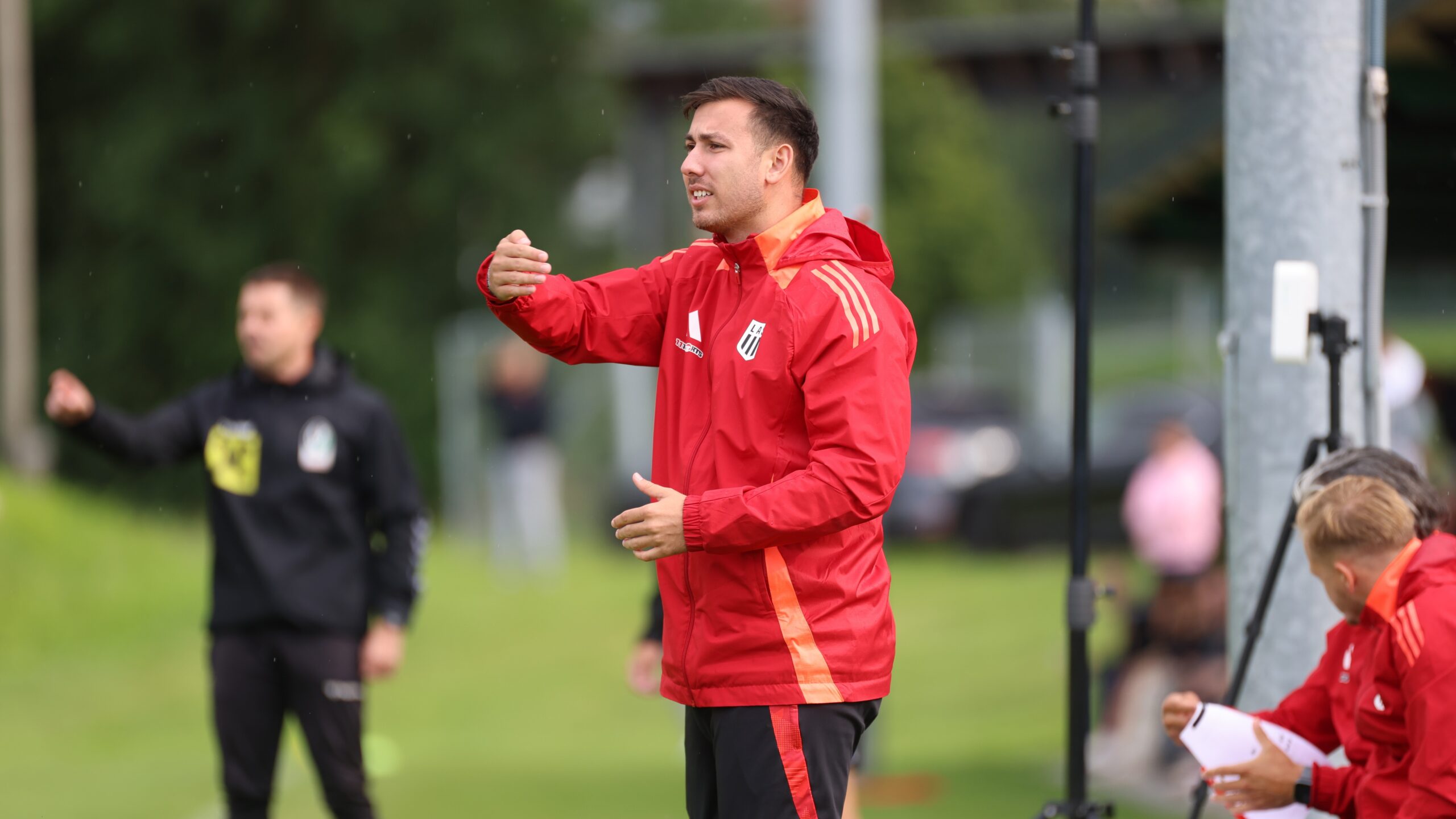
Background and career
Philipp Aigner’s pathway into professional football did not follow a conventional route. While he spent many years playing at club level, a pivotal moment came when his club moved close to insolvency, prompting him to reassess his future in the game. Rather than continuing on an uncertain playing path, he made a conscious decision to step back and explore football from a different perspective.
Driven by curiosity, Aigner enrolled in a match analysis course, which led to an internship at the St. Pölten academy. There, he quickly became involved in daily analytical and coaching processes, gaining practical insight into structured player development and performance analysis.
What began as a one-year internship evolved into greater responsibility. Aigner progressed to Head of Match Analysis while also serving as Assistant Coach of the U18 team, combining video analysis with direct on-pitch coaching. This experience reinforced his belief that analysis only becomes valuable when it directly shapes behavior and decision-making on the field.
In parallel, he worked as a Video Analyst for the Austrian Futsal National Team. The futsal environment, with its emphasis on space, timing and rapid decision-making, further influenced his tactical thinking and later work in set pieces and structured attacking play.
During this period, his football roles were not full-time. Alongside his work in the game, he balanced regular employment while steadily investing in his long-term ambition to build a professional career in football.
The decisive step came with a full-time offer from LASK Linz. Joining the club as a Video Analyst marked a major milestone, later expanding into a hybrid role as Video Analyst and Assistant Coach, with a growing focus on set pieces and tactical implementation.
A modern mind in set-piece coaching and analysis
Philipp Aigner is part of a new generation of football coaches who operate at the intersection of data, structure and on-pitch execution. His work focuses on turning marginal moments into strategic advantages, treating set pieces not as isolated actions but as an integral part of a team’s tactical identity.
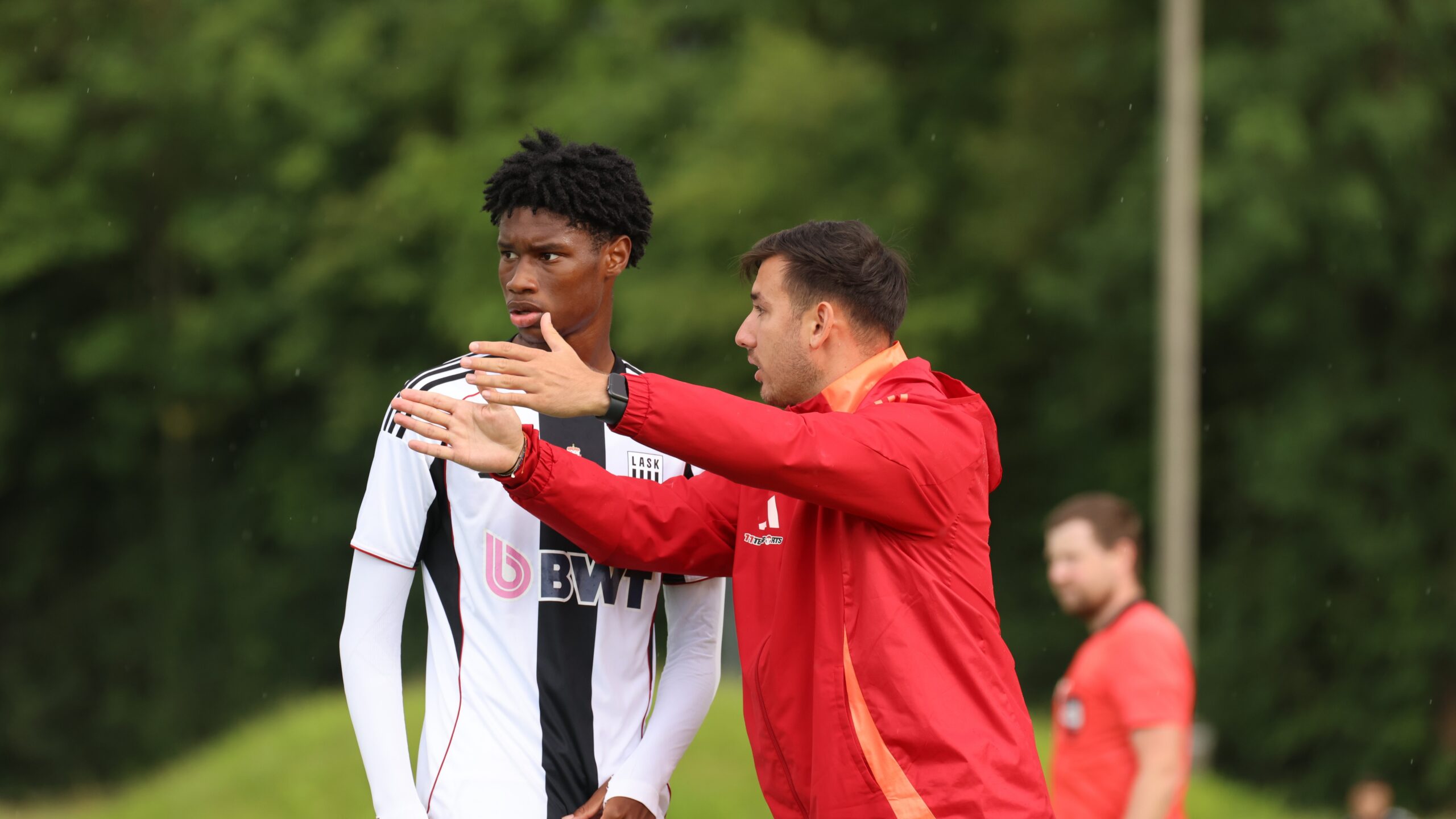
Our Exclusive Interview with Philipp Aigner
How did you start a career in football without having a professional player background?
I did play football myself, but I was always aware that I would need to invest my time differently to progress in the professional game. Without a professional playing background, I knew early on that I had to add value through understanding the game deeply and through the quality of my work rather than reputation. I began by investing heavily in education, self-study and practical experience analysing games, working with video and supporting teams wherever I could gain insight into the coaching process.
Analysis became my entry point, because it allowed me to be close to decision-making and to understand football from a structural and tactical perspective. Over time, the role naturally expanded. By consistently translating analysis into practical solutions for coaches and players, trust grew and I became more involved on the pitch. Not having a professional playing career forced me to be very precise in my communication, well-prepared and solution-oriented qualities that are essential in high-performance environments. Looking back, that path shaped how I work today. It taught me that credibility in football doesn’t only come from the past, but from clarity, reliability and impact in the present.
Credibility in football doesn’t only come from the past, but from clarity, reliability and impact in the present.
Which key moments or decisions shaped your early career path and helped you move into coaching and analysis?
Several key moments shaped my early career, but more than anything it was a series of deliberate decisions rather than one defining event. One important step was the decision to invest heavily in learning alongside playing. Early on, I realized that if I wanted to move into professional football without relying solely on my playing background, I had to build a different skill set. I chose to spend time analysing matches, working with video and engaging with tactical concepts, even when it wasn’t required.
Another decisive moment was recognizing that analysis could be a bridge into coaching. Instead of treating analysis as a purely technical role, I focused on how insights could influence training content and decision-making. That mindset helped me build trust with coaches and gradually take on more responsibility on the pitch. Equally important were the environments I worked in early on. Being around coaches who were open to dialogue and willing to challenge ideas accelerated my development. Those experiences taught me the importance of communication, context and timing, not just having good ideas, but knowing when and how to share them.
How would you describe your current role, and what are your main responsibilities within the coaching and performance staff?
My role sits at the intersection of analysis and coaching. I work as an analyst and assistant coach, with a specific responsibility for set pieces, while also supporting the head coach and staff in tactical and performance-related topics. On a daily basis, I’m involved in match and training analysis, opponent preparation and the translation of analytical insights into concrete training content. A big part of my work is ensuring that information flows efficiently, from data and video into clear coaching messages that players can actually apply on the pitch. I’m also responsible for the design, implementation and continuous development of our attacking and defensive set-piece strategy. That includes video preparation, on-field coaching and close coordination with the head coach to align set pieces with our overall game model.
What does your daily and weekly workflow look like, from analysis and preparation to direct involvement on the training pitch and on matchday?
My workflow is built around the match cycle, constantly alternating between analysis, planning and on-pitch implementation. Early in the week, the focus is on reflection and adjustment.
I analyse our last match in detail, with a particular emphasis on set pieces and key tactical moments and identify clear areas for improvement. In parallel, I start opponent analysis, looking for tendencies and patterns that are relevant to our game model rather than collecting information for its own sake.
Midweek is about translation and preparation. Together with the coaching staff, I turn insights into concrete training objectives. For set pieces, this includes designing routines, preparing defensive schemes and creating short, targeted video clips. On the pitch, I’m directly involved in coaching these situations, refining details and ensuring clarity in individual roles and collective behavior.
As we move closer to matchday, the emphasis shifts strongly toward reduction and communication. Especially on matchday itself, set pieces are one of the most difficult areas to influence. Players have already been fed a large amount of information throughout the week, and cognitive overload becomes a real risk. That’s why we often talk about “working in the shadows.” It means using time very deliberately identifying the right moments to communicate, keeping messages extremely focused and sometimes choosing not to add information unless it clearly improves execution.
The goal is to support players without distracting them, so they can rely on automatisms and clear reference points under pressure. On matchday, I support the staff with live analysis and targeted input, mainly around set pieces, opponent adjustments and document key moments immediately after the game to feed directly into the next cycle.
The teams that succeed are not necessarily those with the most ideas, but those who translate complex tactical concepts into clear behaviors.
How do you translate complex analysis and tactical ideas into clear, practical solutions that players and coaches can apply under real match pressure?
For me, the key is reduction and relevance. Complex analysis only has value if it survives match pressure, so I always start by identifying the one or two behaviors that truly influence the situation we want to improve. I translate data and tactical concepts into simple cues, clear visuals, and repeatable actions. With players, that means short video clips, concrete reference points on the pitch, and language that connects directly to their decision-making rather than abstract theory.
With coaches, it’s about showing the why behind an idea, but also being very clear about the how and the trade-offs. Especially with set pieces, everything is built around clarity timing, and automatisms. If a solution can’t be executed instinctively, it’s too complex. So I test ideas in training, simplify them further if needed and make sure they fit the team’s overall game model. My goal is that players don’t have to “think tactics” in decisive moments, they just recognize the picture and act with confidence.
What is your personal vision of football, and how do you believe the game is evolving tactically and structurally at the highest level?
My personal vision of football is centered around clarity, adaptability and collective intelligence. I believe the game is at its best when players clearly understand principles rather than fixed instructions and when teams are able to adapt their behavior to different match contexts without losing their identity. At the highest level, football is evolving toward a game of controlled chaos. Structurally, we see more fluid positions, constant occupation, manipulation of spaces and a reduced distinction between phases of the game. Build-up, pressing, rest defense and transitions are increasingly interconnected rather than treated as isolated moments.
Tactically, the margins are becoming smaller, which increases the importance of details and specialization. Set pieces, restarts and micro-structures around the ball can decide matches more than ever. At the same time, physical and cognitive demands are rising, which means teams must manage information carefully and create environments where players can make fast and confident decisions under pressure. For me, the key challenge and opportunity lies in simplifying complexity. The teams that succeed are not necessarily those with the most ideas, but those who translate complex tactical concepts into clear behaviors that can be executed instinctively. Football will continue to evolve, but clarity, timing and execution will remain decisive at the highest level.
Looking ahead, what kind of football projects or environments do you see yourself working in, and what ambitions drive you for the next phase of your career?
Looking ahead, I see myself working in high-performance environments where analysis, coaching and decision-making are closely connected. I’m particularly motivated by projects that value detail, structure and long-term development, rather than short-term reactions.
I want to continue growing in roles where I can take increasing responsibility, especially in areas like tactical planning, set pieces and the translation of analysis into on-pitch impact.
Being close to the daily coaching process is important to me, not just producing insights, but actively shaping how a team plays and improves. My ambition is to be part of a club or project that is curious, demanding and open to innovation, where different perspectives within the staff are encouraged and where performance is constantly questioned and refined. At the same time, I want to work in environments with a strong football culture and clear values, where success is built through collective work and consistency.
Ultimately, what drives me is the desire to keep learning and to help teams perform at their highest possible level by bringing clarity to complexity and by contributing to sustainable success on and off the pitch.