

![[1]](https://commons.wikimedia.org/wiki/File:Sheffield_fc_1876.jpg)
Football is now a global industry. Mega stadiums, billion-euro broadcasting deals and superstar athletes dominate the modern game. Yet the foundations of football were laid far from this spectacle in the industrial heart of 19th-century England. At the center of that story stands a club officially recognized by FIFA as the world’s oldest: Sheffield Football Club.
A Game Born in an Industrial City (1857)
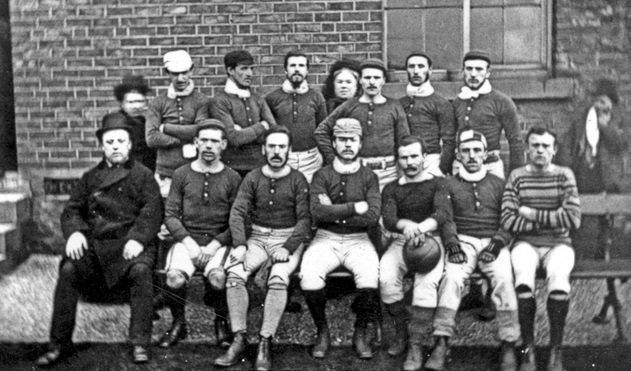
Sheffield FC was founded on October 24,1857, in the steel city of Sheffield. Its founders, Nathaniel Creswick and William Prest, were cricketers searching for a sport to keep fit during the winter months.
At the time, “football” was not a single, unified game. Different schools and towns played by different rules some allowing handling, others resembling rugby. Sheffield FC emerged at a moment when the sport desperately needed structure and identity.
At the time, “football” was not a single, unified game.
The Sheffield Rules: Football’s First Constitution
In 1858, the club published what became known as the Sheffield Rules, one of the earliest written sets of football regulations.
Many elements now taken for granted in the modern game were first systematized here:
- The throw-in
- The corner kick
- The free kick
- Clear limits on physical contact
- The principle that a ball passing over the crossbar was out of play
When the Football Association (FA) was founded in London in 1863, it drew heavily from the Sheffield Rules. Modern football’s rulebook was built, in large part, on these foundations.
The First Derby, the First Rivalry
One of football’s earliest recorded rivalries also emerged in Sheffield. Founded in 1860, Hallam FC became Sheffield FC’s natural opponent. Matches between the two clubs are considered among the oldest football fixtures ever played.
While today these games take place at amateur level, their historical value surpasses many of football’s most famous modern derbies.
A Club That Resisted Professionalism
As football moved toward professionalism in the late 19th century, Sheffield FC chose a different path. The club consciously maintained its amateur status for decades, prioritizing the spirit of the game over competitive success.
This decision meant fewer trophies but it preserved something far more enduring: football’s original ethos.
FIFA Recognition and Global Respect
Sheffield FC’s contribution to football history has been formally recognized. FIFA awarded the club the prestigious Order of Merit, an honor reserved for institutions and individuals who have profoundly shaped the game.
The club also holds a permanent place in the FIFA Museum, widely regarded as a living monument to football’s origins.
Sheffield FC Today
Today, Sheffield FC competes in the lower tiers of the English football pyramid. Its stadium is modest, its resources limited. Yet its identity carries a weight no modern giant can replicate: it represents where football began.
From Origins to Industry: Sheffield FC vs Modern Football
Comparing Sheffield FC to modern football is to compare a handwritten manuscript with a global media empire.
Where Sheffield FC was founded on community, participation and shared rules, modern football revolves around branding, commercial value and global audiences. Clubs today are multinational corporations; players are assets; matches are content.
Yet every kick, every set piece, every tactical structure traces its lineage back to Sheffield. Without the Sheffield Rules, there is no Premier League. Without amateur pioneers, there is no Champions League. Sheffield FC reminds us that football was first a social language, then a competition, and only later an industry.
Sheffield FC reminds us that football was first a social language, then a competition, and only later an industry.
As the modern game accelerates, its need for memory grows stronger. In that sense, Sheffield FC is not just football’s past it is its conscience.