


Tarkan Batgün stands out as a pioneering force in the world of football scouting and data-driven talent identification, a professional whose journey has spanned continents, cultures and evolving technologies. Born with dual Australian–Turkish citizenship, Batgün first immersed himself in the footballing landscape of Australia, where he transitioned from player to analyst, gradually decoding the language of the game through video, metrics and match observation.
Returning to Türkiye, he built one of the country’s earliest dedicated scouting enterprises, subsequently launching Comparisonator – an AI-powered platform that doesn’t merely collect data but normalises it, contextualises it and translates it into actionable insight for clubs, agencies and federations worldwide.
Batgün has lived and worked in multiple football cultures – from Australia to Europe, from Türkiye to Saudi Arabia – refining the mantra that “data means nothing without integratable context.” His roles include consulting, lecturing on football analytics, moderating global panels and writing about how scouting must adapt to thousands of variables beyond the pitch.
As CEO of Comparisonator, his mission is to build bridges between football cultures and to enable clubs in lesser-known or undervalued markets to compete on a more level field. Through his website (tarkanbatgun.biz) and his media appearances, he shares his philosophy: that the future of talent identification lies not in replacing the scout, but in empowering the scout with smarter tools.
In this conversation, we step inside Tarkan’s world: the motivations that drive him, the challenges he’s overcome, the evolution of football scouting, and how he sees the next decade unfolding for data, AI and human insight in the game.
Our exclusive interview with Tarkan Batgün
You began your football journey in Australia and later returned to Türkiye before expanding into Europe and the Middle East. Can you walk us through how those diverse cultural and operational environments shaped your philosophy of scouting and what you believe is the “universal language” of talent?
Absolutely. My career has been shaped by geography as much as by football itself.
I began in Australia, which was a very structured and system-driven environment. There, I learned the importance of methodology, discipline, and building processes that could scale. Everything had to be measurable, repeatable, and ultimately justify itself through data. That gave me a foundation for how to look at the game with clarity rather than emotion.
When I returned to Türkiye, I stepped into a completely different football culture — one that is emotional, instinctive, and deeply human. In Türkiye, talent isn’t just evaluated on metrics; it’s understood through personality, psychology, and social context. Here I learned that numbers never tell the whole story. A player’s background, mentality, and environment can transform raw quality into real performance.
Later, as I expanded my work into Europe and the Middle East, I found myself integrating these two worlds. Europe brought a mixture of structure and innovation — a place where analytics, tactical frameworks, and long-term planning drive decisions. The Middle East offered a unique perspective on ambition, rapid development, and how different cultures adapt football philosophy to their own identity.
Through all these experiences, I realised something important: the universal language of talent is adaptability.
A truly talented player can adapt — to different tactical systems, different speeds of the game, different cultures and expectations. Technical quality is everywhere. But what separates a player who succeeds from one who remains a promising name is their ability to adjust, learn, and thrive in new environments.
For me, the global journey taught me to blend three angles:
- data-driven clarity from Australia,
- emotional and cultural understanding from Türkiye,
- and strategic, structured modern football from Europe.
That mixture shapes my scouting philosophy today: talent must be understood holistically — through numbers, through context, and through adaptability.
the universal language of talent is adaptability.
At Comparisonator you’ve emphasised the idea of “contextualised data” – data that is meaningful only when paired with adaptibility, tactics and league-environment. Could you give us a concrete example of a player profile where raw numbers would have mis-led a club, but your platform revealed the true value or risk?
Absolutely — this is exactly why we built Comparisonator. Raw numbers, on their own, can lie. Context tells the truth.
One example I often use is a case of a young winger playing in a league where transitions were extremely fast and defensive structures were very loose. His raw attacking numbers were incredible — dribbles, key passes, shots on target — everything suggested he was a top-level creator.
A club approached us enthusiastic about signing him because, statistically, he looked like the best in his position. But when we ran him through Comparisonator, something different emerged.
When we contextualised his data — adjusting for game tempo, defensive pressure, possession style and league quality — his outputs dropped dramatically. His successful dribbles per 90 were inflated because he had huge space to run into. His passing efficiency looked elite only because opponents pressed less aggressively. And when we filtered his performance against teams with European-level intensity, his effectiveness collapsed by almost 40%.
At the same time, another club was evaluating a central midfielder whose basic numbers looked very average on paper. Nothing special in raw stats. But when we compared him in a like-for-like tactical environment — pace of play, ball recovery patterns, and possession structure of the club scouting him — he suddenly came out as a perfect fit. His interception timing matched the club’s defensive block. His progressive passing under pressure was top percentile only when filtered to high-intensity matches. And his adaptability score — switching leagues — was significantly higher than the more “statistically impressive” players.
If the club had relied solely on raw data, they would have chased the wrong player and missed the one who would actually thrive in their system. This is the core philosophy behind Comparisonator: data becomes powerful only when you place it inside the right football environment. Raw numbers can be misleading; contextualised numbers reveal reality.
Raw numbers can be misleading; contextualised numbers reveal reality.
Technology and AI are transforming football analytics fast. How do you personally balance the human element – instinct, experience, cultural intuition – with algorithmic insight? In your view, what remains the domain of the human scout, even as AI evolves?
For me, technology and AI are not replacing the human scout — they are upgrading the scout. But there is a very important balance, because football is still a human game played by emotional, unpredictable human beings.
AI can process millions of data points, compare players across leagues, and reveal patterns we could never see manually. But AI has no childhood memories of football. It has no smell of the dressing room. It doesn’t feel pressure, momentum, fear, leadership, or cultural belonging. That’s where the human element remains irreplaceable.
My personal balance works like this:
1. AI defines the universe of possibilities; humans define meaning. AI will show you all “players who fit the model.” But a scout’s instinct decides which of those players can survive a derby atmosphere in Türkiye, or adapt to Dutch positional football, or fit the social culture of a club.
2. AI measures actions; humans judge intentions. A dataset knows a player made 12 pressing actions. A scout knows why he pressed, whether he pressed intelligently, whether it came from coaching or from personality.
3. AI compares environments; humans understand environments. Our platform can normalise performance across leagues. But only a human with cultural intuition knows the difference between a player who thrives in chaos and a player who thrives in structure.
4. AI predicts potential; humans evaluate character. Talent is easy to identify. Character, humility, adaptability — these remain human-only domains. No algorithm can tell you how a player will react when benched, or whether he can handle rapid fame, or carry responsibility in a dressing room.
So what remains purely human?
- Reading body language and personality.
- Understanding cultural fit.
- Feeling the rhythm of a game beyond numbers.
- Predicting emotional growth.
- Making the “instinct call” when data and context still leave a grey zone.
AI gives us clarity; human scouts give us truth. And when the two work together, that’s when clubs make their best decisions.
Your company (Comparisonator) reaches clubs and markets sometimes overlooked by traditional scouting networks. How do you help those clubs identify talent and mitigate risk – especially when the markets may lack extensive data, high-profile exposure or familiar scouting roads?
This is one of the core reasons we built Comparisonator in the first place — to give every club, regardless of budget or geography, access to the same quality of insight as the biggest organisations in the world.
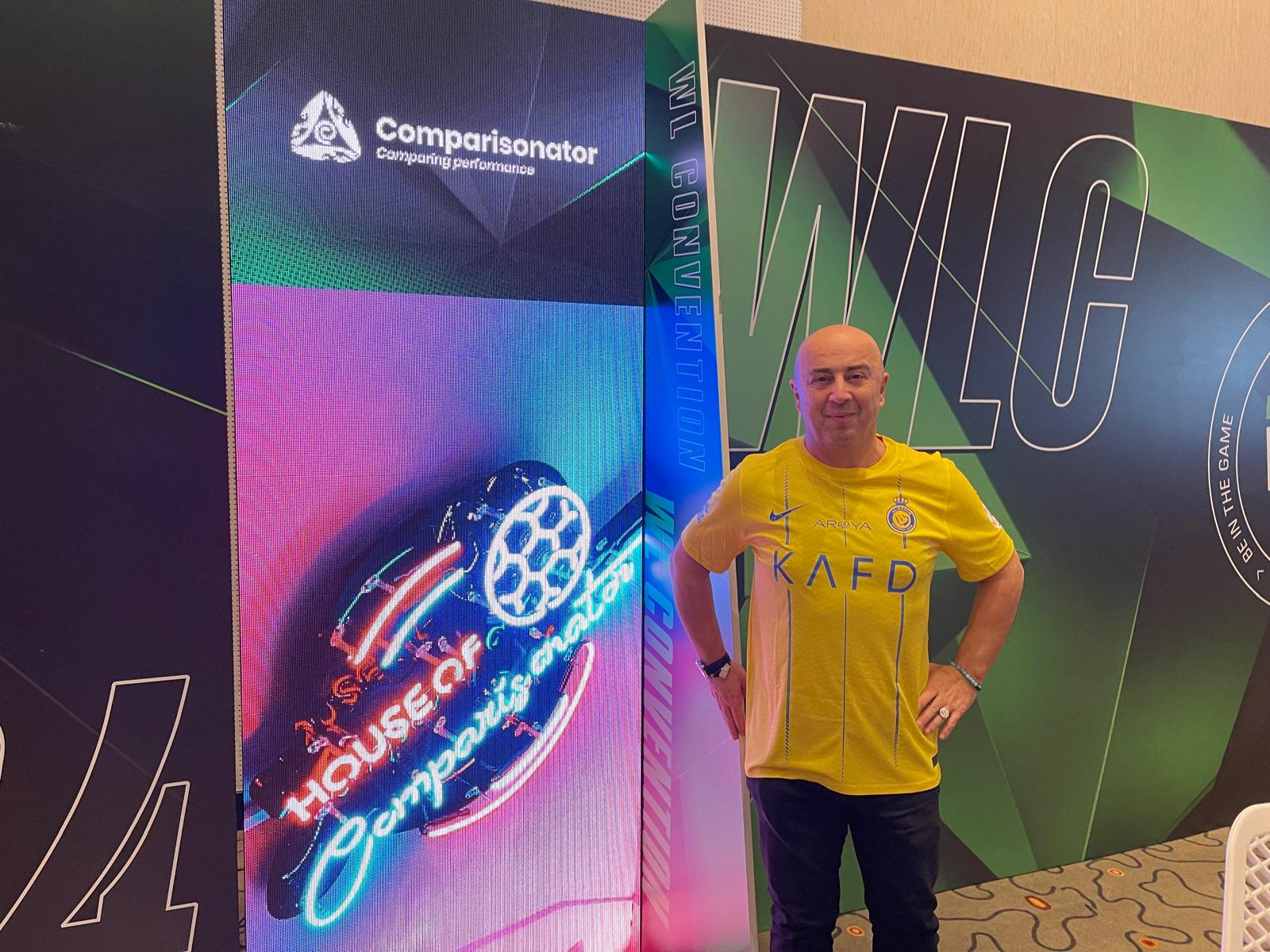
Traditional scouting networks naturally gravitate toward regions that are well-mapped, data-rich, and historically proven. But football is full of hidden talent in places where data is incomplete, visibility is low, or “trusted pathways” simply don’t exist. That’s where we provide two key advantages:
1. We create a standardised football language even when the market isn’t standardised.
If a club is scouting in a region with limited data or inconsistent tracking, our platform normalises the metrics – tempo, physical demands, tactical context, league strength – so the club sees what the player actually is, not just what their environment makes them look like.
This allows a club in, say, Southeast Asia or Eastern Europe to compare a local defender directly against a player from Portugal, Türkiye or Argentina, without distortion.
2. We highlight “risk signals” that might be invisible even to experienced scouts.
In emerging markets, raw numbers may be missing or unreliable. So we focus on patterns:
- Does the player maintain output in higher-pressure matches?
- How adaptable is he when facing European-style tempo?
- Is his performance inflated by environment or role?
- Does his physical data transition naturally to stronger leagues?
This helps clubs avoid signing players who look excellent locally but won’t survive a tactical or physical jump.
3. We identify undervalued talent by looking at role fit, not reputation.
Many of the clubs we support don’t have the resources for 20 scouts across 10 countries.
So we use AI to match their tactical needs with players who fit their game model — even if the market doesn’t spotlight them.
A club might need a high-volume defensive midfielder, or a winger who excels in transition, or a centre-back who builds from deep. Our system finds that player even if:
- he’s from a league with limited exposure,
- he’s never been on a major scouting list,
- or his team’s style hides his real qualities.
This levels the playing field.
4. We offer clarity in environments where uncertainty is highest.
Raw scouting alone in under-the-radar markets is risky. Data alone is incomplete. But contextualised data + human football expertise is incredibly powerful.
We tell clubs: “Here is the true player — not the league version of him, but the version he would be in your league, your tempo, your system.” That’s where risk turns into opportunity.
5. Ultimately, we give these clubs confidence.
Confidence to sign young players from non-traditional markets. Confidence to compete with bigger clubs using smarter tools. Confidence to trust decisions backed by both science and football sense.
Our mission is simple: make global talent accessible, understandable, and comparable for everyone — not just the elite clubs.
You’ve built a personal brand as an analyst, lecturer and consultant – moderating panels, speaking at forums, writing content via your website (tarkanbatgun.biz) and media outlets. What motivates you beyond the technology – what is the deeper “why” behind your work in football, mentoring, scouting and analytics?
For me, the deeper “why” behind everything I do goes far beyond technology.
What drives me is helping top-level football decision makers make the right choices under massive pressure.
Throughout my career — whether in Australia, Türkiye, Europe or the Middle East — I’ve worked closely with Sporting Directors, Head Coaches, Scouts, and Recruitment Leaders. These people live in a world where every decision is high-risk:
- Which player to sign?
- Which talent is ready for a loan?
- Which club environment actually suits their development?
- Which profile fits the head coach’s game model today, not theoretically?
These decisions decide seasons. Careers. Budgets. Reputations. And very often, they must make them with incomplete data, limited time, and inconsistent information from different leagues.
That is the real reason I built Comparisonator. Not to create a flashy data tool.
Not to overwhelm clubs with charts. But to give high-level decision makers the clarity they need to act with confidence.
Comparisonator simplifies that complexity by:
- Normalising player performance across every league in the world so directors can compare apples to apples, not illusions from different contexts.
- Role suitability algorithms that show which players truly fit the coach’s tactical demands.
- Loan & Transfer Fit models that help Loan Managers identify the right club, environment and tactical ecosystem for each player’s development.
- AI Points and Physical Data that instantly reveal whether a player’s intensity and adaptation metrics will translate to a stronger league.
- CompaGPT that explains insights in clear football language — the way directors actually make decisions.
These tools exist to reduce risk in the most important decisions in football. But the deeper motivation (my personal mission) is human.
I’ve seen brilliant Sporting Directors lose seasons because they trusted incomplete information. I’ve seen coaches get criticised because the squad didn’t match their tactical reality. And I’ve seen young players fail simply because their loan destination didn’t fit their style.
My “why” is to prevent those failures. To give leaders visibility, context, and truth — not noise. Through my lectures, panels, and content, I try to create a global standard for decision-making. Through Comparisonator, I give leaders the tools to apply that standard daily.
At the end of the day, technology is just the delivery. My real motivation is helping football’s top decision makers make smarter, fairer, faster decisions — decisions that can change the future of clubs and the careers of players.
That is why I do this. And that is what keeps me passionate every single day.
Looking ahead over the next five to ten years, what do you see as the biggest strategic shift in talent identification and scouting? And how is Comparisonator preparing to evolve so it remains at the forefront of that shift?
Over the next ten years, the biggest strategic shift in talent identification will be the move from evaluating players to evaluating environments.
Clubs will no longer ask only “Is this player good?” — they will ask:
- “Is he good for our football?”
- “Is he good for our league?”
- “Is he good for our project and timeline?”
- “Is he good inside our tactical ecosystem?”
This shift changes scouting from judging talent to predicting adaptation.
1. The Future: Live Interaction, AI Dialogue & Holographic Scenario Building
The biggest transformation will be how decision makers interact with scouting tools.
Today, data is static. In the future, it becomes alive.
I envision Comparisonator becoming an AI-driven, live conversational assistant:
You speak to it —
- “Find me a left-back who fits our 4-3-3 build-up role.”
- “Show me loan destinations that maximise playing time and intensity.”
- “List only players adaptable to high-tempo leagues with our physical thresholds.”
Comparisonator will respond instantly, in football language, to Sporting Directors, Head Coaches, Loan Managers, and Recruitment Leaders.
But it goes further:
Holographic Simulation & Tactical Scenarios
Decision makers will visually place a player inside their formation using holographic or spatial interfaces.
Imagine seeing:
- how a winger behaves in your pressing trigger,
- how a midfielder receives under pressure in your league’s tempo,
- how a centre-back builds from the first line in your system.
This turns scouting into interactive decision science, and this is exactly the direction Comparisonator’s evolution is heading.
2. League-to-League Translation Models
The next strategic edge will be predicting how a player’s performances translate across ecosystems.
Comparisonator is pioneering:
- league-normalisation,
- adaptation scoring,
- physical & tactical stress replication,
- AI Points as environment translators.
This will be the global standard for comparing players from different leagues.
3. Tactical-Fit Matching at Scale
Clubs increasingly ask: “Does he play our football?”
We are evolving Comparisonator to:
- detect role fit,
- model phase-of-play actions,
- evaluate pressing profiles,
- understand transition behaviours,
- map build-up involvement and positional tendencies.
This means clubs scout solutions, not just players.
4. Development Forecasting for Loans & Pathways
Loan Managers and Academy Heads need to know: “Where will this player develop fastest and where is the risk?”
Comparisonator is building tools that:
- evaluate ideal loan destinations,
- forecast acceleration vs stagnation,
- quantify environmental risk,
- match clubs to player development styles.
This will completely reshape talent pathways.
5. Opening Non-Traditional Markets With Confidence
The next talent waves will come from regions with limited exposure and inconsistent data (Southeast Asia, Balkans, North Africa, Middle East, Central America).
Comparisonator’s contextual engine becomes the global access point:
- normalising performance,
- revealing undervalued players,
- reducing scouting risk,
- expanding market reach for clubs and agencies.
In summary: The future of scouting isn’t finding players, it’s forecasting how they behave in your environment.
By evolving into a conversational, interactive, holographic, and environment-aware decision platform, Comparisonator will stand at the forefront of the next decade of elite football decision-making.
We are not building a tool. We are building the operating system for football decisions.