
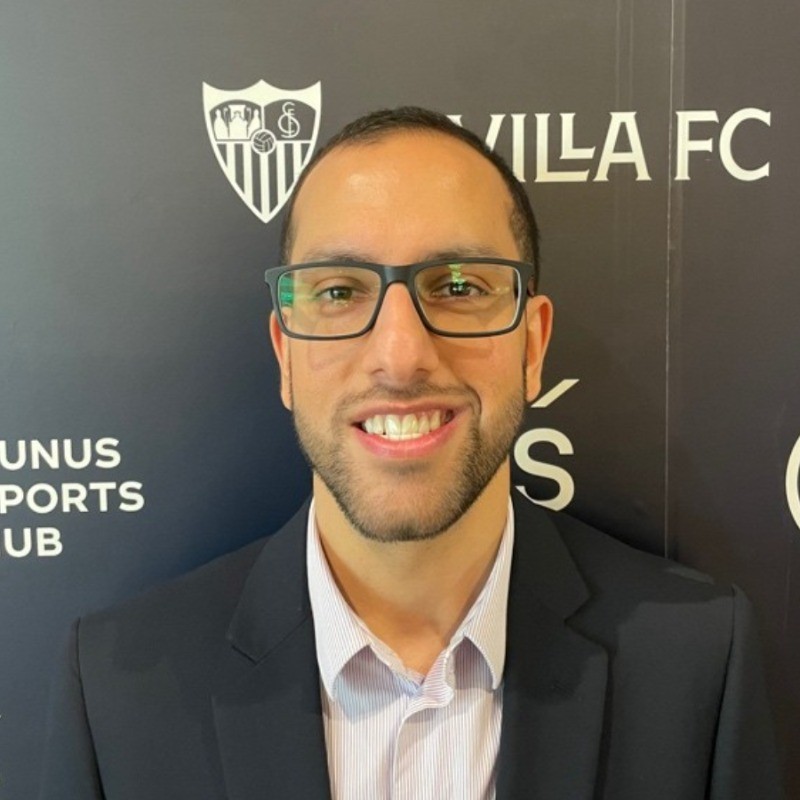

Andrea Cannavacciuolo is a Mental Performance & Human Potential Coach with a rare full-time pedigree in professional football, having worked inside clubs across both Europe and Major League Soccer. His unique approach integrates emotional intelligence, communication strategy, and attitudinal development to strengthen team performance from within.
Andrea’s career began as a physical trainer, earning his PRO certification at Coverciano, Italy’s elite coaching center. Over time, he shifted focus toward the mental and relational dimensions of sport, developing a highly adaptive methodology grounded in real-time engagement with coaches, staff, and players.
His work fosters shared purpose, functional communication, and psychological resilience, often described by peers as invisible but essential.
He has worked with numerous clubs including Monza, Palermo, Albinoleffe, Cosenza, Feralpisalò, and most recently Charlotte FC in MLS. Whether in consultancy roles or embedded full-time within a technical staff, Andrea is known for his fluid presence, quietly aligning human dynamics with team performance objectives. His work fosters shared purpose, functional communication, and psychological resilience, often described by peers as invisible but essential.
Multilingual in Italian, English, Spanish, and French, Andrea combines scientific insight with intuitive coaching to create what he calls silent levers, behind-the-scenes interventions that impact results, cohesion, and ultimately, club value.
Our exclusive interview with Andrea Cannavacciuolo
Who is Andrea Cannavacciuolo outside of football?
Outside of football, I’m guided by the same values that shape my behind-the-scenes role: connection, shared purpose, and a strong sense of community, what I often call the “pack” spirit. Though my work is often invisible, it’s rooted in supporting collective performance. Beyond that, I love writing, learning languages, and traveling, ways to keep exploring and connecting with the world.
Albert Einstein said: “Not everything that counts can be counted, and not everything that can be counted counts”
You’ve worked full-time as a Mental Performance and Human Potential Coach in professional football, which is still quite rare. Why do you think this role is so often underestimated or misunderstood?
This role is often underestimated because it focuses on factors that, although they profoundly impact performance and add great value, are not easily visible or measurable in numbers. Not everyone chooses to work systematically on these aspects. Some leaders hesitate due to concerns about changing traditional roles or recognition dynamics, but forward-thinking managers (like Guardiola, who has long relied on the quiet support of Manel Estiarte) embrace this change and integrate such roles into their staff. Unfortunately, some clubs still accept the underutilization of potential as a normal side effect.
Albert Einstein said: “Not everything that counts can be counted, and not everything that can be counted counts”
How did your journey shift from physical training to focusing on mental performance? What inspired that evolution in your career?
I started out fully focused on helping players reach peak physical performance. A study visit with the Brooklyn Nets in the NBA shifted my perspective — I realized that mindset and attitude can impact performance as much as physical and technical work. That insight led me to gradually redirect my studies toward mental preparation. I trained at EKIS, a leading school in the field in Italy, and have since fully dedicated myself to this work in professional football. Today, alongside mental performance coaching, I also support the staff in group management strategy.
What are the most common invisible challenges inside a football team that can impact performance without being noticed?
Some of the most impactful challenges inside a football team are often invisible: unresolved internal tensions, misaligned goals, unclear communication, emotional overload under pressure, and untapped individual or collective potential. Over time, I’ve learned the value of constant maintenance of key pillars like alignment, communication, and relationship quality — elements that quietly strengthen the group’s “immune system” and drive high, sustainable performance. My work supports coaches and directors in reinforcing these dynamics discreetly, with a focus on long-term value and shared success.
You’ve described your method as a fluid, almost invisible intervention. Can you explain what that means in practice, and how you collaborate with coaches and staff without disrupting existing structures?
Fluidity, for me, means adapting to the unique rhythm and needs of each environment. I operate like a silent drone — observing from a distance, capturing subtle signals from the group’s daily life, and transforming them, without judgment, into useful strategies. This may happen individually, in small groups, or in plenary moments. I quietly support the quality of relationships, help streamline internal communication, and act as a bridge across different leadership roles to keep alignment strong. I also help ease leadership overload by processing excess information and offering clear, actionable insights. One reference from my time at Charlotte sums it up well: “Andrea worked like oil in a well-tuned engine — never flashy, always essential.”
In your experience, what distinguishes a good team environment from a great one?
A good team environment is built on strong professional standards. A great one, instead, is rooted in values that elevate the human factor — where individual and collective growth is encouraged through deep instincts of cooperation and mutual protection. I’ve developed structured programs to support this process, tailored to each club I work with. One of them is T.E.A.M. (Trust, Excellence, Alignment, Motivation), which involves all members of the organization and aims to strengthen group well-being, clarity, and shared values at the highest level.
You’ve worked in multiple football cultures, with Italy and the United States among them. How do cultural differences influence your approach to mental performance?
Speaking multiple languages supports my approach, but what truly makes the difference is the cross-cultural nature of coaching techniques. When we work on awareness and emotional regulation, we access deep levels that often bypass potential resistance linked to cultural differences. Even in very different environments like Italy and the United States, I’ve found that, when well calibrated, mental performance work reaches people in a direct and authentic way.
Communication seems central to your work. What do you believe are the most damaging communication habits in elite sport, and how can they be improved?
In elite sport, communication is like the nervous system in the human body — when it fails to connect properly with the musculoskeletal system, movement disorders occur. Similarly, in a team, poor communication between roles and departments can create dysfunction, tension, and performance breakdowns. Among the most damaging habits are neglecting to analyze feedback and struggling to communicate clearly under pressure. Both issues can be significantly improved through tailored internal training protocols that strengthen awareness, responsiveness, and relational clarity.
What is your approach when working with young players compared to experienced professionals?
When working with young players, my focus is on helping them set clear goals and identify what might be holding them back from reaching their full potential. Through targeted coaching techniques, I support their personal growth, helping them align their available resources with ambitious objectives and accelerating their development. A key part of the process is guiding them to connect their individual aspirations with the team’s collective goals — turning personal evolution into shared value.
Looking ahead, what kind of environments or challenges are you most excited to take on next in your career?
I’m most excited by environments where I can humbly contribute to developing winning, growth-oriented mindsets — built on emotional stability — places where I can support the club’s evolution by helping align individual goals with collective purpose. I’m drawn to contexts where there’s real coherence between values and ambitions. I’m especially inspired by the opportunity to help unlock and give value to every drop of untapped potential. Winning by creating value, and creating value by winning — with long-term consistency — that’s the kind of challenge that inspires me most.