

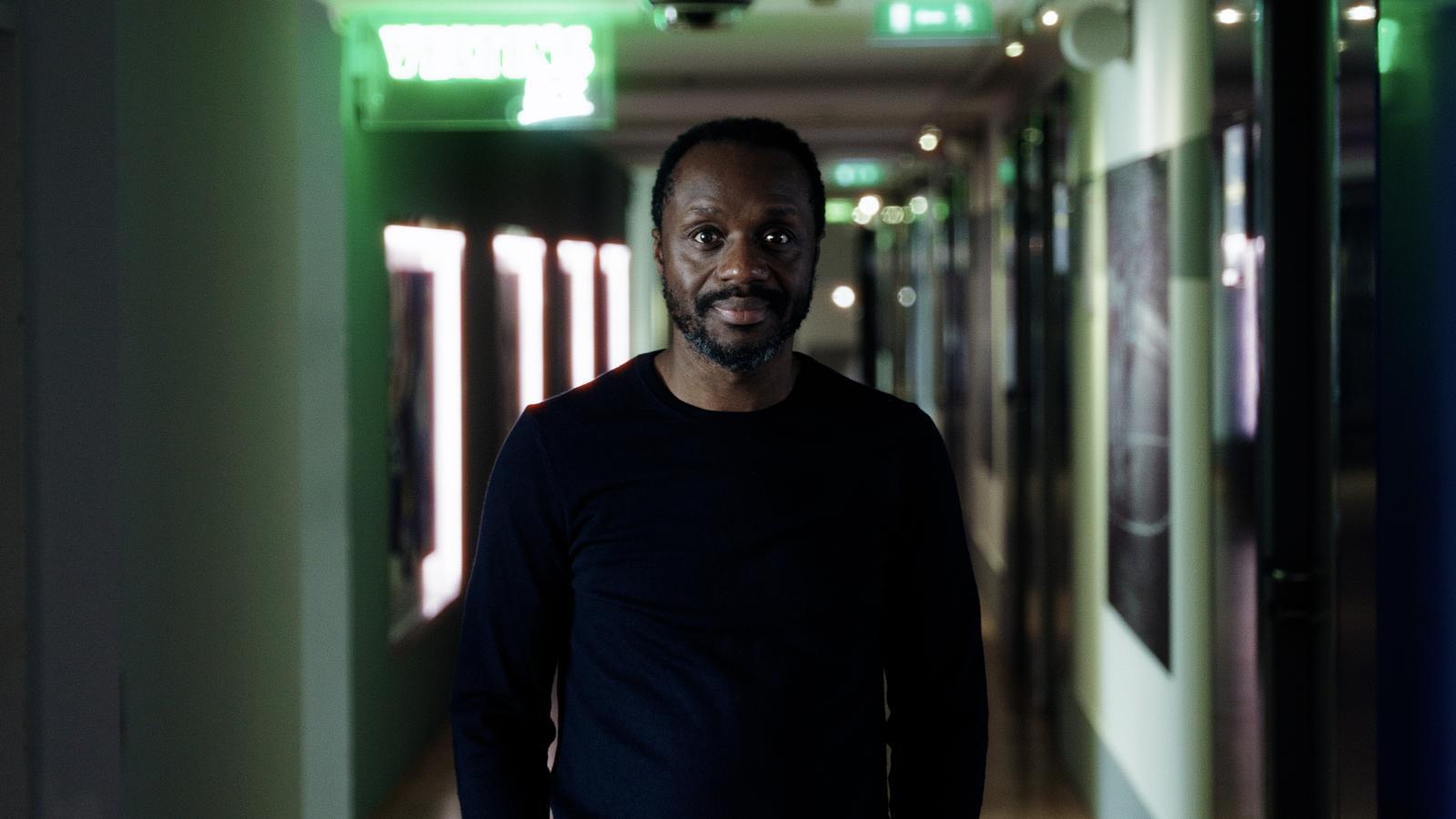
Ben Manga has built a reputation as one of European football’s most astute talent spotters and squad architects, carving out a career defined by sharp eye for potential, meticulous scouting networks, and an ability to transform undervalued players into major assets.
After ending his playing days as a midfielder with clubs such as Fortuna Düsseldorf and Karlsruher SC, he shifted seamlessly into the world of scouting and youth development, beginning at Alemannia Aachen, where he coached across age groups from U11 to U23. This early grounding in player development laid the foundation for the career that followed.
His rise through Germany’s football landscape included scouting roles at TSG Hoffenheim and VfB Stuttgart, but it was at Eintracht Frankfurt where Manga became widely recognised. Serving as Director of Professional Football and Head of Scouting from 2016 to 2022, he played a decisive role in assembling the squads that delivered the DFB-Pokal title in 2018 and the historic Europa League triumph in 2022, with a semi-final run in 2019. His global scouting network unearthed talents such as Sébastien Haller, Luka Jović, Evan Ndicka, Daichi Kamada, Jesper Lindstrøm and Randal Kolo Muani: players who arrived for modest fees and later generated enormous sporting and financial value for the club.
After Frankfurt, Manga moved to England to become Technical Director at Watford, bringing his recruitment methodology to the Championship. Most recently, he served as Director of Professional Football and Head of Scouting at FC Schalke 04, where he was tasked with rebuilding sporting structures and strengthening the club’s talent pipeline.
Across more than two decades in coaching, scouting and front-office leadership, Ben Manga has developed a profile built on global scouting expertise, multicultural fluency and a proven track record of constructing competitive teams. Today, his name is synonymous with smart recruitment, strategic squad planning and the ability to create significant value while maintaining a clear footballing identity.
His global scouting network unearthed talents who arrived for modest fees and later generated enormous sporting and financial value for the club.
Our exclusive interview with Ben Manga
Ben, before we talk about your impressive football career, who are you as a person outside of sport? What drives you, and what values are particularly important to you in everyday life?
I am a very calm, down-to-earth and honest person for whom values continue to play a major role. Friendships, loyalty and respectful coexistence are particularly important to me in everyday life. No matter what it is, I always want to give 100 per cent. This expectation of myself drives me and has brought me to where I am today.
You played professional football yourself and then started a career as a scout and later as a manager. What motivated you to stay in football after your active career – but in a completely different role?
When I had to end my active career due to serious knee injuries, it was immediately clear to me that I definitely wanted to stay in football. My passion for the sport was too great. Jörg Schmadtke opened the door for me at the time: he gave me the opportunity to start as a youth coach and at the same time build up a complete scouting system. That was something that didn’t exist in that form at the time. That’s how my journey began after my playing career.
You took on responsibility early on with your first steps as a youth coach and scout at Alemannia Aachen. What experiences from this phase shaped you and influenced your view of talent development?
After my active career, I started from scratch and had to work hard for everything. That had a lasting impact on me. Back then, we coaches put together our squads entirely on our own. That was my introduction to scouting. I was personally responsible for how my team looked. This taught me early on to take responsibility and not look for excuses when something didn’t work out (grins). That period had a big impact on me.
You often say, “Mentality beats talent.” What does this guiding principle mean to you personally – and how do you recognise players who have exactly this mentality?
Fredi Bobic and I used to say this to each other all the time: there are an incredible number of talented players, but only those who also have the right mentality will really make it to the top in the end. That’s exactly what this sentence is meant to express. I myself was always obsessed with being successful, subordinated everything else to that goal and wanted to constantly improve. That probably set me apart from players who had more talent than me but didn’t have the same inner drive.
There are an incredible number of talented players, but only those who also have the right mentality will really make it to the top.
Your network and your eye for talent are considered exceptional. How do you combine intuition, experience, global contacts and analytics to discover players early on?
Thanks to my long career in the business and the many different positions I have held, I am now able to put myself in anyone’s shoes. This helps enormously when searching for and evaluating players or coaches. I speak German, Spanish and English and can also get by in Portuguese and Italian. This makes it easier to connect with people on a personal level. For me, people always come first. If you can win them over, you’re already well on your way. Over the years, I have built up a large network because I am open, honest, friendly and courteous.
During your time at Eintracht Frankfurt, you played a key role in building a team that won the Europa League and achieved significant increases in value. What do you think was the decisive factor for success during this phase?
For me, success comes from working together, mutual trust, loyalty and hard work. These are precisely the values that Eintracht Frankfurt embodied during this phase. With Fredi Bobic as sporting director, Bruno Hübner as sporting director and our coaches Niko Kovac and later Adi Hütter, we were a real team. Even in difficult times, we always stuck together. This team spirit was the key to our success.
With positions at Watford, TSG Hoffenheim, VfB Stuttgart and other clubs, you have gained a wide range of experience. Which of these positions has had the greatest influence on you as a manager – and why?
Every single position has helped me progress. Aachen was the beginning, later Hoffenheim, Stuttgart, Frankfurt and Watford were added. I was able to learn everywhere and had very good superiors from whom I learned a lot. My experience in England was particularly formative, as it was the first time I worked with a club owner. That was new to me and very instructive in terms of day-to-day operations. In Germany, many people are often involved in decisions, so a lot depends on the personality of the boss. I was fortunate to have strong superiors at my various positions who took responsibility.
You are one of the first African managers in German professional football. What message would you like to give to young Africans who dream of making their way in European football – whether as players, scouts or managers?
I came to Germany as a small child with my parents and my sister. We had to work very hard and fight for our way. I want to show that anyone can do it: with commitment, discipline, willpower and professional competence. I want to be a role model and encourage others. Unfortunately, there are not yet many African officials in German football, which is precisely why my path should show that it is possible.
Looking ahead to the next five to ten years, what developments in professional football would you like to be actively involved in, and what are your personal goals?
I love football and in the coming years I want to pass on my experience, my ideas and my perspective to people who are open to them. I don’t have any big personal goals. For me, the focus is on doing a good job for the club I work for and helping it to be successful.