
.jpg)
If you want to understand why “league partners” and “official sponsors” sit at the center of modern sports marketing, look at the scale and certainty they buy. Global competitions deliver guaranteed, repeatable moments where audiences show up in the hundreds of millions, media schedules are locked for years, and brands can plan multi-market storytelling with the rights to the IP fans love. Below is a practical tour of how the biggest football properties structure these deals, who the heavyweight brands are, and why the model keeps growing.
Why brands buy league and tournament rights (not just teams)
- Mass, predictable reach. Global finals can draw audiences most marketers will never find elsewhere. FIFA says the Qatar 2022 World Cup final reached close to 1.5 billion people worldwide, and five billion engaged with tournament content across platforms, a reminder that a single event can deliver multiple campaigns’ worth of exposure.
- Category exclusivity. League-level partners typically lock rivals out across an entire competition (beer, payments, airline, gaming, etc.), something club deals can’t guarantee.
- Ownable IP and assets. Beyond logos on LED boards, partners get marks, player imagery (subject to rights), hospitality, trophy tours, ticketing promotions, and broadcast integrations that can be deployed across dozens of markets over multiple seasons.
- Cross-property leverage. Increasingly, a single contract spans men’s and women’s competitions, youth tournaments, and community programs—one buy, many platforms. Heineken’s women’s football deal with UEFA (running to 2025) is a good example of that multi-property approach.
How the deals are structured
Although every contract is bespoke, most major competition partnerships share a common architecture:
- Tiered rights packages. Properties sell a small number of “top-tier” global partners with category exclusivity (e.g., beer, airline, payments), then a second layer of global sponsors, and sometimes regional supporters with rights limited to specific territories. FIFA formalizes this as FIFA Partners, FIFA World Cup Sponsors, and Regional Supporters, a clean model that protects value at the top while allowing local activation below.
- Multi-year cycles. Rights typically run in 3–4-year cycles (UEFA) or across a World Cup cycle (FIFA), giving brands time to build, test, and optimize platforms, rather than “one-and-done” flights.
- Integrated asset menus:
- Global IP and logo lock-ups
- Broadcast-visible LED and virtual signage
- Digital content & data rights (e.g., “Official Statistics/Cloud Partner”)
- Hospitality & ticketing
- Player/legend access (subject to separate image rights)
- Grassroots & inclusion programs (increasingly mandatory)
- Measurement and reporting. Brands demand proof. Most top properties now include independent media valuation, brand lift studies, and digital engagement reporting in their packages, often via official analytics partners.
Case study 1: UEFA Champions League; decades-long brand platforms
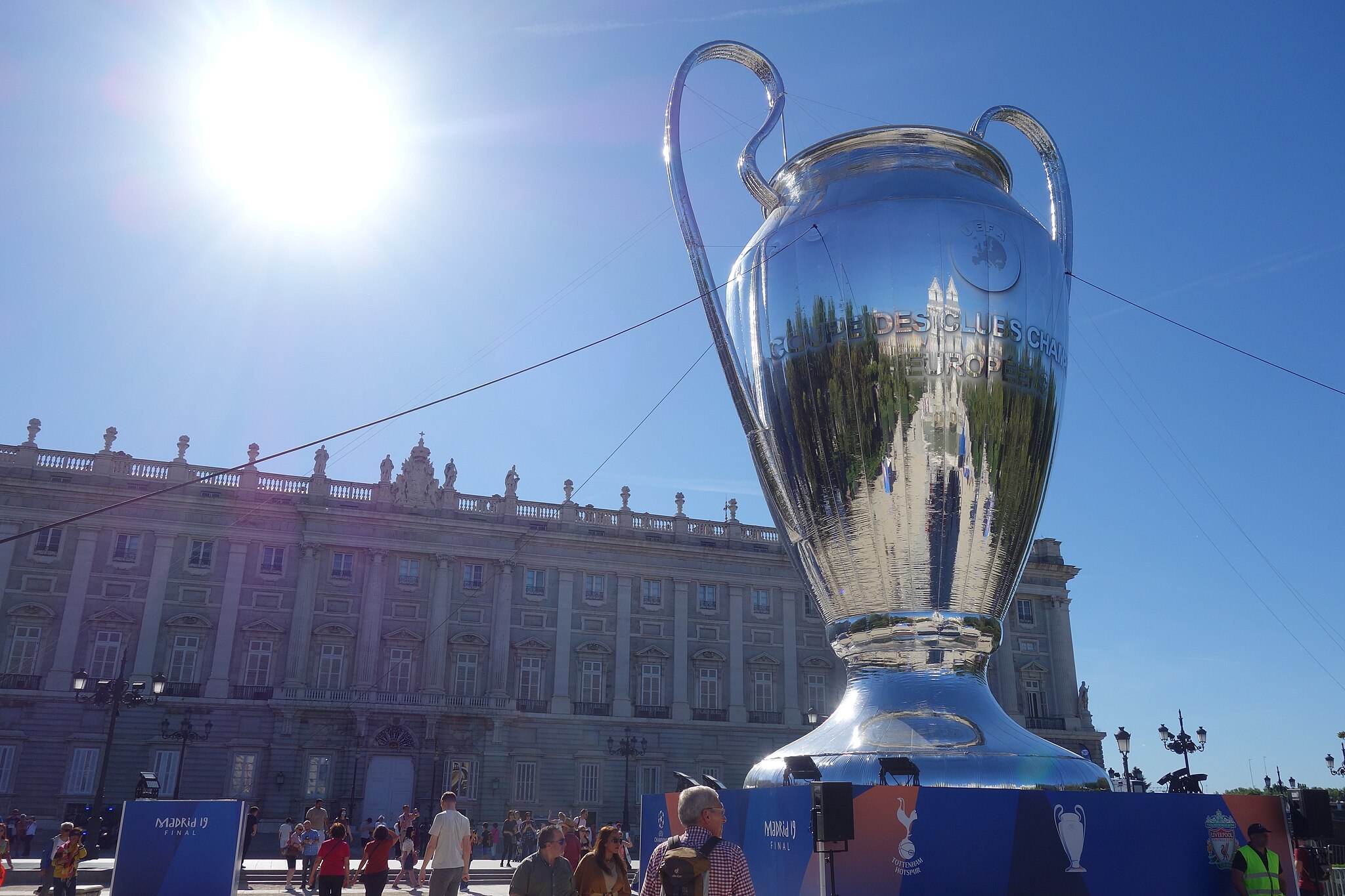
For almost three decades, the UEFA Champions League has delivered a stable, premium sponsorship roster. Some of the longest-serving partners are still on the shirt:
- Heineken (beer & 0.0) has backed the competition since 1994 and renewed through 2027, a rare span for any global platform. The brewer also backs UEFA women’s football to 2025, evidence of the “one portfolio, many properties” strategy.
- Mastercard has also been a Champions League mainstay since 1994, renewing again through 2027. “Priceless” moments were built for this environment.
- Other current Champions League partners in the 2024–27 cycle include PepsiCo (Pepsi/Lay’s/Gatorade), PlayStation, FedEx, Just Eat Takeaway, Qatar Airways, Expedia, Crypto.com, and Bet365, reflecting both legacy categories and newer economy entrants.
“UEFA’s format expansion beginning 2024/25 increased total match inventory and created more high-value broadcast windows, sponsorship value tracks the number and quality of moments available to activate.”
Why it works: UEFA’s format expansion beginning 2024/25 increased total match inventory and created more high-value broadcast windows, sponsorship value tracks the number and quality of moments available to activate.
Case study 2: FIFA World Cup; global tiers and global numbers
FIFA’s commercial program is deliberately tiered and global:
- Top-tier FIFA Partners (e.g., Adidas, Coca-Cola, Wanda Group, Hyundai-Kia, Visa, Qatar Airways) hold rights across all FIFA events.
- World Cup Sponsors focus on the tournament itself (e.g., AB InBev renewed as beer sponsor for 2026/2030). Regional Supporters then add local reach in host markets.
The prize for brands is unparalleled audience concentration: FIFA’s own reporting places the Qatar 2022 final at ~1.5bn reach and 5bn engaged across the tournament. It also documents social reach and engagements at a scale few other events approach.
Case study 3: Premier League & WSL; category partners with data and purpose
The Premier League moved away from title sponsorship in 2016/17 and now sells a small set of category-defining roles:
- EA SPORTS FC (lead partner)
- Nike (official ball)
- Oracle (official cloud & advanced stats)
- Budweiser (beer)
- Hublot (timekeeper)
- Avery Dennison (name/number & sleeve badges)
- Barclays (official banking partner)
On the women’s side, Barclays made a landmark bet on the English women’s pyramid, becoming title partner of the Barclays Women’s Super League (and Women’s Championship) in 2019. That commitment has since been extended through 2029, a long runway that has helped fund development across the ecosystem.
“Heineken and PepsiCo are treating women’s rights packages as mainstream platforms, not side projects. That’s where the market is going.”
Earlier reporting pegged the 2022–25 phase as the largest investment in UK women’s sport by a brand, and the newest extension continues that scale.
Entertainment built in: sponsors as showrunners
The line between sport and entertainment keeps blurring, and sponsors are increasingly the producers:
- PepsiCo will bring pre-kickoff concerts to the UEFA Women’s Champions League finals through 2030, mirroring its men’s final activations and using Lay’s/Gatorade to reach different fan cohorts, proof that rights are now content engines, not just logo placements.
What partners actually buy, and how they activate
- Cultural moments at scale. With UEFA estimating Champions League final “reach” figures in the hundreds of millions, partners build annual tentpoles: new product drops, brand films, and social challenges all timed to matchdays and draws.
- Category exclusivity and IP. From pouring rights in fan zones to using the trophy silhouette in packaging, the ability to be the official brand in a category for years is the moat.
- Data-driven storytelling. Cloud/statistics partnerships (e.g., Premier League x Oracle) give brands persistent on-screen presence while powering second-screen content and fantasy integrations.
- Purpose & participation. Women’s football packages routinely include grassroots and inclusion programs (e.g., UEFA’s Together #WePlayStrong), aligning brand activity with growth of the game.
- Multi-market execution. Airlines, payment networks, and beverages can activate in 50+ countries with one creative platform, localized by market—why the Champions League and the World Cup over-index for truly global brands.
How the money flows back into the game
At UEFA level, commercial (media + sponsorship) growth from the 2024/25 format change is designed to lift distributions to clubs across the Champions League, Europa League, and Conference League, proof that better inventory equals better economics for both rights-holder and participants.
In England, Barclays’ long-horizon backing of the WSL/Championship has underwritten visible development: more full-time pros, improved facilities, and stronger marketing that feeds the audience flywheel.
Takeaways for brands
- Pick platforms that match your footprint. Global networks (payments, airlines, beverages) are built for FIFA/UEFA scale; challenger and DTC brands can win with regional tiers or women’s properties where cut-through is higher per dollar.
- Buy fewer, do more. The most effective partners (Heineken, Mastercard, PepsiCo, PlayStation) renew through multiple cycles and keep building—consistency beats novelty.
- Own moments, not just minutes. Data visualizations, pre-match shows, and social-first content are now the real assets, LED is table stakes.
- Use women’s football as a growth engine, not a CSR line. Heineken and PepsiCo are treating women’s rights packages as mainstream platforms, not side projects. That’s where the market is going.
The bottom line
Leagues and tournaments give brands what few other media investments can: certainty of attention at continental or global scale, protected by exclusivity and delivered through repeatable cultural moments. From UEFA’s decades-long partnerships with Heineken and Mastercard to FIFA’s tiered global program and the Premier League’s data-led roles, the playbook is clear: secure long-term rights, activate relentlessly, measure hard, and keep showing up. The result is a compounding asset for brands, and a funding engine for the sport.
If you’re planning your own approach, start by choosing the stage first (global vs. regional), then the story you can tell year after year. The properties that win for brands are the ones you build with, not the ones you rent for a season.